
Filter
3580
Text search:
HIV
transmission
Featured
355
1156
Language
3265
240
68
54
28
27
27
11
6
6
5
5
3
3
3
3
3
2
2
2
2
2
2
2
2
2
2
2
2
1
1
1
1
1
1
1
1
1
1
1
1
1
1
1
1
1
1
1
1
1
1
1
1
Document type
2155
483
479
152
124
75
60
19
12
7
4
3
1
1
Countries
166
123
97
95
95
94
93
91
89
88
87
86
74
62
60
56
50
48
47
44
43
40
39
38
38
37
34
34
27
27
24
23
21
20
20
18
18
18
16
15
14
13
12
12
12
12
11
11
11
9
8
8
7
6
6
6
6
6
5
5
4
4
4
4
4
4
4
4
3
3
3
3
3
3
2
2
2
2
2
2
2
2
2
2
2
2
2
2
1
1
1
1
1
1
1
1
1
1
1
1
1
1
1
1
1
1
1
1
1
1
1
1
1
1
1
1
1
1
1
1
1
1
1
1
1
Authors & Publishers
406
167
126
112
106
73
66
56
46
40
34
31
27
26
23
22
22
21
19
19
19
19
18
17
16
16
16
16
15
15
15
15
15
15
15
13
13
13
12
12
12
11
11
10
10
10
10
9
9
9
9
9
8
8
8
8
8
8
8
8
7
7
7
7
7
7
7
7
7
7
7
7
6
6
6
6
6
6
6
6
6
6
6
6
6
6
6
6
6
6
6
6
6
6
6
5
5
5
5
5
5
5
5
5
5
5
5
5
5
5
5
5
5
5
5
5
5
5
5
5
5
5
5
5
5
5
4
4
4
4
4
4
4
4
4
4
4
4
4
4
4
4
4
4
4
4
4
4
4
4
4
4
4
4
4
4
4
4
4
4
4
4
4
4
4
4
4
4
4
4
4
4
4
4
4
4
4
3
3
3
3
3
3
3
3
3
3
3
3
3
3
3
3
3
3
3
3
3
3
3
3
3
3
3
3
3
3
3
3
3
3
3
3
3
3
3
3
3
3
3
3
3
3
3
3
3
3
3
3
3
3
3
3
3
3
3
3
3
3
3
3
3
3
3
3
3
3
3
3
3
3
3
3
2
2
2
2
2
2
2
2
2
2
2
2
2
2
2
2
2
2
2
2
2
2
2
2
2
2
2
2
2
2
2
2
2
2
2
2
2
2
2
2
2
2
2
2
2
2
2
2
2
2
2
2
2
2
2
2
2
2
2
2
2
2
2
2
2
2
2
2
2
2
2
2
2
2
2
2
2
2
2
2
2
2
2
2
2
2
2
2
2
2
2
2
2
2
2
2
2
2
2
2
2
2
2
2
2
2
2
2
2
2
2
2
2
2
2
2
2
2
2
2
2
2
2
2
2
2
2
2
2
2
2
2
2
2
2
2
2
2
2
2
2
2
2
2
2
2
2
2
2
2
2
2
2
2
2
2
2
2
2
2
2
2
2
2
2
2
2
2
2
2
2
2
2
2
2
2
2
2
2
2
2
2
2
2
2
2
2
2
2
2
2
2
2
2
2
2
2
2
2
2
2
2
2
2
2
2
2
2
2
2
2
2
2
2
2
2
2
2
2
2
2
2
2
2
1
1
1
1
1
1
1
1
1
1
1
1
1
1
1
1
1
1
1
1
1
1
1
1
1
1
1
1
1
1
1
1
1
1
1
1
1
1
1
1
1
1
1
1
1
1
1
1
1
1
1
1
1
1
1
1
1
1
1
1
1
1
1
1
1
1
1
1
1
1
1
1
1
1
1
1
1
1
1
1
1
1
1
1
1
1
1
1
1
1
1
1
1
1
1
1
1
1
1
1
1
1
1
1
1
1
1
1
1
1
1
1
1
1
1
1
1
1
1
1
1
1
1
1
1
1
1
1
1
1
1
1
1
1
1
1
1
1
1
1
1
1
1
1
1
1
1
1
1
1
1
1
1
1
1
1
1
1
1
1
1
1
1
1
1
1
1
1
1
1
1
1
1
1
1
1
1
1
1
1
1
1
1
1
1
1
1
1
1
1
1
1
1
1
1
1
1
1
1
1
1
1
1
1
1
1
1
1
1
1
1
1
1
1
1
1
1
1
1
1
1
1
1
1
1
1
1
1
1
1
1
1
1
1
1
1
1
1
1
1
1
1
1
1
1
1
1
1
1
1
1
1
1
1
1
1
1
1
1
1
1
1
1
1
1
1
1
1
1
1
1
1
1
1
1
1
1
1
1
1
1
1
1
1
1
1
1
1
1
1
1
1
1
1
1
1
1
1
1
1
1
1
1
1
1
1
1
1
1
1
1
1
1
1
1
1
1
1
1
1
1
1
1
1
1
1
1
1
1
1
1
1
1
1
1
1
1
1
1
1
1
1
1
1
1
1
1
1
1
1
1
1
1
1
1
1
1
1
1
1
1
1
1
1
1
1
1
1
1
1
1
1
1
1
1
1
1
1
1
1
1
1
1
1
1
1
1
1
1
1
1
1
1
1
1
1
1
1
1
1
1
1
1
1
1
1
1
1
1
1
1
1
1
1
1
1
1
1
1
1
1
1
1
1
1
1
1
1
1
1
1
1
1
1
1
1
1
1
1
1
1
1
1
1
1
1
1
1
1
1
1
1
1
1
1
1
1
1
1
1
1
1
1
1
1
1
1
1
1
1
1
1
1
1
1
1
1
1
1
1
1
1
1
1
1
1
1
1
1
1
1
1
1
1
1
1
1
1
1
1
1
1
1
1
1
1
1
1
1
1
1
1
1
1
1
1
1
1
1
1
1
1
1
1
1
1
1
1
1
1
1
1
1
1
1
1
1
1
1
1
1
1
1
1
1
1
1
1
1
1
1
1
1
1
1
1
1
1
1
1
1
1
1
1
1
1
1
1
1
1
1
1
1
1
1
1
1
1
1
1
1
1
1
1
1
1
1
1
1
1
1
1
1
1
1
1
1
1
1
1
1
1
1
1
1
1
1
1
1
1
1
1
1
1
1
1
1
1
1
1
1
1
1
1
1
1
1
1
1
1
1
1
1
1
1
1
1
1
1
1
1
1
1
1
1
1
1
1
1
1
1
1
1
1
1
1
1
1
1
1
1
1
1
1
1
1
1
1
1
1
1
1
1
1
1
1
1
1
1
1
1
1
1
1
1
1
1
1
1
1
1
1
1
1
1
1
1
1
1
1
1
1
1
1
1
1
1
1
1
1
1
1
1
1
1
1
1
1
1
1
1
1
1
1
1
1
1
1
1
1
1
1
1
1
1
1
1
1
1
1
1
1
1
1
1
1
1
1
1
1
1
1
1
1
1
1
1
1
1
1
1
1
1
1
1
1
1
1
1
1
1
1
1
1
1
1
1
1
1
1
1
1
1
1
1
1
1
1
1
1
1
1
1
1
1
1
1
1
1
1
1
1
1
1
1
1
1
1
1
1
1
1
1
1
1
1
1
1
1
1
1
1
1
1
1
1
1
1
1
1
1
1
1
1
1
1
1
1
1
1
1
1
1
1
1
1
1
1
1
1
1
1
1
1
1
1
1
1
1
1
1
1
1
1
1
1
1
1
1
1
1
1
1
1
1
1
1
1
1
1
1
1
1
1
1
1
1
1
1
1
1
1
1
1
1
1
1
1
1
1
1
1
1
1
1
1
1
1
1
1
1
1
1
1
1
1
1
1
1
1
1
1
1
1
1
1
1
1
1
1
1
1
1
1
1
1
1
1
1
1
1
1
1
1
1
1
1
1
1
1
1
1
1
1
1
1
1
1
1
1
1
1
1
1
1
1
1
1
1
1
1
1
1
1
1
1
1
1
1
1
1
1
1
1
1
1
1
1
1
1
1
1
1
1
1
1
1
1
1
1
1
1
1
1
1
1
1
1
1
1
1
1
1
1
1
1
1
1
1
1
1
1
1
1
1
1
1
1
1
1
1
1
1
1
1
1
1
1
1
1
1
1
1
1
1
1
1
1
1
1
1
1
1
1
1
1
1
1
1
1
1
1
1
1
1
1
1
1
1
1
1
1
1
1
1
1
1
1
1
1
1
1
1
1
1
1
1
1
1
1
1
1
1
1
1
1
1
1
1
1
1
1
1
1
1
1
1
1
1
1
1
1
1
1
1
1
1
1
1
1
1
1
1
1
1
1
1
1
1
1
1
1
1
1
1
1
1
1
1
1
1
1
1
1
1
1
1
1
1
1
1
1
1
1
1
1
1
1
1
1
1
1
1
1
1
1
1
1
1
1
1
1
1
1
1
1
1
1
1
1
1
1
1
1
1
1
1
1
1
1
1
1
1
1
1
1
1
1
1
1
1
1
1
1
1
1
1
1
1
1
1
1
1
1
1
1
1
1
1
1
1
1
1
1
1
1
1
1
1
1
1
1
1
1
1
1
1
1
1
1
1
1
1
1
1
1
1
1
1
1
1
1
1
1
1
1
1
1
1
1
1
1
1
1
1
1
1
1
1
1
1
1
1
1
1
1
1
1
1
1
1
1
1
1
1
1
1
1
1
1
1
1
1
1
1
1
1
1
1
1
1
1
1
1
1
1
1
1
1
1
1
1
1
1
1
1
1
1
1
1
1
1
1
1
1
1
1
1
1
1
1
1
1
1
1
1
1
1
1
1
1
1
1
1
1
1
1
1
1
1
1
1
1
1
1
1
1
1
1
1
1
1
1
1
1
1
1
1
1
1
1
1
1
1
1
1
1
1
1
1
1
1
1
1
1
1
1
1
1
1
1
1
1
1
1
1
1
1
1
1
1
1
1
1
1
1
1
1
1
1
1
1
1
1
1
1
1
1
1
1
1
1
1
1
1
1
1
1
1
1
1
1
1
1
1
1
1
1
1
1
1
1
1
1
1
1
1
1
1
1
1
1
1
1
1
1
1
1
1
1
1
1
1
1
1
1
1
1
1
1
1
1
1
1
1
1
1
1
1
1
1
1
1
1
1
1
1
1
1
1
1
1
1
1
1
1
1
1
1
1
1
1
1
1
1
1
1
1
1
1
1
1
1
1
1
1
1
1
1
1
1
1
1
1
1
1
1
1
1
1
1
1
1
1
1
1
1
1
1
1
1
1
1
1
1
1
1
1
1
1
1
1
1
1
1
1
1
1
1
1
1
1
1
1
1
1
1
1
1
1
1
1
1
1
1
1
1
1
1
1
1
1
1
1
1
1
1
1
1
1
1
1
1
1
1
1
1
1
1
1
1
1
1
1
1
1
1
1
1
1
1
1
1
1
1
1
1
1
1
1
1
1
1
1
1
1
1
1
1
1
1
1
1
1
1
1
1
1
1
1
1
1
1
1
1
1
1
1
1
1
1
1
1
1
1
1
1
1
1
1
1
1
1
1
1
1
1
1
1
1
1
1
1
1
1
1
1
1
1
1
1
1
1
1
1
1
1
1
1
1
1
1
1
1
1
1
1
1
1
1
1
1
1
1
1
1
1
1
1
1
1
1
1
1
1
1
1
1
1
1
1
1
1
1
1
1
1
1
1
1
1
1
1
1
1
1
1
1
1
1
1
1
1
1
1
1
1
1
1
1
1
1
1
1
1
1
1
1
1
1
1
1
1
1
1
1
1
1
1
1
1
1
1
1
1
1
1
1
1
1
1
1
1
1
1
1
1
1
1
1
1
1
1
1
1
1
1
1
1
1
1
1
1
1
1
1
1
1
1
1
1
1
1
1
1
1
1
1
1
1
1
1
1
1
1
1
1
1
1
1
1
1
1
1
1
1
1
1
1
1
1
1
1
1
1
1
1
1
1
1
1
1
1
1
1
1
1
1
1
1
1
1
1
1
1
1
1
1
1
1
1
1
1
1
1
1
1
1
1
1
1
1
1
1
1
1
1
1
1
1
1
1
1
1
1
1
1
1
1
1
1
1
1
1
1
1
1
1
1
1
1
1
1
1
1
1
1
1
1
1
1
1
1
1
1
1
1
1
1
1
1
1
1
1
1
1
1
1
1
1
1
1
1
1
1
1
1
1
1
1
1
1
1
1
1
1
1
1
1
1
1
1
1
1
1
1
1
1
1
1
1
1
1
1
1
1
1
1
1
1
1
1
1
1
1
1
1
1
1
1
1
1
1
1
1
1
1
1
1
1
1
1
1
1
1
1
1
1
1
1
1
1
1
1
1
1
1
1
1
1
1
1
1
1
1
1
1
1
1
1
1
1
1
1
1
1
1
1
1
1
1
1
1
1
1
1
1
1
1
1
1
1
1
1
1
1
1
1
1
1
1
1
1
1
1
1
1
1
1
1
1
1
1
1
1
1
1
1
1
1
1
1
1
1
1
1
1
1
1
1
1
1
1
1
1
1
1
1
1
1
1
1
1
1
1
1
1
1
1
1
1
1
1
1
1
1
1
1
1
1
1
1
1
1
1
1
1
1
1
1
1
1
1
1
1
1
1
1
1
1
1
1
1
1
1
1
1
1
1
1
1
1
1
1
1
1
1
1
1
Publication Years
899
2336
330
15
Category
1739
293
207
134
111
91
31
1
Toolboxes
413
299
227
102
96
82
80
75
56
55
50
46
40
39
37
36
36
27
27
27
21
18
9
4
2
1
Global guidance on criteria and processes for validation: elimination of mother-to-child transmission of HIV, syphilis and hepatitis B virus
EMTCT Global Validation Advisory Committee, Global HIV, Hepatitis and Sexually Transmitted Infections Programmes
World Health Organization WHO
(2021)
C_WHO
Validation of elimination of mother-to-child transmission, or vertical transmission, of HIV, syphilis and hepatitis B virus (HBV), is an attestatio
...
n that a country has successfully met standard criteria for elimination, or for being at 1 of the 3 levels of achievement on the ‘Path to Elimination’ while delivering quality services for women, girls and their children, through the life-course, respecting human rights and ensuring gender equality and community engagement.
This document, the third version, adds on EMTCT of hepatitis B virus (HBV), bringing together a package of interventions and metrics to support integrated management and monitoring of vertical transmission across a wide range of epidemiological and programmatic contexts.
This document, the third version, adds on EMTCT of hepatitis B virus (HBV), bringing together a package of interventions and metrics to support integrated management and monitoring of vertical transmission across a wide range of epidemiological and programmatic contexts.
more

This publication provides guidance for planning country-specific programming to achieve the triple elimination of mother-to-child (or vertical) transmission of HIV, syphilis and hepatitis B virus. I
...
t is based on the WHO Triple Elimination Framework, which promotes an integrated, person-centred approach to efficiently and holistically prevent transmission of these infections from mothers to their infants along four pillars.
more
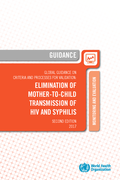
Guidance
Second Edition
Monitoring and Evaluation
Understand HIV transmission, prevention strategies, and treatment advances including antiretroviral therapy and PrEP. Access medical lectures and research updates on YouTube from Harvard, medical pr
...
ofessionals, and health organizations covering drug resistance, vaccine development, and co-infections.
more
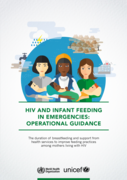
The duration of breastfeeding and support from health services to improve feeding practices among mothers living with HIV
This operational guidance, developed by WHO, UNICEF and ENN, outlines the duration of breastfeeding and support from health services to improve infant feeding practices amon ... g mothers living with HIV. It is intended to be used to complement emergency and sectoral guidelines on health, nutrition and HIV, including specifically infant feeding, prevention of mother-to-child transmission of HIV and paediatric antiretroviral treatment. more
This operational guidance, developed by WHO, UNICEF and ENN, outlines the duration of breastfeeding and support from health services to improve infant feeding practices amon ... g mothers living with HIV. It is intended to be used to complement emergency and sectoral guidelines on health, nutrition and HIV, including specifically infant feeding, prevention of mother-to-child transmission of HIV and paediatric antiretroviral treatment. more

This document aims to provide Ministry of Health guidance on the implementation of PEP and PrEP to prevent HIV transmission and improve overall health outcomes. This comprehensive approach reflects
...
the commitment of all involved in combating HIV and enhancing public health.
more
This study aimed to understand the patterns of HIV drug resistance in pregnant women in Mozambique. This might help in tailoring optimal regimens for prevention of mother to child transmission of
...
HIV (pMTCT) and antenatal care.
more
Chapter 1 of the WHO manual for male circumcision as an HIV prevention strategy
provides an overview of how medical male circumcision (VMMC) can reduce the risk of female-to-male HIV
...
transmission. It explains that VMMC is an effective and safe risk-reduction method that, according to three randomized controlled trials, reduces HIV acquisition by approximately 60%. The chapter highlights that VMMC should be offered as part of a combination prevention approach, alongside other strategies like safer sex education and condom use, to address concerns about potential behavioral changes.
more
Most people with unsuppressed HIV in a large population study in Uganda were already diagnosed but not in clinical care, suggesting that re-engaging people with HIV and ensuring that they are receiv
...
ing antiretroviral treatment could have a substantial impact on HIV transmission.
more

Epidemiology
Chagas disease (American trypanosomiasis) is caused by the protozoan parasite Trypanosoma cruzi, and transmitted to humans by infected triatomine bugs, and less commonly by transfusion, organ transplant, from mother to infant, and in rare instances, by ingestion of contaminated food or
...
drink.1-4 The hematophagous triatomine vectors defecate during or immediately after feeding on a person. The parasite is present in large numbers in the feces of infected bugs, and enters the human body through the bite wound, or through the intact conjunctiva or other mucous membrane.
Vector-borne transmission occurs only in the Americas, where an estimated 8 to 10 million people have Chagas disease.5 Historically, transmission occurred largely in rural areas in Latin America, where houses built of mud brick are vulnerable to colonization by the triatomine vectors.4 In such areas, Chagas disease usually is acquired in childhood. In the last several decades, successful vector control programs have substantially decreased transmission rates in much of Latin America, and large-scale migration has brought infected individuals to cities both within and outside of Latin America.
more

This video, created in collaboration with our Horizon Infectious Disease specialists, explores the fundamentals of human immunodeficiency virus (HIV) & acquired immunodeficiency syndrome (AIDS).
From t
...
ransmission to treatment, this video provides concise, accurate information on diagnosis, early symptoms, causes, prevention, and patient treatment options.
more
HIV and Ebola Update
UNAIDS
(2014)
It is essential that all people, including people living with HIV, are able to access health services and ongoing treatment. If people living with HIV who are on ART stop abruptly because they canno
...
t access new supplies they could rapidly become unwell, drug resistance may build and the chances of onward transmission of the virus would increase.
more
Policy Brief.
WHO recommends that pregnant women receive testing for HIV, syphilis and hepatitis B (HBSAg) at least once during pregnancy, preferably in the first trimester.
Dual HIV/syphilis rapi
...
d diagnostic tests (RDTs) can be used as the first test for pregnant women as part of antenatal care (ANC).
These simple tests can be used at the point-of-care and are cost-saving compared to standard testing in ANC. They enable more women to be diagnosed with HIV and syphilis so that they can access treatment and prevent transmission to their children.
more

WHO updated recommendations on HIV clinical management: recommendations for a public health approach
recommended
This document provides an overview of the updated World Health Organization recommendations for HIV clinical management, which focus on optimizing antiretroviral therapy, preventing vertical transmission
...
, and enhancing tuberculosis prevention among individuals with HIV. These updates are intended to support global initiatives aimed at ending AIDS as a public health threat by 2030. Key changes include the introduction of new antiretroviral drugs and regimens, revised postnatal prophylaxis and breastfeeding guidelines for managing infants at risk of vertical transmission, and the endorsement of shorter tuberculosis preventive treatments to improve efficacy and adherence.
more
Over 2 million children worldwide are living with HIV infection and 95% reside in sub-Saharan Africa with the majority infected through mother-to-child transmission. Infected children have a high mo
...
rtality with 50% dying by 2 years of age. Their clinical presentation includes common childhood infections, opportunistic infections and conditions associated with HIV/AIDS immune suppression.
more

In: Antenatal Care, Maternal Care, Under 5 Clinics, Family Planning Clinics and HIV Exposed Child Follow Up.
This 5th Edition of the Malawi Guidelines for Clinical Management of HIV in Children and
...
Adults is implemented from January 2022. It replaces all previous editions of the Malawi Antiretroviral therapy (ART) and Prevention of Mother to Child Transmission (PMTCT) guidelines.This document is written for medical doctors, clinical officers, medical assistants, nurses, midwives, laboratorians, health surveillance assistants (HSAs) and medical records clerks who are working in public and private sector health facilities in Malawi. It is designed to be a practical guide for implementation of integrated HIV Services
more
The adopted pillars for the AEVT Plan are a) early testing among children exposed to HIV, syphilis and HBV; b) closing the treatment gap among PBFW and children exposed to HIV, syphilis and HBV; c)
...
prevention of new HIV, syphilis and HBV infections among PBFW; and d) breaking down barriers to access to integrated services. Based on these pillars, the AEVT plan guides galvanizing political advocacy for the last mile toward the elimination of vertical transmission of HIV, syphilis and HBV in Africa by 2030
more

Lignes directrices pour la surveillance du VIH chez les femmes enceintes en consultation prénatale à partir des données programmatiques de routine
UNAIDSWHO Working group on global HIV
(2015)
C_WHO
Le présent document s’adresse essentiellement au personnel des programmes de surveillance du VIH dont la tâche est de surveiller l’évolution de l’épidémie de VIH. Il décrit la manière dont les données recueillies systématiquement dans le cadre des programmes de prévention de la
...
transmission mère-enfant du VIH ( PTME) peuvent être utilisées aux fins de la surveillance du VIH chez les femmes enceintes en consultation prénatale.
more
Kenya : National Communications Strategy
NATIONAL AIDS and STIs CONTROL PROGRAMME (NASCOP), MINISTRY OF PUBLIC HEALTH AND SANITATION
Ministry of health
(2012)
C1
Towards the Elimination of Mother-to-Child Transmission of HIV and keeping mothers Alive. 2012-2015
1.HIV infections – drug therapy. 2.Anti-HIV agents – adverse effects. 3.Anti-retroviral agents. 4.Benzoxazines – adverse effects. 5.Pregnancy. 6.Disease
...
transmission, Vertical - prevention and control. 7.Treatment outcome. I.World Health Organization
more
