
Filter
5214
Text search:
acute
care
Featured
633
1261
Language
4821
176
173
133
84
75
41
28
23
13
11
9
9
8
8
8
7
7
7
6
5
5
4
4
3
3
3
3
3
3
3
3
3
3
2
2
2
2
2
2
2
2
1
1
1
1
1
1
1
1
1
1
1
1
1
1
1
1
1
Document type
2389
1054
866
314
223
144
101
72
16
15
11
6
1
1
Countries / Regions
285
249
123
120
103
98
98
96
93
92
83
81
79
78
76
70
65
59
58
58
53
53
51
49
46
45
42
41
40
39
39
38
37
37
35
35
34
33
32
27
26
23
22
21
20
20
18
17
16
14
14
13
13
13
13
13
12
11
11
11
10
10
10
9
8
8
8
8
7
7
7
7
7
7
6
6
6
6
6
6
6
5
5
5
5
5
4
4
4
4
4
4
4
4
4
4
4
3
3
3
3
3
3
3
3
3
3
2
2
2
2
2
2
2
2
2
2
2
2
1
1
1
1
1
1
1
1
1
1
1
1
1
1
1
1
1
1
1
1
1
1
1
1
1
1
Authors & Publishers
853
226
193
138
125
117
111
61
60
42
39
34
32
32
31
28
28
24
24
22
20
20
18
18
18
18
18
18
17
17
17
17
16
16
15
15
15
15
14
14
14
13
13
13
12
12
12
12
12
12
12
12
12
11
11
11
11
11
11
11
11
10
10
10
10
10
10
10
10
10
10
9
9
9
9
9
9
9
9
9
9
8
8
8
8
8
8
8
7
7
7
7
7
7
7
7
7
7
7
7
7
6
6
6
6
6
6
6
6
6
6
6
6
6
6
6
6
6
6
6
6
5
5
5
5
5
5
5
5
5
5
5
5
5
5
5
5
5
5
5
5
5
5
5
5
5
5
5
5
5
5
5
5
5
5
4
4
4
4
4
4
4
4
4
4
4
4
4
4
4
4
4
4
4
4
4
4
4
4
4
4
4
4
4
4
4
4
4
4
4
4
4
4
4
4
4
4
4
4
4
4
4
4
4
4
4
4
4
4
4
4
4
3
3
3
3
3
3
3
3
3
3
3
3
3
3
3
3
3
3
3
3
3
3
3
3
3
3
3
3
3
3
3
3
3
3
3
3
3
3
3
3
3
3
3
3
3
3
3
3
3
3
3
3
3
3
3
3
3
3
3
3
3
3
3
3
3
3
3
3
3
3
3
3
3
3
3
3
3
3
3
3
3
3
3
3
3
3
3
3
3
3
3
3
3
3
3
3
3
3
3
2
2
2
2
2
2
2
2
2
2
2
2
2
2
2
2
2
2
2
2
2
2
2
2
2
2
2
2
2
2
2
2
2
2
2
2
2
2
2
2
2
2
2
2
2
2
2
2
2
2
2
2
2
2
2
2
2
2
2
2
2
2
2
2
2
2
2
2
2
2
2
2
2
2
2
2
2
2
2
2
2
2
2
2
2
2
2
2
2
2
2
2
2
2
2
2
2
2
2
2
2
2
2
2
2
2
2
2
2
2
2
2
2
2
2
2
2
2
2
2
2
2
2
2
2
2
2
2
2
2
2
2
2
2
2
2
2
2
2
2
2
2
2
2
2
2
2
2
2
2
2
2
2
2
2
2
2
2
2
2
2
2
2
2
2
2
2
2
2
2
2
2
2
2
2
2
2
2
2
2
2
2
2
2
2
2
2
2
2
2
2
2
2
2
2
2
2
2
2
2
2
2
2
2
2
2
2
2
2
2
2
2
2
2
2
2
2
2
2
2
2
2
2
2
2
2
2
2
2
2
2
2
2
2
2
2
2
2
2
2
2
2
2
2
2
2
2
2
2
2
2
2
2
2
2
2
2
2
2
2
2
2
2
2
2
2
2
2
2
2
2
2
2
2
2
2
2
2
2
2
2
2
2
2
2
2
2
2
2
2
2
2
2
2
2
2
2
1
1
1
1
1
1
1
1
1
1
1
1
1
1
1
1
1
1
1
1
1
1
1
1
1
1
1
1
1
1
1
1
1
1
1
1
1
1
1
1
1
1
1
1
1
1
1
1
1
1
1
1
1
1
1
1
1
1
1
1
1
1
1
1
1
1
1
1
1
1
1
1
1
1
1
1
1
1
1
1
1
1
1
1
1
1
1
1
1
1
1
1
1
1
1
1
1
1
1
1
1
1
1
1
1
1
1
1
1
1
1
1
1
1
1
1
1
1
1
1
1
1
1
1
1
1
1
1
1
1
1
1
1
1
1
1
1
1
1
1
1
1
1
1
1
1
1
1
1
1
1
1
1
1
1
1
1
1
1
1
1
1
1
1
1
1
1
1
1
1
1
1
1
1
1
1
1
1
1
1
1
1
1
1
1
1
1
1
1
1
1
1
1
1
1
1
1
1
1
1
1
1
1
1
1
1
1
1
1
1
1
1
1
1
1
1
1
1
1
1
1
1
1
1
1
1
1
1
1
1
1
1
1
1
1
1
1
1
1
1
1
1
1
1
1
1
1
1
1
1
1
1
1
1
1
1
1
1
1
1
1
1
1
1
1
1
1
1
1
1
1
1
1
1
1
1
1
1
1
1
1
1
1
1
1
1
1
1
1
1
1
1
1
1
1
1
1
1
1
1
1
1
1
1
1
1
1
1
1
1
1
1
1
1
1
1
1
1
1
1
1
1
1
1
1
1
1
1
1
1
1
1
1
1
1
1
1
1
1
1
1
1
1
1
1
1
1
1
1
1
1
1
1
1
1
1
1
1
1
1
1
1
1
1
1
1
1
1
1
1
1
1
1
1
1
1
1
1
1
1
1
1
1
1
1
1
1
1
1
1
1
1
1
1
1
1
1
1
1
1
1
1
1
1
1
1
1
1
1
1
1
1
1
1
1
1
1
1
1
1
1
1
1
1
1
1
1
1
1
1
1
1
1
1
1
1
1
1
1
1
1
1
1
1
1
1
1
1
1
1
1
1
1
1
1
1
1
1
1
1
1
1
1
1
1
1
1
1
1
1
1
1
1
1
1
1
1
1
1
1
1
1
1
1
1
1
1
1
1
1
1
1
1
1
1
1
1
1
1
1
1
1
1
1
1
1
1
1
1
1
1
1
1
1
1
1
1
1
1
1
1
1
1
1
1
1
1
1
1
1
1
1
1
1
1
1
1
1
1
1
1
1
1
1
1
1
1
1
1
1
1
1
1
1
1
1
1
1
1
1
1
1
1
1
1
1
1
1
1
1
1
1
1
1
1
1
1
1
1
1
1
1
1
1
1
1
1
1
1
1
1
1
1
1
1
1
1
1
1
1
1
1
1
1
1
1
1
1
1
1
1
1
1
1
1
1
1
1
1
1
1
1
1
1
1
1
1
1
1
1
1
1
1
1
1
1
1
1
1
1
1
1
1
1
1
1
1
1
1
1
1
1
1
1
1
1
1
1
1
1
1
1
1
1
1
1
1
1
1
1
1
1
1
1
1
1
1
1
1
1
1
1
1
1
1
1
1
1
1
1
1
1
1
1
1
1
1
1
1
1
1
1
1
1
1
1
1
1
1
1
1
1
1
1
1
1
1
1
1
1
1
1
1
1
1
1
1
1
1
1
1
1
1
1
1
1
1
1
1
1
1
1
1
1
1
1
1
1
1
1
1
1
1
1
1
1
1
1
1
1
1
1
1
1
1
1
1
1
1
1
1
1
1
1
1
1
1
1
1
1
1
1
1
1
1
1
1
1
1
1
1
1
1
1
1
1
1
1
1
1
1
1
1
1
1
1
1
1
1
1
1
1
1
1
1
1
1
1
1
1
1
1
1
1
1
1
1
1
1
1
1
1
1
1
1
1
1
1
1
1
1
1
1
1
1
1
1
1
1
1
1
1
1
1
1
1
1
1
1
1
1
1
1
1
1
1
1
1
1
1
1
1
1
1
1
1
1
1
1
1
1
1
1
1
1
1
1
1
1
1
1
1
1
1
1
1
1
1
1
1
1
1
1
1
1
1
1
1
1
1
1
1
1
1
1
1
1
1
1
1
1
1
1
1
1
1
1
1
1
1
1
1
1
1
1
1
1
1
1
1
1
1
1
1
1
1
1
1
1
1
1
1
1
1
1
1
1
1
1
1
1
1
1
1
1
1
1
1
1
1
1
1
1
1
1
1
1
1
1
1
1
1
1
1
1
1
1
1
1
1
1
1
1
1
1
1
1
1
1
1
1
1
1
1
1
1
1
1
1
1
1
1
1
1
1
1
1
1
1
1
1
1
1
1
1
1
1
1
1
1
1
1
1
1
1
1
1
1
1
1
1
1
1
1
1
1
1
1
1
1
1
1
1
1
1
1
1
1
1
1
1
1
1
1
1
1
1
1
1
1
1
1
1
1
1
1
1
1
1
1
1
1
1
1
1
1
1
1
1
1
1
1
1
1
1
1
1
1
1
1
1
1
1
1
1
1
1
1
1
1
1
1
1
1
1
1
1
1
1
1
1
1
1
1
1
1
1
1
1
1
1
1
1
1
1
1
1
1
1
1
1
1
1
1
1
1
1
1
1
1
1
1
1
1
1
1
1
1
1
1
1
1
1
1
1
1
1
1
1
1
1
1
1
1
1
1
1
1
1
1
1
1
1
1
1
1
1
1
1
1
1
1
1
1
1
1
1
1
1
1
1
1
1
1
1
1
1
1
1
1
1
1
1
1
1
1
1
1
1
1
1
1
1
1
1
1
1
1
1
1
1
1
1
1
1
1
1
1
1
1
1
1
1
1
1
1
1
1
1
1
1
1
1
1
1
1
1
1
1
1
1
1
1
1
1
1
1
1
1
1
1
1
1
1
1
1
1
1
1
1
1
1
1
1
1
1
1
1
1
1
1
1
1
1
1
1
1
1
1
1
1
1
1
1
1
1
1
1
1
1
1
1
1
1
1
1
1
1
1
1
1
1
1
1
1
1
1
1
1
1
1
1
1
1
1
1
1
1
1
1
1
1
1
1
1
1
1
1
1
1
1
1
1
1
1
1
1
1
1
1
1
1
1
1
1
1
1
1
1
1
1
1
1
1
1
1
1
1
1
1
1
1
1
1
1
1
1
1
1
1
1
1
1
1
1
1
1
1
1
1
1
1
1
1
1
1
1
1
1
1
1
1
1
1
1
1
1
1
1
1
1
1
1
1
1
1
1
1
1
1
1
1
1
1
1
1
1
1
1
1
1
1
1
1
1
1
1
1
1
1
1
1
1
1
1
1
1
1
1
1
1
1
1
1
1
1
1
1
1
1
1
1
1
1
1
1
1
1
1
1
1
1
1
1
1
1
1
1
1
1
1
1
1
1
1
1
1
1
1
1
1
1
1
1
1
1
1
1
1
1
1
1
1
1
1
1
1
1
1
1
1
1
1
1
1
1
1
1
1
1
1
1
1
1
1
1
1
1
1
1
1
1
1
1
1
1
1
1
1
1
1
1
1
1
1
1
1
1
1
1
1
1
1
1
1
1
1
1
1
1
1
1
1
1
1
1
1
1
1
1
1
1
1
1
1
1
1
1
1
1
1
1
1
1
1
1
1
1
1
1
1
1
1
1
1
1
1
1
1
1
1
1
1
1
1
1
1
1
1
1
1
1
1
1
1
1
1
1
1
1
1
1
1
1
1
1
1
1
1
1
1
1
1
1
1
1
1
1
1
1
1
1
1
1
1
1
1
1
1
1
1
1
1
1
1
1
1
1
1
1
1
1
1
1
1
1
1
1
1
1
1
1
1
1
1
1
1
1
1
1
1
1
1
1
1
1
1
1
1
1
1
1
1
1
1
1
1
1
1
1
1
1
1
1
1
1
1
1
1
1
1
1
1
1
1
1
1
1
1
1
1
1
1
1
1
1
1
1
1
1
1
1
1
1
1
1
1
1
1
1
1
1
1
1
1
1
1
1
1
1
1
1
1
1
1
1
1
1
1
1
1
1
1
1
1
1
1
1
1
1
1
1
1
1
1
1
1
1
1
1
1
1
1
1
1
1
1
1
1
1
1
1
1
1
1
1
1
1
1
1
1
1
1
1
1
1
1
1
1
1
1
1
1
1
1
1
1
1
1
1
1
1
1
1
1
1
1
1
1
1
1
1
1
1
1
1
1
1
1
1
1
1
1
1
1
1
1
1
1
1
1
1
1
1
1
1
1
1
1
1
1
1
1
1
1
1
1
1
1
1
1
1
1
1
1
1
1
1
1
1
1
1
1
1
1
1
1
1
1
1
1
1
1
1
1
1
1
1
1
1
1
1
1
1
1
1
1
1
1
1
1
1
1
1
1
1
1
1
1
1
1
1
1
1
1
1
1
1
1
1
1
1
1
1
1
1
1
1
1
1
1
1
1
1
1
1
1
1
1
1
1
1
1
1
1
1
1
1
1
1
1
1
1
1
1
1
1
1
1
1
1
1
1
1
1
1
1
1
1
1
1
1
1
1
1
1
1
1
1
1
1
1
1
1
1
1
1
1
1
1
1
1
1
1
1
1
1
1
1
1
1
1
1
1
1
1
1
1
1
1
1
1
1
1
1
1
1
1
1
1
1
1
1
1
1
1
1
1
1
1
1
1
1
1
1
1
1
1
1
1
1
1
1
1
1
1
1
1
1
1
1
1
1
1
1
1
1
1
1
1
1
1
1
1
1
1
1
1
1
1
1
1
1
1
1
1
1
1
1
1
1
1
1
1
1
1
1
1
1
1
1
1
1
1
1
1
1
1
1
1
1
1
1
1
1
1
1
1
1
1
1
1
1
1
1
1
1
1
1
1
1
1
1
1
1
1
1
1
1
1
1
1
1
1
1
1
1
1
1
1
1
1
1
1
1
1
1
1
1
1
1
1
1
1
1
1
1
1
1
1
1
1
1
1
1
1
1
1
1
1
1
1
1
1
1
1
1
1
1
1
1
1
1
1
1
1
1
1
1
1
1
1
1
1
1
1
1
1
1
1
1
1
1
1
1
1
1
1
1
1
1
1
1
1
1
1
1
1
1
1
1
1
1
1
1
1
1
1
1
1
1
1
1
1
1
1
1
1
1
1
1
1
1
1
1
1
1
1
1
1
1
1
1
1
1
1
1
1
1
1
1
1
1
1
1
1
1
1
1
1
1
1
1
1
1
1
1
1
1
1
1
1
1
1
1
1
1
1
1
1
1
1
1
1
1
1
1
1
1
1
1
1
1
1
1
1
1
1
1
1
1
1
1
1
1
1
1
1
1
1
1
1
1
1
1
1
1
1
1
1
1
1
1
1
1
1
1
1
1
1
1
1
1
1
1
1
1
1
1
1
1
1
1
1
1
1
1
1
1
1
1
1
1
1
1
1
1
1
1
1
1
1
1
1
1
1
1
1
1
1
1
1
1
1
1
1
1
1
1
1
1
1
1
1
1
1
1
1
1
1
1
1
1
1
1
1
1
1
1
1
1
1
1
1
1
1
1
1
1
1
1
1
1
1
1
1
1
1
1
1
1
1
1
1
1
1
1
1
1
1
1
1
1
1
1
1
1
1
1
1
1
1
1
1
1
1
1
1
1
1
1
1
1
1
1
1
1
1
1
1
1
1
1
1
1
1
1
1
1
1
1
1
1
1
1
1
1
1
1
1
1
1
1
1
1
1
1
1
1
1
1
1
1
1
1
1
1
1
1
1
1
1
1
1
1
1
1
1
1
1
1
1
1
1
1
1
1
1
1
1
1
1
1
1
1
1
1
1
1
1
1
1
1
1
1
1
1
1
1
1
1
1
1
1
1
1
1
1
1
1
1
1
1
1
1
1
1
1
1
1
1
1
1
1
1
1
1
1
1
1
1
1
1
1
1
1
1
1
1
1
1
1
1
1
1
1
1
1
1
1
1
1
1
1
1
1
1
1
1
1
1
1
1
1
1
1
1
1
1
1
1
1
1
1
1
1
1
1
1
1
1
1
1
1
1
1
1
1
1
1
1
1
1
1
1
1
1
1
1
1
1
1
1
1
1
1
1
1
1
1
1
1
1
1
1
1
1
1
1
1
1
1
1
1
1
1
1
1
1
1
1
1
1
1
1
1
1
1
1
1
1
1
1
1
1
1
1
1
1
1
1
1
1
1
1
1
1
1
1
1
1
1
1
1
1
1
1
1
1
1
1
1
1
1
1
1
1
1
1
1
1
1
1
1
1
1
1
1
1
1
1
1
1
1
1
1
1
1
1
1
1
1
1
1
1
1
1
1
1
1
1
1
1
1
1
1
1
1
1
1
1
1
1
1
1
1
1
1
1
1
1
1
1
1
1
1
1
1
1
1
1
1
1
1
1
1
1
1
1
1
1
1
1
1
1
1
1
1
1
1
1
1
1
1
1
1
1
1
1
1
1
1
1
1
1
1
1
1
1
1
1
1
1
1
1
1
1
1
1
1
1
1
1
1
1
1
1
1
1
1
1
1
1
1
1
1
1
1
1
1
1
1
1
1
1
1
1
1
1
1
1
1
1
1
1
1
1
1
1
1
1
1
1
1
1
1
1
1
1
1
1
1
1
1
1
1
1
1
1
1
1
1
1
1
1
1
1
1
1
1
1
1
1
1
1
1
1
1
1
1
1
1
1
1
1
1
1
1
1
1
1
1
1
1
1
1
1
1
1
1
1
1
1
1
1
1
1
1
1
1
1
1
1
1
1
1
1
1
1
1
1
1
1
1
1
1
1
1
1
1
1
1
1
1
1
1
1
1
1
1
1
1
1
1
1
1
1
1
1
1
1
1
1
1
1
1
1
1
1
1
1
1
1
1
1
1
1
1
1
1
1
1
1
1
1
1
1
1
1
1
1
1
1
1
1
1
1
1
1
1
1
1
1
1
1
1
1
1
1
1
1
1
1
1
1
1
1
1
1
1
1
1
1
1
1
1
1
1
1
1
1
1
1
1
1
1
1
1
1
1
1
1
1
1
1
1
1
1
1
1
1
1
1
1
1
1
1
1
1
1
1
1
1
1
1
1
1
1
1
1
1
1
1
1
1
1
1
1
1
1
1
1
1
1
1
1
1
1
1
1
1
1
1
1
1
1
1
1
1
1
1
1
1
1
1
1
1
1
1
1
1
1
1
1
1
1
1
1
1
1
1
1
1
1
1
1
1
1
1
1
1
1
1
1
1
1
1
1
1
1
1
1
1
1
1
1
1
1
1
1
1
1
1
1
1
1
1
1
1
1
1
1
1
1
1
1
1
1
1
1
1
1
1
1
1
1
1
1
1
1
1
1
1
1
1
1
1
1
1
1
1
1
1
1
1
1
1
1
1
1
1
1
1
1
1
1
1
1
1
1
1
1
1
1
1
1
1
1
1
1
1
1
1
Publication Years
1950
2745
492
25
2
Category
2078
474
332
288
279
87
47
2
Toolboxes
806
457
206
172
171
150
146
144
142
138
127
109
103
99
85
78
77
63
62
44
44
37
34
26
13
6
2

An estimated 1.3 billion people – or 16% of global population worldwide – experience a significant disability today. Persons with disabilities have the right to the highest attainable standard of health as those without disabilities. However, the WHO Global report on health equity for persons w
...
ith disabilities demonstrates that while some progress has been made in recent years, the world is still far from realizing this right for many persons with disabilities who continue to die earlier, have poorer health, and experience more limitations in everyday functioning than others. These poor health outcomes are due to unfair conditions faced by persons with disabilities in all facets of life, including in the health system itself. Countries have an obligation under international human rights law to address the health inequities faced by persons with disabilities. Furthermore, the Sustainable Development Goals and global health priorities will not progress without ensuring health for all.
more
Conflict
In early October, Ukrainian forces continued recapturing areas of southern and eastern oblasts, notably Lyman (Donetsk oblast). The liberation of thousands of square kilometres resulted in the grim discovery of two new mass graves in Lyman and Sviatohirsk (containing of 120 civilian bodi
...
es). Shelling and missile strikes continue to cause the majority of casualties with 1,043 civilian casualties registered by OHCHR in October. Five waves of missile attacks on urban centres were recorder in October alone, leading to widespread disruption of energy supply with millions of citizens being deprived from electricity and water at times during the month.
more
UNFPA implements programmes addressing gender-based violence (GBV) in 153 countries and territories, many of which face humanitarian emergencies. Leading resources used by GBV practitioners include the Inter-Agency Minimum Standards for Gender-Based Violence in Emergencies Programming (the GBViE Min
...
imum Standards) released in 2019 and the Essential Services Package for Women and Girls Subject to Violence released in 2015. Experiences across UNFPA have shown that GBV practitioners have faced challenges in determining when and how to use these tools and how to adapt different approaches to diverse contexts.
more
Travailler avec les dirigeants communautaires pour lutter contre la VBG est une très bonne et prometteuse approche, car les dirigeants communautaires sont les gardiens de toutes nos croyances et coutumes. Étant donné que la VBG est enracinée dans les croyances et les coutumes, essayer de sâ€
...
™attaquer à la VBG sans impliquer les dirigeants communautaires peut mener à un grand conflit, et vous n’aurez aucun résultat. Les dirigeants communautaires ont également des rôles à jouer dans la réponse aux survivantes de la VBG. Les survivantes s’adressent aux chefs de villages pour faire part de leurs préoccupations et de leurs expériences, et les dirigeants ont des pratiques pour traiter les préoccupations et une approche de la justice qui se base d’abord sur le maintien de la cohésion sociale, mais la VBG ne peut pas être résolue comme n’importe quel autre conflit. D’après mon expérience des programmes de VBG dans mon propre pays et ailleurs, j’ai appris qu’il est plus difficile d’impliquer les dirigeants communautaires dans certains endroits que dans d’autres. Parfois, les aspects religieux rendent les choses plus difficiles. Mais si vous demandez à n’importe quel dirigeant de décrire ce qu’est un dirigeant, ce qu’un dirigeant fait, il parlera de la protection de la communauté. Et c’est aussi ce que nous voulons — protéger les femmes et les filles dans la communauté.
more

The MHPSS MSP is an easy-to-follow intersectoral package, which spells out the activities and actions that all humanitarian actors should put in place in all emergencies for an effective MHPSS response. It speaks to different actors at the global, regional, national, and local levels to plan, coordi
...
nate and implement an effective MHPSS response.
more
PLoS Neglected Tropical diseases August 16, 2021 https://doi.org/10.1371/journal.pntd.0009697
Chagas disease, also known as American trypanosomiasis, is a neglected tropical disease transmitted by triatomine insects, first identified in 1909. Chagas disease affects approximately 6–7 million peop
...
le globally and is highly prevalent in Latin America where most cases are reported. However, there is increasing evidence that Chagas disease is now an important public health issue outside the “classical” endemic countries due to population migration. Our understanding of Chagas disease, including its pathologies and factors relating to progression, remains to date limited, and is also challenged by lack of diagnosis and highly effective treatment. This systematic review aims to describe studies with Chagas patients receiving antiparasitic treatment. Databases were searched for relevant studies published after 1997, and the results of these searches were screened.
more
Pathogens . 2021 Nov 16;10(11):1493.doi: 10.3390/pathogens10111493
.Chronic manifestations of Chagas disease present as disabling and life-threatening condi-tions affecting mainly the cardiovascular and gastrointestinal systems. Although meaningful research has outlined the different molecular mech
...
anisms underlying Trypanosoma cruzi’s infection and the host-parasite interactions that follow, prompt diagnosis and treatment remain a challenge, particu-larly in developing countries and also in those where the disease is considered non-endemic. This review intends to present an up-to-date review of the parasite’s life cycle, genetic diversity, virulence factors, and infective mechanisms, as well as the epidemiology, clinical presentation, diagnosis, and treatment options of the main chronic complications of Chagas disease.
more

Not long ago, on the occasion of the 100th anniversary of the discovery of Chagas disease, several campaigns denounced the scant progress has been made in diffrent spheres- medical, scientific and politcal- but major challanges still remain. This is an appropriate time to celebrate what has been ach
...
ieved and to take the next step.
more

April 2022 Volume 35 Issue 2 e00152-21
Population movements have turned Chagas disease (CD) into a global public health problem. Despite the successful implementation of subregional initiatives to control vectorial and transfusional Trypanosoma cruzi transmission in Latin American settings where t
...
he disease is endemic, congenital CD (cCD) remains a significant challenge. In countries where the disease is not endemic, vertical transmission plays a key role in CD expansion and is the main focus of its control. Although several health organizations provide general protocols for cCD control, its management in each geopolitical region depends on local authorities, which has resulted in a multitude of approaches. The aims of this review are to (i) describe the current global situation in CD management, with emphasis on congenital infection, and (ii) summarize the spectrum of available strategies, both official and unofficial, for cCD prevention and control in countries of endemicity and nonendemicity. From an economic point of view, the early detection and treatment of cCD are cost-effective. However, in countries where the disease is not endemic, national health policies for cCD control are nonexistent, and official regional protocols are scarce and restricted to Europe. Countries of endemicity have more protocols in place, but the implementation of diagnostic methods is hampered by economic constraints. Moreover, most protocols in both countries where the disease is endemic and those where it is not endemic have yet to incorporate recently developed technologies. The wide methodological diversity in cCD diagnostic algorithms reflects the lack of a consensus. This review may represent a first step toward the development of a common strategy, which will require the collaboration of health organizations, governments, and experts in the field.
more
Comprehensive Guidelines for Prevention and Control of Dengue and Dengue Haemorrhagic Fever -Revised and expanded edition
World Health Organization World Health Organization WHO Regional Office for South-East Asia
WHO Regional Office for South-East Asia
(2011)
CC
Revised and expanded version of the Guidelines

Mem Inst Oswaldo Cruz, Rio de Janeiro, Vol. 117: e210277chgsa, 2022. online | memorias.ioc.fiocruz.br

After five consecutive below-average rains, the humanitarian crisis in the Horn of Africa is expanding and deepening.
Combined with insecurity and macroeconomic volatility, the impact of the drought on food and nutrition security has been devastating. Across Ethiopia, Kenya and Somalia, an estima
...
ted 22 million people are now acutely food insecure because of the drought. The malnutrition situation is also critical. Some 5.1 million children across drought-affected areas of the three countries are acutely malnourished in 2023, with dire implications for their health, growth and survival. Concerningly, the upcoming March-May 2023 rains are also forecast to be below-average. Should these rains fail, and humanitarian assistance not be delivered at scale, food insecurity will continue to deteriorate.
Regardless of how the 2023 rains perform, extremely high humanitarian needs will persist through 2023 while a full recovery from a drought of this magnitude will take years. To address the devastating drought-induced hunger and malnutrition across the region, WFP is pursuing an integrated dual track approach; meeting immediate life-saving food and nutritional needs while simultaneously building resilience to extreme climate variability.
more
Female Genital Schistosomiasis (FGS) is a gynaecological disease caused by Schistosoma haematobium, a parasitic worm that is acquired by skin contact with freshwater contaminated by schistosome cerceriae. Communities in which the infection is most endemic have limited access to clean water and healt
...
hcare services. Up to 150 million adolescent girls and women are estimated to be at risk of FGS and about 16–56 milion womens are living with FGS, with the majority of these in sub-Saharan Africa. The variability of these estimates points to the fact that this neglected tropical disease is not well studied and frequently not prioritized by local, regional, and global health policy makers.
more
Schistosomiasis is a helminthic infection and one of the neglected tropical diseases (NTDs). It is caused by blood flukes of the genus Schistosoma. It is an important public health problem, particularly in poverty-stricken areas, especially those within the tropics and subtropics. It is estimated th
...
at at least 236 million people worldwide are infected, 90% of them in sub-Saharan Africa, and that this disease causes approximately 300,000 deaths annually. The clinical manifestations are varied and affect practically all organs. There are substantial differences in the clinical presentation, depending on the phase and clinical form of schistosomiasis in which it occurs. Schistosomiasis can remain undiagnosed for a long period of time, with secondary clinical lesion. Here, we review the clinical profile of schistosomiasis. This information may aid in the development of more efficacious treatments and improved disease prognosis.
more

Knowledge, attitudes and practices about human African trypanosomiasis and their implications in designing intervention strategies for Yei county, South Sudan
Bukachi, SA.; Mumbo, AA.; Alak, ACD.; Sebit, W.; Rumunu, J.
PLOS Neclected Tropical Diseases
(2018)
CC
A clear understanding of the knowledge, attitudes and practices (KAP) of a particular community is necessary in order to improve control of human African trypanosomiasis (HAT).New screening and diagnostic tools and strategies were introduced into South Sudan, as part of integrated delivery of primar
...
y healthcare. Knowledge and awareness on HAT, its new/improved screening and diagnostic tools, the places and processes of getting a confirmatory diagnosis and treatment are crucial to the success of this strategy.
more
Schistosomiasis is a public health problem in tropical and subtropical regions of Africa, Asia, the Caribbean and South America. It is one of the neglected tropical diseases (NTDs) - a group of diseases and conditions that affect particularly low-income populations, worldwide.
Last year, WHO laun
...
ched a new road map for 2021-2030 that aims to end the suffering from NTDs by 2030, in line with the Sustainable Development Goals. The road map specifically targets the elimination of schistosomiasis as a public health problem, globally.
This guideline provides evidence-based recommendations in the following areas: prevalence thresholds, target age groups and frequency of PC, establishment of WASH and snail control activities to support control and elimination of schistosomiasis, diagnostic tests for the assessment of schistosomiasis infection in animal reservoirs, in snail hosts, and in humans.
more
Human African trypanosomiasis (HAT) has been an alarming global public health issue. The disease affects mainly poor and marginalized people in low-resource settings and is caused by two subspecies of haemoflagellate parasite, Trypanosoma brucei and transmitted by tsetse flies. Progress made in HAT
...
control during the past decade has prompted increasing global dialogue on its elimination and eradication. The disease is targeted by the World Health Organization (WHO) for elimination as a public health problem by 2020 and to terminate its transmission globally by 2030, along-side other Neglected Tropical Diseases (NTD). Several methods have been used to control tsetse flies and the disease transmitted by them. Old and new tools to control the disease are available with constraints.
Currently, there are no vaccines available. Efforts towards intervention to control the disease over the past decade have seen considerable progress and remarkable success with incidence dropping progressively, reversing the upward trend of reported cases. This gives credence in a real progress in its elimination. This study reviews various control measures, progress and a highlight of control issues, vector and parasite barriers that may have been hindering progress towards its elimination.
more
PLoS Negl Trop Dis 15(8): e0009697. Chagas disease (CD), caused by the parasite Trypanosoma cruzi, affects ~6–7 million people worldwide. Significant limitations still exist in our understanding of CD. Harnessing individual participant data (IPD) from studies could support more in-depth analyses t
...
o address the many outstanding research questions. This systematic review aims to describe the characteristics and treatment practices of clinical studies in CD and assess the breadth and availability of research data for the potential establishment of a data-sharing platform.
more
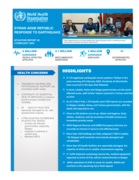
In the early morning of 6 February 2023, a magnitude 7.8 earthquake occurred in southern Türkiye near the
northern border of Syria. The earthquake was followed 11 minutes later by a magnitude 6.7 aftershock. Many
aftershocks are still being felt across the region. Whilst the impact is still bei
...
ng assessed, initial reports evidence
significant damage in the areas of southern Türkiye and northern Syria.
In response, the Syria Ministry of Health (MoH) activated its emergency operations centre (EOC) on 6 Feb 2023
under the chairmanship of the Deputy Minister. In all affected governorates, public and private health facilities
and medical convoys have been repurposed to support the response and are being managed by the National
Ministry of Health (MoH) and Directorate of Health (DoH) at governorate level. Support has been directed to
affected areas, with medical convoys including 28 ambulances and 7 mobile clinics, deployed from the health
directorates of Damascus, Rural Damascus, Quneitra, Homs, Tartous, Aleppo and Latakia
more

Background: The World Health Organization (WHO) published a clinical case definition of post COVID-19
condition, by a Delphi consensus, on 6 October 2021. That process concluded that a separate definition
may be applicable for children. It is important to understand the frequency, characteristics
...
and risk factors
that lead to post COVID-19 condition, along with its impact on everyday functioning and development of
children and adolescents. Long-term outcomes of the condition are currently unknown and need to be
studied. For these reasons, a globally standardized clinical case definition is needed.
Aim: To develop a globally relevant standardized clinical case definition for children and adolescents by
building on the WHO clinical case definition for post COVID-19 condition in adults.
more
