
Filter
3953
Text search:
considerations
Featured
520
808
Language
3643
181
125
116
74
66
27
13
9
8
7
5
4
4
4
3
3
3
3
2
2
2
2
2
2
2
2
2
2
2
2
2
2
2
2
2
2
2
1
1
1
1
1
1
1
1
1
1
1
1
1
1
1
1
1
1
1
1
1
1
1
Document type
1621
987
587
347
150
120
78
18
15
11
8
6
1
1
Countries
222
91
84
71
65
60
59
55
54
48
48
47
47
46
45
45
39
36
35
34
34
33
31
31
27
27
26
26
25
23
23
21
20
20
19
19
17
17
16
14
14
14
14
13
13
12
12
11
11
10
10
10
9
8
8
8
7
7
7
6
6
5
5
5
5
5
5
4
4
4
4
4
4
4
4
4
4
4
4
3
3
3
3
3
3
3
3
2
2
2
2
2
2
2
2
2
2
2
2
2
2
2
2
2
2
2
2
2
2
1
1
1
1
1
1
1
1
1
1
1
1
1
1
1
1
1
1
1
1
1
1
1
1
1
1
1
Authors & Publishers
857
195
111
109
95
70
58
49
41
36
35
35
32
31
30
27
25
24
21
19
19
19
19
17
15
14
13
13
13
13
12
11
11
11
11
11
11
10
10
10
10
10
10
9
9
9
9
9
8
8
8
8
8
8
8
8
8
7
7
7
7
7
7
7
7
7
7
7
7
6
6
6
6
6
6
6
6
6
6
6
6
6
6
6
6
6
6
6
6
6
6
6
5
5
5
5
5
5
5
5
5
5
5
5
5
5
5
5
5
5
5
5
5
5
4
4
4
4
4
4
4
4
4
4
4
4
4
4
4
4
4
4
4
4
4
4
4
4
4
4
3
3
3
3
3
3
3
3
3
3
3
3
3
3
3
3
3
3
3
3
3
3
3
3
3
3
3
3
3
3
3
3
3
3
3
3
3
3
3
3
3
3
3
3
3
3
3
3
3
3
3
3
3
3
3
3
3
3
3
3
3
3
3
3
3
3
3
3
3
3
3
3
3
3
2
2
2
2
2
2
2
2
2
2
2
2
2
2
2
2
2
2
2
2
2
2
2
2
2
2
2
2
2
2
2
2
2
2
2
2
2
2
2
2
2
2
2
2
2
2
2
2
2
2
2
2
2
2
2
2
2
2
2
2
2
2
2
2
2
2
2
2
2
2
2
2
2
2
2
2
2
2
2
2
2
2
2
2
2
2
2
2
2
2
2
2
2
2
2
2
2
2
2
2
2
2
2
2
2
2
2
2
2
2
2
2
2
2
2
2
2
2
2
2
2
2
2
2
2
2
2
2
2
2
2
2
2
2
2
2
2
2
2
2
2
2
2
2
2
2
2
2
2
2
2
2
2
2
2
2
2
2
2
2
2
2
2
2
2
2
2
2
2
2
2
2
2
2
2
2
2
2
2
2
2
2
2
2
2
2
2
2
2
2
2
2
2
2
2
2
2
2
2
2
2
2
2
2
2
2
2
2
2
2
2
2
2
2
2
2
2
2
2
2
2
2
2
2
2
2
2
2
2
2
1
1
1
1
1
1
1
1
1
1
1
1
1
1
1
1
1
1
1
1
1
1
1
1
1
1
1
1
1
1
1
1
1
1
1
1
1
1
1
1
1
1
1
1
1
1
1
1
1
1
1
1
1
1
1
1
1
1
1
1
1
1
1
1
1
1
1
1
1
1
1
1
1
1
1
1
1
1
1
1
1
1
1
1
1
1
1
1
1
1
1
1
1
1
1
1
1
1
1
1
1
1
1
1
1
1
1
1
1
1
1
1
1
1
1
1
1
1
1
1
1
1
1
1
1
1
1
1
1
1
1
1
1
1
1
1
1
1
1
1
1
1
1
1
1
1
1
1
1
1
1
1
1
1
1
1
1
1
1
1
1
1
1
1
1
1
1
1
1
1
1
1
1
1
1
1
1
1
1
1
1
1
1
1
1
1
1
1
1
1
1
1
1
1
1
1
1
1
1
1
1
1
1
1
1
1
1
1
1
1
1
1
1
1
1
1
1
1
1
1
1
1
1
1
1
1
1
1
1
1
1
1
1
1
1
1
1
1
1
1
1
1
1
1
1
1
1
1
1
1
1
1
1
1
1
1
1
1
1
1
1
1
1
1
1
1
1
1
1
1
1
1
1
1
1
1
1
1
1
1
1
1
1
1
1
1
1
1
1
1
1
1
1
1
1
1
1
1
1
1
1
1
1
1
1
1
1
1
1
1
1
1
1
1
1
1
1
1
1
1
1
1
1
1
1
1
1
1
1
1
1
1
1
1
1
1
1
1
1
1
1
1
1
1
1
1
1
1
1
1
1
1
1
1
1
1
1
1
1
1
1
1
1
1
1
1
1
1
1
1
1
1
1
1
1
1
1
1
1
1
1
1
1
1
1
1
1
1
1
1
1
1
1
1
1
1
1
1
1
1
1
1
1
1
1
1
1
1
1
1
1
1
1
1
1
1
1
1
1
1
1
1
1
1
1
1
1
1
1
1
1
1
1
1
1
1
1
1
1
1
1
1
1
1
1
1
1
1
1
1
1
1
1
1
1
1
1
1
1
1
1
1
1
1
1
1
1
1
1
1
1
1
1
1
1
1
1
1
1
1
1
1
1
1
1
1
1
1
1
1
1
1
1
1
1
1
1
1
1
1
1
1
1
1
1
1
1
1
1
1
1
1
1
1
1
1
1
1
1
1
1
1
1
1
1
1
1
1
1
1
1
1
1
1
1
1
1
1
1
1
1
1
1
1
1
1
1
1
1
1
1
1
1
1
1
1
1
1
1
1
1
1
1
1
1
1
1
1
1
1
1
1
1
1
1
1
1
1
1
1
1
1
1
1
1
1
1
1
1
1
1
1
1
1
1
1
1
1
1
1
1
1
1
1
1
1
1
1
1
1
1
1
1
1
1
1
1
1
1
1
1
1
1
1
1
1
1
1
1
1
1
1
1
1
1
1
1
1
1
1
1
1
1
1
1
1
1
1
1
1
1
1
1
1
1
1
1
1
1
1
1
1
1
1
1
1
1
1
1
1
1
1
1
1
1
1
1
1
1
1
1
1
1
1
1
1
1
1
1
1
1
1
1
1
1
1
1
1
1
1
1
1
1
1
1
1
1
1
1
1
1
1
1
1
1
1
1
1
1
1
1
1
1
1
1
1
1
1
1
1
1
1
1
1
1
1
1
1
1
1
1
1
1
1
1
1
1
1
1
1
1
1
1
1
1
1
1
1
1
1
1
1
1
1
1
1
1
1
1
1
1
1
1
1
1
1
1
1
1
1
1
1
1
1
1
1
1
1
1
1
1
1
1
1
1
1
1
1
1
1
1
1
1
1
1
1
1
1
1
1
1
1
1
1
1
1
1
1
1
1
1
1
1
1
1
1
1
1
1
1
1
1
1
1
1
1
1
1
1
1
1
1
1
1
1
1
1
1
1
1
1
1
1
1
1
1
1
1
1
1
1
1
1
1
1
1
1
1
1
1
1
1
1
1
1
1
1
1
1
1
1
1
1
1
1
1
1
1
1
1
1
1
1
1
1
1
1
1
1
1
1
1
1
1
1
1
1
1
1
1
1
1
1
1
1
1
1
1
1
1
1
1
1
1
1
1
1
1
1
1
1
1
1
1
1
1
1
1
1
1
1
1
1
1
1
1
1
1
1
1
1
1
1
1
1
1
1
1
1
1
1
1
1
1
1
1
1
1
1
1
1
1
1
1
1
1
1
1
1
1
1
1
1
1
1
1
1
1
1
1
1
1
1
1
1
1
1
1
1
1
1
1
1
1
1
1
1
1
1
1
1
1
1
1
1
1
1
1
1
1
1
1
1
1
1
1
1
1
1
1
1
1
1
1
1
1
1
1
1
1
1
1
1
1
1
1
1
1
1
1
1
1
1
1
1
1
1
1
1
1
1
1
1
1
1
1
1
1
1
1
1
1
1
1
1
1
1
1
1
1
1
1
1
1
1
1
1
1
1
1
1
1
1
1
1
1
1
1
1
1
1
1
1
1
1
1
1
1
1
1
1
1
1
1
1
1
1
1
1
1
1
1
1
1
1
1
1
1
1
1
1
1
1
1
1
1
1
1
1
1
1
1
1
1
1
1
1
1
1
1
1
1
1
1
1
1
1
1
1
1
1
1
1
1
1
1
1
1
1
1
1
1
1
1
1
1
1
1
1
1
1
1
1
1
1
1
1
1
1
1
1
1
1
1
1
1
1
1
1
1
1
1
1
1
1
1
1
1
1
1
1
1
1
1
1
1
1
1
1
1
1
1
1
1
1
1
1
1
1
1
1
1
1
1
1
1
1
1
1
1
1
1
1
1
1
1
1
1
1
1
1
1
1
1
1
1
1
1
1
1
1
1
1
1
1
1
1
1
1
1
1
1
1
1
1
1
1
1
1
1
1
1
1
1
1
1
1
1
1
1
1
1
1
1
1
1
1
1
1
1
1
1
1
1
1
1
1
1
1
1
1
1
1
1
1
1
1
1
1
1
1
1
1
1
1
1
1
1
1
1
1
1
1
1
1
1
1
1
1
1
1
1
1
1
1
1
1
1
1
1
1
1
1
1
1
1
1
1
1
1
1
1
1
1
1
1
1
1
1
1
1
1
1
1
1
1
1
1
1
1
1
1
1
1
1
1
1
1
1
1
1
1
1
1
1
1
1
1
1
1
1
1
1
1
1
1
1
1
1
1
1
1
1
1
1
1
1
1
1
1
1
1
1
1
1
1
1
1
1
1
1
1
1
1
1
1
1
1
1
1
1
1
1
1
1
1
1
1
1
1
1
1
1
1
1
1
1
1
1
1
1
1
1
1
1
1
1
1
1
1
1
1
1
1
1
1
1
1
1
1
1
1
1
1
1
1
1
1
1
1
1
1
1
1
1
1
1
1
1
1
1
1
1
1
1
1
1
1
1
1
1
1
1
1
1
1
1
1
1
1
1
1
1
1
1
1
1
1
1
1
1
1
1
1
1
1
1
1
1
1
1
1
1
1
1
1
1
1
1
1
1
1
1
1
1
1
1
1
1
1
1
1
1
1
1
1
1
1
1
1
1
1
1
1
1
1
1
1
1
1
1
1
1
1
1
1
1
1
1
1
1
1
1
1
1
1
1
1
1
1
1
1
1
1
1
1
1
1
1
1
1
1
1
1
1
1
1
1
1
1
1
1
1
1
1
1
1
1
1
1
1
1
1
1
1
1
1
1
1
1
1
1
1
1
1
1
1
1
1
1
1
1
1
1
1
1
1
1
1
1
1
1
1
1
1
1
1
1
1
1
1
1
1
1
1
1
1
1
1
1
1
1
1
1
1
1
1
1
1
1
1
1
1
1
1
1
1
1
1
1
1
1
1
1
1
1
1
1
1
1
1
1
1
1
1
1
1
1
1
1
1
1
1
1
1
1
1
1
1
1
1
1
1
1
1
1
1
1
1
1
1
1
1
1
1
1
1
1
1
1
1
1
1
1
1
1
1
1
1
1
1
1
1
1
1
1
1
1
1
1
1
1
1
1
1
1
1
1
1
1
1
1
1
1
1
1
1
1
1
1
1
1
1
1
1
1
1
1
1
1
1
1
1
1
1
1
1
1
1
1
1
1
1
1
1
1
1
1
1
1
1
1
1
1
1
1
1
1
1
1
1
1
1
1
1
1
1
1
1
1
1
1
1
1
1
1
1
1
1
1
1
1
1
1
1
1
1
1
1
1
1
1
1
1
1
1
1
1
1
1
1
1
1
1
1
1
1
1
1
1
1
1
1
1
1
1
1
1
1
1
1
1
1
1
1
1
1
1
1
1
1
1
1
1
1
1
1
1
1
1
1
1
1
1
1
1
1
1
1
1
1
1
1
1
1
1
1
1
1
1
1
1
1
1
1
1
1
1
1
1
1
1
1
1
1
1
1
1
1
1
1
1
1
1
1
1
1
1
1
1
1
1
1
1
1
1
1
1
1
1
1
1
1
1
1
1
1
1
1
1
1
1
1
1
1
1
1
1
1
1
1
1
1
1
1
1
1
1
1
1
1
1
1
1
1
1
1
1
1
1
1
1
1
1
1
1
1
1
1
1
1
1
1
1
1
1
1
1
1
1
1
1
1
1
1
1
1
1
1
1
1
1
1
1
1
1
1
1
1
1
1
1
1
1
1
1
1
1
1
1
1
1
1
1
1
1
1
1
1
1
1
1
1
1
1
1
1
1
1
1
1
1
1
1
1
1
1
1
1
1
1
1
1
1
1
1
1
1
1
1
1
1
1
1
1
1
1
1
1
1
1
1
1
1
1
1
1
1
1
1
1
1
1
1
1
1
1
1
1
1
1
1
1
1
1
1
1
1
1
1
1
1
1
1
1
1
1
1
1
1
1
1
1
1
1
1
1
1
1
1
1
1
1
1
1
1
1
1
1
1
1
1
1
1
1
1
1
1
1
1
1
1
1
1
1
1
1
1
1
1
1
1
1
1
1
1
1
1
1
1
1
1
1
1
1
1
1
1
1
1
1
1
1
1
1
1
1
1
1
1
1
1
1
1
1
1
1
1
1
1
1
1
1
1
1
1
1
1
1
1
1
1
1
1
1
1
1
1
1
1
1
1
1
1
1
1
1
1
1
1
1
1
1
1
1
1
1
1
1
1
1
1
1
1
1
1
1
1
1
1
1
1
1
1
1
1
1
1
1
1
1
1
1
1
1
1
1
1
1
1
1
1
1
1
1
1
1
1
1
1
1
1
1
1
1
1
1
1
1
1
1
1
1
1
1
1
1
1
1
1
1
1
1
1
1
1
1
1
1
1
1
1
1
1
1
1
1
1
1
1
1
1
1
1
1
1
1
1
1
1
1
1
1
1
1
1
1
1
1
Publication Years
1714
1957
263
18
1
Category
1068
379
365
291
230
95
59
1
Toolboxes
685
289
191
189
167
132
121
119
114
106
101
88
79
75
69
66
59
55
52
36
35
34
33
26
21
2

Countries, partners, and donors are committed to the global elimination of blinding trachoma by 2020.
Achieving this public health milestone requires more than funding; it requires health personnel with the
right mix of skills, and well supported and managed health systems. Mass drug administratio
...
n (MDA)
with Zithromax®, the Pfizer, Inc. donated antibiotic, is a key component of the SAFE strategy, endorsed
by the World Health Organization. There is growing
recognition that improving all aspects of MDA, from
planning to training, recording to reporting, and
receipt of drug to distribution (the supply chain), will
be necessary if MDA programmes are going to reduce
the community burden of Chlamydia trachomatis, and
eliminate trachoma as a cause of blindness by 2020.
more
This new guidance aims to support programme implementers, coordinators and others in humanitarian settings in their actions to counter suicide and self-harm in humanitarian contexts and to save lives.

Trachoma causes more vision loss and blindness than any other infection in the world. This disease is caused by Chlamydia trachomatis bacteria. Other variants or strains of these bacteria can cause a sexually transmitted infection (chlamydia) and disease in lymph nodes.
This is photomicrograph
...
of a conjunctival smear that revealed the presence of what are known as, intracytoplasmic inclusions Trachoma is easily spread through direct personal contact such as from fingers, through shared towels and clothes, and through flies that have been in contact with the eyes or nose of an infected person. When left untreated, repeated Chlamydia trachomatis infections in the eye can cause severe scarring on the inside of the eyelid. This can cause the eyelashes to scratch the cornea (trichiasis). In addition to causing pain, trichiasis permanently damages the cornea and can lead to irreversible blindness.
Chlamydia trachomatis infections spread in areas that lack access to safely managed drinking water and sanitation systems. Trachoma affects the most resource-limited communities in the world. Globally, almost 1.9 million people have vision loss because of trachoma, and it causes 1.4% of all blindness worldwide.1 In 2021, 136 million people lived in trachoma-endemic areas and were at risk of trachoma blindness.
more
In 2011, ICTC developed a Trachoma Action Plan (TAP) planning guide to support national health officials in endemic countries. This resource was developed to complement the 2020 INSight roadmap by helping countries create specific national plans detailing how they will reach elimination targets in t
...
heir own particular contexts.
more
This Guide responds to requests from practitioners and country teams who have learned about the Nurturing care framework and want to understand how to adapt health and nutrition services to be supportive of nurturing care and strengthen caregivers’ capacity.
Over 6 million people worldwide are infected with Trypanosoma cruzi, the protozoan that causes Chagas disease
(CD). T. cruzi is transmitted by triatomine insects, congenitally, through uncontrolled blood donations and organ transplants,
and via consumption of food or drink contaminated by triatomi
...
nes.
more

The Practical manual on laboratory strengthening, 2022 update provides practical guidance on implementation of WHO recommendations and best practices for TB laboratory strengthening. It is an updated version of the GLI Practical Guide to Laboratory Strengthening published in 2017 and provides the la
...
test practical guidance on use of newly recommended diagnostics as well as guidance in key technical areas, including quality assurance and quality management systems, specimen collection and registration, procurement and supply-chain management, diagnostic connectivity, biosafety, data management, human resources, strategic planning, and model algorithms. The key changes are:
inclusion of recent or updated WHO recommendations for tests to diagnose TB and detect drug resistance;
alignment with the latest WHO critical concentrations for phenotypic drug-susceptibility testing (DST) and the new definitions of pre-XDR-TB and XDR-TB;
updated information on building quality-assured TB testing and management capacity using the Stepwise Laboratory Quality Improvement Process Towards Accreditation (SLIPTA) approach (Score-TB package1);
updated information on assessing, analysing and optimising TB diagnostic networks; and
updated information on the use of next-generation sequencing (NGS) to detect mutations associated with drug resistance for surveillance purposes.
The document also provides references to resources and tools relevant for work on laboratory strengthening.
more
Le présent document rassemble une série de recommandations émises par l’Organisation mondiale de la Santé (OMS) et l’Organisation panaméricaine de la Santé (OPS) pour aider les professionnels chargés des programmes de lutte antivectorielle en Amérique latine et dans les Caraïbes aux niv
...
eaux national, infranational et local à mettre à jour et prendre des decisions à base factuelle qui touchent les mesures de lutte antivectorielle les mieux adaptées à chaque situation particulière. La GIV peut être utilisée lorsque la cible est la surveillance et la lutte ou l’élimination (en function de chaque situation) des MTV et peut contribuer à réduire le développement de la résistance aux insecticides au moyen de l’utilisation rationnelle de ces produits. Le présent document contient les instructions nécessaires pour mener à bien le mandat établi par l’OPS en 2008 (résolution CD48.R8, document CD48/13), en particulier, il complémente une série de guides de l’OMS publiés en 2012
more
Este documento reúne um conjunto de recomendações formuladas pela OMS e pela OPAS para ajudar os profissionais responsáveis pelos programas de controle de vetores nas Américas em nível nacional, subnacional e local a se atualizarem e tomarem decisões baseadas em evidências sobre as medidas d
...
e controle mais apropriadas para cada situação. O MIV pode ser utilizado quando o objetivo é a vigilância e o controle ou a eliminação (dependendo da situação específica) das DTVs e pode ajudar a reduzir o desenvolvimento de resistência aos inseticidas pelo uso racional desses produtos. Este documento contém instruções para a execução do mandato de 2008 da OPAS sobre o manejo integrado de vetores (resolução CD48.R8, documento CD48/13) e, em particular, complementa uma série de diretrizes da OMS publicadas em 2012
more

This report provides a review and analysis of the research landscape for three diseases – Chagas disease, human African trypanosomiasis and leishmaniasis – that disproportionately afflict poor and remote populations with limited access to health services. It represents the work of the disease re
...
ference group on Chagas Disease, Human African Trypanosomiasis and Leishmaniasis (DRG3) which was established to identify key research priorities through review of research evidence and input from stakeholders' consultations.
more

The World Health Organization (WHO) and the global community of countries, partners, donors, technical experts, scientists and field implementation teams continue to work towards the ultimate goal of a world free of the burden of neglected tropical diseases (NTDs).
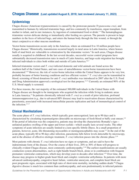
Epidemiology
Chagas disease (American trypanosomiasis) is caused by the protozoan parasite Trypanosoma cruzi, and transmitted to humans by infected triatomine bugs, and less commonly by transfusion, organ transplant, from mother to infant, and in rare instances, by ingestion of contaminated food or
...
drink.1-4 The hematophagous triatomine vectors defecate during or immediately after feeding on a person. The parasite is present in large numbers in the feces of infected bugs, and enters the human body through the bite wound, or through the intact conjunctiva or other mucous membrane.
Vector-borne transmission occurs only in the Americas, where an estimated 8 to 10 million people have Chagas disease.5 Historically, transmission occurred largely in rural areas in Latin America, where houses built of mud brick are vulnerable to colonization by the triatomine vectors.4 In such areas, Chagas disease usually is acquired in childhood. In the last several decades, successful vector control programs have substantially decreased transmission rates in much of Latin America, and large-scale migration has brought infected individuals to cities both within and outside of Latin America.
more

Schistosomiasis is widely recognized as a disease that is socially determined. An understanding of the social and behavioural factors linked to disease transmission and control should play a vital role in designing policies and strategies for schistosomiasis prevention and control. To this must be a
...
dded the awareness that schistosomiasis is also a disease of poverty. It still survives in poverty-stricken, remote areas where there is little or no safe water or sanitation, and health care is scarce or non-existent. For a variety of complex reasons, many of which are addressed in this book, the disease is particularly prevalent in sub-Saharan Africa, and persists in certain areas of rural China. This concern for human behaviour in an environment of poverty echoes the concerns of the new research priority for “diseases of poverty” identified by the Special Programme for Research & Training in Tropical Diseases.
more

Climate change presents the single biggest threat to human development, and its widespread impacts disproportionately burden the poorest and most vulnerable households in fragile and rural developing contexts – particularly women and children.
According to the Intergovernmental Panel on Climate C
...
hange’s (IPCC) latest report, ‘between 2010 and 2020, droughts, floods and storms killed 15 times as many people in highly vulnerable countries, particularly in Africa — which is responsible for less than 3 percent of global emissions – than in the wealthiest countries’.
Recognising environmental degradation and climate change are key accelerators of extreme child vulnerability, World Vision (WV) approved the Environmental Stewardship Management Policy (‘the Policy’) and Guidelines (‘the Guidelines’) in 2021.
To support the implementation of the Policy and Guidelines, WV has developed this Environmental Stewardship and Climate Action Handbook (‘the Handbook’) to help offices across the WV Partnership implement best practice environmental management strategies both in the field and in our operations and facilities.
Integrating environmental stewardship and climate action into all our work – whether that be in our Area Programmes, grant projects, responses to disasters or advocacy – is critical to achieving WV’s strategy.
As a Christian organisation we are compelled to follow the ways of Jesus Christ, calling us to care for the ‘least of these’ (Matthew 25:40) – the vulnerable children who are disproportionately impacted by climate change. Our response to the degradation of the environment is not motivated by political expediency or funding – but because we are called to steward God’s creation (Genesis 1:28).
more

This sourcebook aims to detail why health needs to be part of urban and territorial planning and how to make this happen. It brings together two vital elements we need to build habitable cities on a habitable planet: 1) Processes to guide the development of human settlements – in this document ref
...
erred to as “urban and territorial planning (UTP)”; and 2) concern for human health, well-being and health equity at all levels – from local to global, and from human to planetary health.
This sourcebook identifies a comprehensive selection of existing resources and tools to support the incorporation of health into UTP, including advocacy frameworks, entry points and guidance, as well as tools and illustrative case studies. It does not provide prescriptions for specific scenarios – these should be determined by context, people and available resources.
more
Plus de 700 000 personnes perdent la vie par suicide chaque année. La réduction d’un tiers du taux mondial de mortalité par suicide d’ici à 2030 est à la fois un indicateur et une cible (la seule pour la santé mentale) dans les objectifs de développement durable des Nations Unies et dans
...
le Plan d’action global de l’OMS pour la santé mentale 2013–2030. Le treizième programme général de travail 2019–2023 de l’OMS comprend le même indicateur avec une réduction de 15 % à l’horizon 2023.
Le monde n’est pas sur la bonne voie pour atteindre les cibles de la réduction du suicide fixées pour 2030. L’OMS encourage les pays à prendre des mesures pour prévenir le suicide, idéalement par le biais d’une stratégie nationale intégrée de prévention du suicide. Les gouvernements et les communautés peuvent contribuer à la prévention du suicide en mettant en œuvre l’approche LIVE LIFE de l’OMS, dont le but est de servir de base pour commencer la prévention du suicide, et dont ils peuvent s’inspirer pour élaborer une stratégie nationale intégrée de prévention du suicide. Le présent guide s’adresse à tous les pays, qu’ils disposent actuellement ou non d’une stratégie nationale de prévention du suicide.
more

Conflicts and disasters, including pandemics, affect women and men in all their diversity differently, and women and girls often suffer the most. Crisis-related hardships combine and compound pre-existing disadvantages, for example, they often cause women’s working conditions to worsen while incre
...
asing their overall workload and care responsibilities. At the same time, crises can give rise to changes that enable women to take up roles that were previously available only to men, and crises can open opportunities to address existing gender-based discrimination and violations of rights.
more

The document “Guidance on Law and Public Health Emergency Preparedness and Response” provides recommendations for governments on how laws and policies can support effective preparation for and response to public health emergencies such as epidemics or pandemics. It explains the role of legal fra
...
meworks in enabling governments and institutions to prevent, detect and manage health crises while protecting human rights and supporting coordinated action across sectors. The guidance highlights lessons learned from the COVID-19 pandemic and examines how national laws, policies and emergency powers were used in many countries. It also identifies common gaps in legal preparedness and proposes key elements that should be included in national legislation, such as clear roles and responsibilities, early warning systems, protection of vulnerable groups and cooperation with humanitarian actors. Overall, the document serves as a practical tool to help countries review and strengthen their legal and policy frameworks for managing public health emergencies.
more

Full Perscribing information on Fexinidazole Tablet for oral use
INDICATIONS AND USAGE
Fexinidazole Tablets are indicated for the treatment of both the first-stage (hemolymphatic) and second-stage (meningoencephalitic) human African trypanosomiasis (HAT) due to Trypanosoma brucei gambiense in pati
...
ents 6 years of age and older and weighing at least 20 kg.
Limitations of Use
Due to the decreased efficacy observed in patients with severe second stage HAT (cerebrospinal fluid white blood cell count (CSF-WBC) >100 cells/μL) due to T. brucei gambiense disease, Fexinidazole Tablets should only be used in these patients if there are no other available treatment options [see Warnings and Precautions (5.1)]
more

Knowledge, attitudes and practices about human African trypanosomiasis and their implications in designing intervention strategies for Yei county, South Sudan
Bukachi, SA.; Mumbo, AA.; Alak, ACD.; Sebit, W.; Rumunu, J.
PLOS Neclected Tropical Diseases
(2018)
CC
A clear understanding of the knowledge, attitudes and practices (KAP) of a particular community is necessary in order to improve control of human African trypanosomiasis (HAT).New screening and diagnostic tools and strategies were introduced into South Sudan, as part of integrated delivery of primar
...
y healthcare. Knowledge and awareness on HAT, its new/improved screening and diagnostic tools, the places and processes of getting a confirmatory diagnosis and treatment are crucial to the success of this strategy.
more
