
Filter
361
Text search:
Pharmacology
Featured
37
75
Language
Document type
168
77
71
19
11
4
3
3
2
2
1
Countries
30
14
10
9
8
5
5
5
5
5
5
4
4
4
4
3
3
3
3
3
3
3
3
3
3
2
2
2
2
2
2
2
2
2
2
2
2
1
1
1
1
1
1
1
1
1
1
1
1
1
1
1
Authors & Publishers
Publication Years
Category
123
37
16
7
6
4
1
Toolboxes
52
45
34
24
20
18
13
12
8
7
5
4
3
3
3
2
1
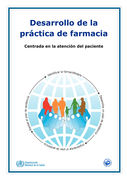
Spanish version of "Developing Pharmacy Practice" - WHO/FIP Joint handbook -
Este manual de introducción marca un nuevo paradigma en la práctica de farmacia. Intenta guiar a los formadores en atención farmacéutica para educar a los estudiantes de farmacia y a los farmacéuticos ya estableci
...

This document introduces four strategic objectives and twelve operational principles for good pharmaceutical procurement. These objectives and principles have been developed and endorsed by the Interagency Pharmaceutical Coordination Group (IPC), involving the pharmaceutical advisers of the United
...
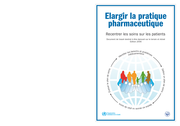
French version of "Developing Pharmacy Practice" - WHO/FIP Joint handbook - Ce manuel expose un nouveau paradigme de pratique pharmaceutique. Il a pour but de guider les enseignants en pharmacie pour qu’ils intègrent cette nouvelle pratique pharmaceutique, de former les étudiants
...

The MSF qualification scheme is concerned with the pharmaceutical quality assessment for drugs. This procedure is applicable to products for international supply, i.e. products supplied through the MSF procurement centres. This qualification procedure is not applicable for local purchase, i.e. purch
...

Q9: What is/are the effective and safe interventions to treat somatoform disorders in children and adolescents in non- specialist health settings?

BUKO Pharma-Kampagne has investigated the causes and consequences of antibiotic resistance in India, South Africa, Tanzania and Germany. Together with our partners we collected data and did interviews with numerous stakeholders. The outcome is presented in a brochure that is now available in English
...
Accessed on 15.08.2022
La farmacovigilancia es una herramienta que permite la detección, evaluación, conocimiento y prevención de efectos adversos y/o inesperados de los medicamentos que se prescriben. También facilita la detección de fallas de respuesta terapéutica por deficiencias de calid
...

The Pharmaceutical Forum of the Americas (PFA) has previously published guidelines and organised campaigns for community pharmacists on the prevention, detection and control of arbovirus infections in 2018 with a grant from the FIP Foundation for Pharmacy Education and Research. Building on that exp
...

Global UNIDO Project: Strengthening the local production of essential generic drugs in the least developed and developing countries
WHO Technical Report Series, No. 961, 2011, Annex 8 - These guidelines are intended to provide a description of ways in which pharmacists can improve access to health care, health promotion and the use of medicines on behalf of the patients they serve. The role of FIP is to provide leadership for na
...

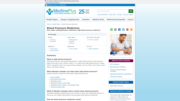
On this website you can find information on high blood pressure, how to lower it and how blood pressure medicines work.
ATLAS on substance use (2010)— Resources for the prevention and treatment of substance use disorder
Accessed: 14.03.2019


Q 12: In children and adolescents with anxiety disorders, what is the effectiveness and safety, considering system issues in low- and middle-income countries, of using pharmacological interventions in non-specialist settings?
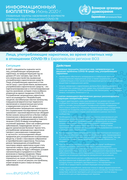
Информационный бюллетень Июнь 2020 г.
Уязвимые группы населения в контексте ответных мер в отношении COVID-19
Vulnerable populations during COVID-19 response - Drug users

Pharmacy Toolbox
recommended
Please find all relevant guidelines and information in our new Pharmacy Toolbox.
The PHARMACY TOOLBOX is a comprehensive knowledge repository to provide its users with practical, up-to-date information on medicines and good pharmaceutical practices. It collates basic documents on (essential) medici
...
Approximately 80% of the 463 million adults worldwide with diabetes live in low-income and middle-income countries (LMICs). A major obstacle to designing evidence-based policies to improve diabetes outcomes in LMICs is the scarce availability of nationally representative data on the current patterns
...
