Filter
792
Text search:
World
Health
Organization
WHO,
FAO
Featured
53
212
Language
Document type
284
242
109
68
40
19
11
8
4
3
1
1
1
Countries
45
24
18
15
14
14
14
13
13
13
12
11
9
9
9
8
8
7
7
7
7
7
7
7
7
6
6
6
5
5
5
5
4
4
4
4
4
4
4
4
3
3
3
3
3
3
3
3
3
3
3
3
3
3
3
3
3
3
2
2
2
2
2
2
2
2
2
2
2
2
2
2
2
1
1
1
1
1
1
1
1
1
1
1
1
1
1
1
1
1
1
1
1
1
1
1
1
1
1
1
1
1
1
1
1
1
1
1
1
1
Authors & Publishers
Publication Years
Category
237
95
35
28
24
8
2
Toolboxes
149
131
60
47
42
33
27
25
20
19
8
7
7
6
6
5
5
5
4
4
3
3
2
1
1
1
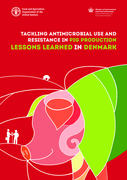
This publication describes an arduous campaign to tackle the use of antimicrobials - specifically antibiotics - in the Danish swine-producing sector thanks to the collaboration between the regulatory sector within the Ministry of Environment and Food, private veterinary practitioners and swine produ
...

An interdisciplinary approach to address global health challenges such as the Covid-19 pandemic, climate change, loss of biodiversity, human migration has been framed by the One Health approach. Thi
...

An emerging framework for achieving synergies among the Sendai Framework, the 2030 Agenda for Sustainable Development, the New Urban Agenda and the Paris Agreement. This paper discusses the potential of the Health Emergency and Disaster Risk M
...

Since the release of the first volume in May 2020, the COVID-19 pandemic has continued to rage around the world. By mid-March, 2021, countries around the globe had reported over 123 million cases—a nearly five-fold increase since this report’s p
...
English Analysis on World about Food and Nutrition and Epidemic; published on 13 Dec 2021 by FAO
Recommendations to develop guidelines on community-based rehabilitation (CBR) were made during the International Consultation to Review Community-based Rehabilitation which was held in Helsinki, Finland in 2003. WHO; the International Labour
...
A joint FAO/WFP update for the United Nations Security Council, January 2018. ISSUE N.3. Six months on from the last joint report for the United
Nations Security Council (UNSC), this report by the
Food and Agriculture
...

Antimicrobials are precious agents for combating infectious diseases and had saved millions of lives throughout the world. However, the current trend of increasing antimicrobial resistance (AMR) has become a global
...

Antimicrobial resistant (AMR) organisms are increasing globally, threatening to render existing treatments ineffective against many infectious diseases. In Africa, AMR has already been documented to be a problem for HIV and the pathogens that cause malaria, tuberculosis, typhoid, cholera, meningitis
...

Biology, Diagnosis and Treatment, Epidemiology and Prevention

Deeply concerned by the morbidity and mortality caused by the COVID-19 pandemic, the negative impacts on physical and mental health and social well-being, the negative impacts on economies and societies and the consequent exacerb
...
The situation in South Sudan has proven to be unpredictable and volatile. New hotspots of violent conflict and civil unrest have continued to emerge and levels of severe acute food insecurity have become progressively worse. In addition to years of fighting and political instability, the country fac
...
Updated version June 2015

This revised trainer's guide contains a prototype training schedule for four days. Teaching and learning strategies are highly interactive, using participatory and experiential approach. Training outcomes include developing skills in assessment of clients for risk factors; conduct basic screening pr
...
Considerations for public health and social measures in the workplace in the context of COVID-19
recommended
Annex to Considerations in adjusting public health and social measures in the context of COVID-19
The escalating antimicrobial resistance (AMR) pandemic is a global public health threat with extensive health, economic and societal implications. Resistance emerges because of selection pressure fr
...

Supporting the food and agriculture sectors in implementing the Global Action Plan on Antimicrobial Resistance to minimize the impact of antimicrobial resistance