
Filter
1384
Text search:
UNAIDS
Featured
110
449
Language
Document type
820
219
147
58
52
40
20
11
6
5
1
Countries
57
54
46
46
40
40
39
30
30
29
28
27
26
26
26
25
22
17
17
16
16
15
15
15
14
14
14
14
14
13
12
12
12
11
10
10
9
8
7
7
7
6
6
5
5
5
5
5
5
4
4
4
3
3
3
3
3
3
3
2
2
2
2
2
2
2
2
2
2
2
1
1
1
1
1
1
1
1
1
1
1
1
1
1
1
1
1
1
1
1
1
1
1
1
1
1
1
Authors & Publishers
Publication Years
Category
694
80
65
45
30
23
2
1
Toolboxes
264
100
58
43
36
30
25
17
15
15
13
13
13
8
8
8
5
5
4
4
3
3
2


Краткое содержание лекций семинара. На семинаре обсуждались ключевые проблемы в регионе, связанные с заболеваемостью ВИЧ, туберкулезом и гепатитом у людей, употре
...
Specific Issues and a Model of Care
Accessed; 08.10.2019


Female genital mutilation/cutting (FGM/C) refers to “all procedures involving partial or total removal of the female external genitalia or other injury to the female genital organs for non-medical reasons.”1 FGM/C is a violation of girls’ and women’s human rights and is condemned by many int
...

Female genital mutilation/cutting (FGM/C) refers to “all procedures involving partial
or total removal of the female external genitalia or other injury to the female
genital organs for non-medical reasons.”FGM/C is a violation of girls’ and women’s
human rights and is condemned by many in
...

Accessed: 29.02.2020
The United Nations Network on Migration is committed to supporting all partners in pursuit of the implementation of the Global Compact for Safe, Orderly and Regular Migration, recognizing that this cooperative framework provides an invaluable tool for ensuring inclusive, collective responses to COVI
...

The Millennium Development Goals (MDGs) showed
that global commitment and collective action
could significantly reduce the disease burdens of
three deadly communicable diseases: HIV/AIDS,
tuberculosis (TB) and malaria. The MDGs helped
focus efforts on these three deadly diseases
and leveraged
...

La sensibilisation contre le VIH/sida en Afrique de l'Ouest - Aspects linguistiques et communicatifs
Je motive d'abord le choix du corpus et en vous donnant de plus amples informations sur les données et leur contexte linguistique (chap. 2). Ensuite je passerai à la partie de nos recherches qui est consacrée aux 3 différents types de discours et j'illustrerai mon propos à l'aide de quelques ex
...

An evidence-informed approach for non-formal, out-of-school CSE programmes that aims to reach young people from left-behind populations
This guidance is intended to assist anyone designing and/or implementing CSE in out-of-school settings, especially in low- and middle-income countries. This includ
...

These guidelines provide a framework for effective action to facilitate access to safe and ethical
testing services for different population groups. The implementation of the a comprehensive
approach, known as HIV Testing Services (HTS) is cardinal as an effective package of services
that diminis
...

A variety of international organizations are involved in mobilizing resources from both public and private
sources and using them to extend development assistance to low-and middle-income countries around the world. They provide country-focused financial and technical assistance to developing count
...

A year ago, the second Special Session of the World Health Assembly (WHASS) unanimously agreed to start a diplomatic process for a new binding instrument aimed at ensuring the international community is better prepared for the next health emergencies. The establishment of an Intergovernmental Negoti
...
As the Group of Eight (G8) world leaders meet in Saint Petersburg, Russia for this year’s G8 Summit, it is important to take stock of international efforts to finance the response to the global HIV/AIDS epidemic. Financing a sufficient and sustained response to the epidemic has emerged as one of t
...

WFP in Namibia collaborated with partners to strategically transition from emergency food relief interventions towards transformative and sustainable food systems assistance. As part of this plan, WFP aims to transfer management of these projects to the Namibian government, thereby contributing to t
...
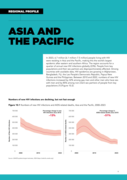
In 2023, 6.7 million [6.1 million–7.5 million] people living with HIV were residing in Asia and the Pacific, making this the world’s largest epidemic after eastern and southern Africa. The region accounts for a quarter of annual new HIV infections globally (23%). People from key populations and
...
Presentation Slides
39th African Union (AU) Summit, Addis Ababa, Ethiopia, February 2026
