
Filter
349
Text search:
MDG
Featured
Recommendations
26
New Publications
154
Language
Document type
No document type
286
Studies & Reports
32
Guidelines
10
Manuals
6
Strategic & Response Plan
6
Training Material
3
Situation Updates
3
Resource Platforms
1
Infographics
1
Fact sheets
1
Countries / Regions
Nepal
21
Ethiopia
18
Malawi
17
Sierra Leone
15
Rwanda
13
Kenya
12
Bangladesh
12
Myanmar / Burma
12
Liberia
11
Nigeria
11
Ghana
10
India
9
Zambia
9
Global
9
Asia
8
Tanzania
7
South Africa
7
Philippines
6
Cambodia
5
Indonesia
5
Uganda
4
Lesotho
4
Latin America and the Carribbean
4
Guinea
3
Namibia
3
East and Southern Africa
3
Western and Central Europe
3
Senegal
2
Cameroon
2
Zimbabwe
2
Pakistan
2
Botswana
2
West and Central Africa
2
Middle East and North Africa
2
South–East Asia Region
2
Burkina Faso
1
Congo, Democratic Republic of
1
Niger
1
South Sudan
1
Afghanistan
1
Germany
1
Lebanon
1
Thailand
1
Mozambique
1
Benin
1
Eswatini/ Swaziland
1
Madagascar
1
Sri Lanka
1
Eastern Europe and Central Asia
1
Other region
1
Africa
1
Bhutan
1
Eastern Europe
1
Moldova
1
Authors & Publishers
Publication Years
Category
Countries
210
Key Resources
22
Women & Child Health
21
Public Health
9
Clinical Guidelines
8
Capacity Building
1
Pharmacy & Technologies
1
Toolboxes
Disability
20
HIV
19
TB
16
Global Health Education
11
Caregiver
8
Health Financing Toolbox
8
Ebola & Marburg
6
Planetary Health
6
AMR
5
Natural Hazards
4
Mental Health
4
Pharmacy
4
Cholera
2
Rapid Response
2
COVID-19
2
Social Ethics
2
NTDs
2
2.0 Rapid Response
2
Polio
1
NCDs
1
This guideline provides global, evidence-informed recommendations on a number of specific issues related to the management of severe acute malnutrition in infants and children, including in the context of HIV.


South Africa has faced many challenges over the past two decades, accomplishing profound positive changes in the social structure and government of the nation. This has not yet fully translated into better health for the population, however, particularly the poorest segment. In fact, the p
...

The power relations around global decisions which shape population health can be changed through new alliances and information flows. The Democratising Global Health Governance Initiative, of which WHO Watch is a project, is designed to contribute to improved population health (and health equity) th
...



The Open AIDS Journal, 2012, 6, 245-258

Antimicrobial resistance (AMR) is an important public health concern shared by developed and developing countries. In developing countries the burden of infectious diseases is greater and exacerbated by limited access to, and availability and affordability of, antimicrobials required to treat infect
...

The Millennium Development Goals (MDGs) showed
that global commitment and collective action
could significantly reduce the disease burdens of
three deadly communicable diseases: HIV/AIDS,
tuberculosis (TB) and malaria. The MDGs helped
focus efforts on these three deadly diseases
and leveraged
...


This special issue on Newborn Health in Global Health Action is being launched to share the experience of how to scale up a cost-effective package of newborn care that involves families, community health workers and health facilities. The results of this community randomized trial, the Uganda Newbor
...

The management of information and logistics is an essential component of health product systems. In a context of limited financial resources and morbidity and mortality sustained by persistent diseases, it is necessary to strengthen health systems through competent resources, especially human resour
...

20-22 July 2015, Monrovia, Liberia
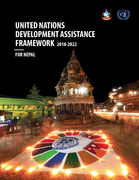
The United Nations Development Assistance Framework (UNDAF) 2018-2022 sets out the UN partnership aiming to support Nepal as it carves out its development agenda over the next five years. At the core of this new UNDAF are the SDGs, the Government of Nepal’s Fourteenth Plan, and international commi
...
