
Filter
401
Text search:
ayuda
humanitaria
Featured
63
127
Language
Document type
225
45
45
40
21
8
5
4
2
2
1
1
1
Countries
38
20
18
14
11
10
9
7
6
6
6
5
5
5
5
5
4
4
4
3
3
3
2
2
2
2
2
2
2
2
2
2
2
2
2
1
1
1
1
1
1
1
1
1
1
1
1
1
1
1
1
1
1
1
Authors & Publishers
Publication Years
Category
232
93
31
26
12
7
Toolboxes
51
41
34
29
14
11
8
8
5
5
5
4
3
3
3
2
2
2
2
1
1
1
to unzip and transfer to a USB or a smartphone (open with the start.html file
New E-learning on health care responsibilities in times of conflict
Are you a doctor wondering how to interact with the media, or a nurse wondering how to treat patient information in difficult circumstances? Are you an ambulance driver unsure of what your responsibilities are? Are you a hospital a
...
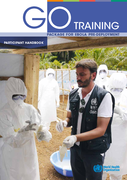
GO pre-deployment training: participant handbook
recommended
This is a pre-deployment training, tailored specially to the Ebola outbreak in West Africa, offered to WHO personnel, consultants, and key partners. The material covered in modules 1-4 is applicable and useful to frontline response workers, national and international. Only Module 5, which focuses on
...
All personnel deployed by the World Health Organization (WHO) to any type of public health or humanitarian emergency need to have basic knowledge and skills to perform effectively and safely. That is why it is essential to be trained prior to deployment. GO training is a comprehensive package of mod
...
A guide for health professionals in low-resource settings, Infection Prevention and Control is a must-have manual for nurses, doctors, and health administrators, and especially those in resource-limited settings
Based on our experience of the COVID-19 spread in South Africa we have written a learni
...
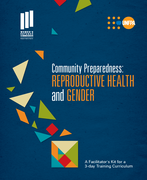
This provisional Facilitator's Kit provides a complete framework for a 3-day training on Community Preparedness for Reproductive Health and Gender. The goal is to build community capacity to prepare and respond to risks and inequities faced by women and girls during emergencies.
The Building a Better Response (BBR) project aims to enhance the capacity of national and international NGO workers and other humanitarian actors to engage with the international humanitarian coordination system in a manner that improves overall coordination and responds to the needs of crisis-affec
...
This note sets out actions to be undertaken throughout the humanitarian programme cycle (HPC) to fulfill commitments on Accountability to Affected Populations (AAP) and to ensure that protection is central to humanitarian response. It sets out the fundamental link between accountability systems and
...

Gender and security is a complex issue, and this research found that there are different levels of comprehension of what it means in humanitarian and development assistance practice. The aims of the paper are twofold: to raise general awareness about gender and how it relates to security risk manage
...
Genre et Sécurité : Orientations pour l’intégration du genre à la gestion des risques de sécurité propose aux ONG des lignes directrices complémentaires pour intégrer la dimension genre à la gestion des risques de sécurité, afin de combler un vide dans les publications existantes et dâ€
...
Large File 27 MB. Please download directly.
Medical Peace Work is an emerging field of expertise in health work, violence prevention, and peace-building. These interactive cases will introduce you to some of the key concepts, opportunities and dilemmas in the peace health field. These audio-visual teaching case are intended to be used as the
...
The Facilitator's Guide has been piloted in Borno (Nigeria) and in Fafan zone (Somali region, Ethiopia) and improved iteratively after each test.
What does the ROAP have that you won't find in other methodologies?
It is based on holistic, people-centred approaches that span across sectors an
...
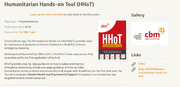
A smartphone app, the Humanitarian Hands-on Tool (HHoT), provides step-by-step practical guidance on how to implement a disability inclusive emergency response.
Developed and launched by CBM in 2017, the HHoT is free, easy to use, fully accessible and is the first application of its kind.
HHoT pr
...
The community engagement hub is a platform for the International Red Cross and Red Crescent Movement, designed to help us put communities at the heart of what we do.
The hub offers a range of learning materials, tools and guidance to support you to mainstream community engagement and accountabili
...
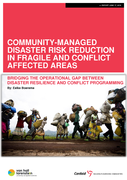
Bridging the gap between disaster resilience and conflict risk reduction
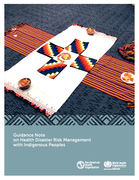
For centuries, indigenous peoples around the world have used their traditional knowledge to prepare for, cope with and survive disasters. Their methods and practices originated within their communities and have been maintained and passed down over generations. Until recently, policy makers have larg
...
Key Resources Humanitarian Aid
recommended
MEDBOX Issue Brief no. 6
This issue brief gives you an overview of the most important documents on humanitarian aid and the WASH sector in MEDBOX
