
Filter
422
Text search:
WHO
South-East
Asia
New
Delhi
Featured
Recommendations
40
New Publications
116
Language
Document type
No document type
222
Studies & Reports
75
Guidelines
61
Manuals
27
Strategic & Response Plan
18
Training Material
7
Fact sheets
5
Infographics
3
Situation Updates
2
Brochures
1
Resource Platforms
1
Countries / Regions
India
60
South–East Asia Region
44
Asia
28
Global
20
Nepal
16
Myanmar / Burma
9
Philippines
6
Thailand
6
Indonesia
6
Bangladesh
5
Ghana
3
Kenya
3
Tanzania
3
Cambodia
3
Sri Lanka
3
Ethiopia
2
China
2
South Africa
2
Western and Central Europe
2
Laos
2
Russia
2
Vietnam
2
Senegal
1
USA
1
Somalia
1
Pakistan
1
Afghanistan
1
Malaysia
1
Singapore
1
Brazil
1
Ecuador
1
East and Southern Africa
1
Western Pacific Region
1
Latin America and the Carribbean
1
Other region
1
Paraguay
1
Africa
1
Bhutan
1
North Korea
1
Timor Leste/ East Timor
1
Iran
1
Bosnia and Herzegovina
1
Authors & Publishers
Publication Years
Category
Countries
111
Clinical Guidelines
62
Public Health
42
Women & Child Health
42
Key Resources
17
Capacity Building
15
Pharmacy & Technologies
6
Toolboxes
NTDs
42
Mental Health
36
TB
31
HIV
28
Caregiver
23
Planetary Health
18
Global Health Education
15
AMR
15
COVID-19
15
Rapid Response
12
NCDs
11
Disability
10
Pharmacy
8
Malaria
6
2.0 Rapid Response
5
Ebola & Marburg
4
Natural Hazards
3
Specific Hazards
3
Cholera
2
Polio
2
Conflict
2
Refugee
1
Zika
1

The World Health Organization (WHO) and United NationsHuman Settlements Programme (UN-HABITAT) joint globalreport, Hidden cities: unmasking and overcoming healthinequities in urban settings, exposes the extent to whichcertain city dwellers suffer di
...
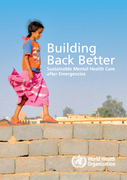
Emergencies, in spite of their tragic nature and adverse effects on mental health, are unparalleled opportunities to build better mental health systems for all people in need. This WHO publication shows how this was done in 10 diverse emergency-affe
...

Pneumonia and diarrhoea account for 23% of under-five mortality and were responsible for an estimated 1.17 million deaths in children under five globally. Furthermore, pneumonia and diarrhoea were responsible for 18% of mortality in children 5–9 years of age, resulting in an estimated 86 000 preve
...

The World Health Organization’s comprehensive antenatal care (ANC) guideline WHO recommendations on antenatal care for a positive pregnancy experience was published in 2016 with the objective of improving the quality of routine health care that al
...
Interium guidance, 25 June 2021Timely and accurate diagnostic testing is an essential tool in preventing and controlling the spread of COVID-19. This document describes recommendations for national testing strategies and the use of PCR and rapid antigen tests in different transmission scenarios of t
...
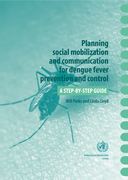
A Step-by-Step Guide.
It is intended for health planners, dengue or vector control programme managers and individuals, nongovernmental organizations (NGOs) and other agencies with interests and/or expertise in developing biological, chemical, environmental and communication interventions to prevent
...
This document provides guidance for countries on how to implement activities to achieve the interruption of yaws transmission. It is intended for use by national yaws eradication programmes, partners involved in the implementation of yaws eradication activities and
...
This document sets out the criteria and procedures to be followed by countries in verifying the interruption of yaws transmission. It is intended for use by international verification teams, national yaws eradication programmes and WHO technical sta
...

This document is for public health specialists, health emergency responders, clinicians, health facility managers, health and care workers and IPC practitioners including but not limited to those working in primary care clinics, sexual health clinics, emergency departments, dental practices, infecti
...
Community health nurses have the potential to make significant contributions to meet the health care needs of various population groups in a variety of community settings. In order to assess the extent to which CHNs are achieving this potential, WHO
...
Eradication of yaws in India | Éradication du pian en Inde - 17 April 2015, 90th Year / 17 Avril 2015, 90e Année | No. 16, 2015, 90, 161–168 | http://www.who.int/wer

Water, sanitation and hygiene (WASH) are critical in the prevention and care for all of the 17 neglected tropical diseases (NTDs) scheduled for intensified control or elimination by 2020.
Provision of safe water, sanitation and hygiene is one of the five key interventions within the global NTD ...
Provision of safe water, sanitation and hygiene is one of the five key interventions within the global NTD ...
This report on global leishmaniasis surveillance follows those published in 2016–2023.2–6 Six indicators of leishmaniasis are publicly available from the Global Health Observatory (GHO).7 In addition to the GHO, country profiles with up to 30 indicators are published, with detailed data received
...
Managing possible serious bacterial infection in young infants when referral is not feasible
recommended
It provides guidance on care for use in resource-limited settings or in settings where families with sick young infants do not accept or cannot access referral care, but can be managed in outpatient settings by an appropriately trained health worker. The guideline seeks to provide programmatic guida
...

The WHO document "Integrating the prevention and control of noncommunicable diseases in HIV/AIDS, tuberculosis, and sexual and reproductive health programmes: implementation guidance" provides a framework for integrating noncommunicable diseases (NC
...


The purpose of the landscape analysis is ultimately to facilitate improved engagement of private providers, thereby contributing to universal access to quality and affordable TB care and the end of the TB epidemic. It focuses on the role of private for-profit providers and on specific challenges and
...
Exposure to air pollution has significant adverse health effects, leading to nearly 1 in every 8 deaths globally. Air pollution affects all age groups, from unborn children to older people, in both high- and low-income nations.
