
Filter
2545
Text search:
Resource
Bank
Featured
195
770
Language
2479
42
38
35
33
17
13
5
4
3
3
3
3
2
2
2
1
1
1
1
1
1
1
1
1
1
1
1
1
1
1
Document type
1410
560
222
139
129
34
23
16
9
1
1
1
Countries
161
115
84
70
69
68
63
55
55
54
51
48
47
40
34
34
32
31
30
24
23
21
21
20
20
20
20
19
17
17
16
16
16
15
14
14
14
12
12
12
11
10
9
8
8
7
7
7
7
6
6
5
5
5
5
5
5
5
4
4
4
4
4
4
4
4
4
4
4
3
3
3
3
2
2
2
2
2
2
2
2
2
2
2
2
2
2
2
2
2
2
2
2
2
2
1
1
1
1
1
1
1
1
1
1
1
1
1
1
1
1
1
1
1
1
1
1
1
1
1
Authors & Publishers
314
85
84
78
77
46
46
39
32
26
24
16
15
15
14
11
11
11
11
10
10
9
9
9
9
9
8
8
8
8
8
8
7
7
7
7
7
7
7
7
7
7
6
6
6
6
6
6
6
6
6
6
6
6
5
5
5
5
5
5
5
5
5
5
5
5
5
5
5
5
5
5
5
5
5
5
5
4
4
4
4
4
4
4
4
4
4
4
4
4
4
4
4
4
4
4
4
4
4
4
4
4
3
3
3
3
3
3
3
3
3
3
3
3
3
3
3
3
3
3
3
3
3
3
3
3
3
3
3
3
3
3
3
3
3
3
3
3
3
3
3
3
3
3
3
3
3
3
3
3
3
3
3
3
3
3
3
2
2
2
2
2
2
2
2
2
2
2
2
2
2
2
2
2
2
2
2
2
2
2
2
2
2
2
2
2
2
2
2
2
2
2
2
2
2
2
2
2
2
2
2
2
2
2
2
2
2
2
2
2
2
2
2
2
2
2
2
2
2
2
2
2
2
2
2
2
2
2
2
2
2
2
2
2
2
2
2
2
2
2
2
2
2
2
2
2
2
2
2
2
2
2
2
2
2
2
2
2
2
2
2
2
2
2
2
2
2
2
2
2
2
2
2
2
2
2
2
2
2
2
2
2
2
2
2
2
2
2
2
2
2
1
1
1
1
1
1
1
1
1
1
1
1
1
1
1
1
1
1
1
1
1
1
1
1
1
1
1
1
1
1
1
1
1
1
1
1
1
1
1
1
1
1
1
1
1
1
1
1
1
1
1
1
1
1
1
1
1
1
1
1
1
1
1
1
1
1
1
1
1
1
1
1
1
1
1
1
1
1
1
1
1
1
1
1
1
1
1
1
1
1
1
1
1
1
1
1
1
1
1
1
1
1
1
1
1
1
1
1
1
1
1
1
1
1
1
1
1
1
1
1
1
1
1
1
1
1
1
1
1
1
1
1
1
1
1
1
1
1
1
1
1
1
1
1
1
1
1
1
1
1
1
1
1
1
1
1
1
1
1
1
1
1
1
1
1
1
1
1
1
1
1
1
1
1
1
1
1
1
1
1
1
1
1
1
1
1
1
1
1
1
1
1
1
1
1
1
1
1
1
1
1
1
1
1
1
1
1
1
1
1
1
1
1
1
1
1
1
1
1
1
1
1
1
1
1
1
1
1
1
1
1
1
1
1
1
1
1
1
1
1
1
1
1
1
1
1
1
1
1
1
1
1
1
1
1
1
1
1
1
1
1
1
1
1
1
1
1
1
1
1
1
1
1
1
1
1
1
1
1
1
1
1
1
1
1
1
1
1
1
1
1
1
1
1
1
1
1
1
1
1
1
1
1
1
1
1
1
1
1
1
1
1
1
1
1
1
1
1
1
1
1
1
1
1
1
1
1
1
1
1
1
1
1
1
1
1
1
1
1
1
1
1
1
1
1
1
1
1
1
1
1
1
1
1
1
1
1
1
1
1
1
1
1
1
1
1
1
1
1
1
1
1
1
1
1
1
1
1
1
1
1
1
1
1
1
1
1
1
1
1
1
1
1
1
1
1
1
1
1
1
1
1
1
1
1
1
1
1
1
1
1
1
1
1
1
1
1
1
1
1
1
1
1
1
1
1
1
1
1
1
1
1
1
1
1
1
1
1
1
1
1
1
1
1
1
1
1
1
1
1
1
1
1
1
1
1
1
1
1
1
1
1
1
1
1
1
1
1
1
1
1
1
1
1
1
1
1
1
1
1
1
1
1
1
1
1
1
1
1
1
1
1
1
1
1
1
1
1
1
1
1
1
1
1
1
1
1
1
1
1
1
1
1
1
1
1
1
1
1
1
1
1
1
1
1
1
1
1
1
1
1
1
1
1
1
1
1
1
1
1
1
1
1
1
1
1
1
1
1
1
1
1
1
1
1
1
1
1
1
1
1
1
1
1
1
1
1
1
1
1
1
1
1
1
1
1
1
1
1
1
1
1
1
1
1
1
1
1
1
1
1
1
1
1
1
1
1
1
1
1
1
1
1
1
1
1
1
1
1
1
1
1
1
1
1
1
1
1
1
1
1
1
1
1
1
1
1
1
1
1
1
1
1
1
1
1
1
1
1
1
1
1
1
1
1
1
1
1
1
1
1
1
1
1
1
1
1
1
1
1
1
1
1
1
1
1
1
1
1
1
1
1
1
1
1
1
1
1
1
1
1
1
1
1
1
1
1
1
1
1
1
1
1
1
1
1
1
1
1
1
1
1
1
1
1
1
1
1
1
1
1
1
1
1
1
1
1
1
1
1
1
1
1
1
1
1
1
1
1
1
1
1
1
1
1
1
1
1
1
1
1
1
1
1
1
1
1
1
1
1
1
1
1
1
1
1
1
1
1
1
1
1
1
1
1
1
1
1
1
1
1
1
1
1
1
1
1
1
1
1
1
1
1
1
1
1
1
1
1
1
1
1
1
1
1
1
1
1
1
1
1
1
1
1
1
1
1
1
1
1
1
1
1
1
1
1
1
1
1
1
1
1
1
1
1
1
1
1
1
1
1
1
1
1
1
1
1
1
1
1
1
1
1
1
1
1
1
1
1
1
1
1
1
1
1
1
1
1
1
1
1
1
1
1
1
1
1
1
1
1
1
1
1
1
1
1
1
1
1
1
1
1
1
1
1
1
1
1
1
1
1
1
1
1
1
1
1
1
1
1
1
1
1
1
1
1
1
1
1
1
1
1
1
1
1
1
1
1
1
1
1
1
1
1
1
1
1
1
1
1
1
1
1
1
1
1
1
1
1
1
1
1
1
1
1
1
1
1
1
1
1
1
1
1
1
1
1
1
1
1
1
1
1
1
1
1
1
1
1
1
1
1
1
1
1
1
1
1
1
1
1
1
1
1
1
1
1
1
1
1
1
1
1
1
1
1
1
1
1
1
1
1
1
1
1
1
1
1
1
1
1
1
1
1
1
1
1
1
1
1
1
1
1
1
1
1
1
1
1
1
1
1
1
1
1
1
1
1
1
1
1
1
1
1
1
1
1
1
1
1
1
1
1
1
1
1
1
1
1
1
1
1
1
1
1
1
1
1
1
1
1
1
1
1
1
1
1
1
1
1
1
1
1
1
1
1
1
1
1
1
1
1
1
1
1
1
1
1
1
1
1
1
1
1
1
1
1
1
1
1
1
1
1
1
1
1
1
1
1
1
1
1
1
1
1
1
1
1
1
1
1
1
1
1
1
1
1
1
1
1
1
1
1
1
1
1
1
1
1
1
1
1
1
1
1
1
1
1
1
1
1
1
1
1
1
1
1
1
1
1
1
1
1
1
1
1
1
1
1
1
1
1
1
1
1
1
1
1
1
1
1
1
1
1
1
1
1
1
1
1
1
1
1
1
1
1
1
1
1
1
1
1
1
1
1
1
1
1
1
1
1
1
1
1
1
1
1
1
1
1
1
1
1
1
1
1
1
1
1
1
1
1
1
1
1
1
1
1
1
1
1
1
1
1
1
1
1
1
1
1
1
1
1
1
1
1
1
1
1
1
1
1
1
1
1
1
1
1
1
1
1
1
1
1
1
1
1
1
1
1
1
1
1
1
1
1
1
1
1
1
1
1
1
1
1
1
1
1
1
1
1
1
1
1
1
1
1
1
1
1
1
1
1
1
1
1
1
1
1
1
1
1
1
1
1
1
1
1
1
1
1
1
1
1
1
1
1
1
1
1
1
1
1
1
1
1
1
1
1
1
1
1
1
1
1
1
1
1
1
1
1
1
1
1
1
1
1
1
1
1
1
1
1
1
1
1
1
1
1
1
1
1
1
1
1
1
1
1
1
1
1
1
1
1
1
1
1
1
1
1
1
1
1
1
1
1
1
1
1
1
1
1
1
1
1
1
1
1
1
1
1
1
1
1
1
1
1
1
1
1
1
1
1
1
1
1
1
1
1
1
1
1
1
1
1
1
1
1
1
1
1
1
1
1
1
1
1
1
1
1
1
1
1
1
1
1
1
1
1
1
1
1
1
1
1
1
1
1
1
1
1
1
1
1
1
1
1
1
1
1
1
1
1
1
1
1
1
1
1
1
1
1
1
1
1
1
1
1
1
1
1
1
1
1
1
1
1
1
1
1
1
1
1
1
1
1
1
1
1
1
1
1
1
1
1
1
1
1
1
1
1
1
1
1
1
1
1
1
1
1
1
1
1
1
1
1
1
1
1
1
1
1
1
1
1
1
1
1
1
1
1
1
1
1
1
1
1
1
1
1
1
1
1
1
1
1
1
1
1
1
1
1
1
1
1
1
1
1
1
1
1
1
1
1
1
1
1
1
1
1
1
1
1
1
1
1
1
1
1
1
1
1
1
1
1
1
1
1
1
1
1
1
1
1
1
1
1
1
1
1
1
1
1
1
1
1
1
1
1
1
1
1
1
1
1
1
1
1
1
1
1
1
1
1
1
1
1
1
1
1
1
1
1
1
1
1
1
1
1
1
1
1
1
1
1
1
1
1
1
1
1
1
1
1
1
1
1
1
1
1
1
1
1
1
1
1
1
1
1
1
1
1
1
1
1
1
1
1
1
1
1
1
1
1
1
1
1
1
1
1
1
1
1
1
1
1
1
1
1
1
1
1
1
1
1
1
1
1
1
1
1
1
1
1
1
1
1
1
1
1
1
1
1
1
1
1
1
1
1
1
1
1
1
1
1
1
1
1
1
1
1
1
1
1
1
1
1
1
1
1
1
1
1
1
1
1
1
1
1
1
1
1
1
1
1
1
1
1
1
1
1
1
1
1
1
1
1
1
1
1
1
1
1
1
1
1
1
1
1
1
1
1
1
1
1
1
1
1
1
1
1
1
1
1
1
1
1
1
1
1
1
1
1
1
1
1
1
1
1
1
1
1
1
1
1
1
1
1
1
1
1
1
1
1
1
1
1
1
1
1
1
1
1
1
1
1
1
1
1
1
1
1
1
1
1
1
1
1
1
1
1
1
1
1
1
1
1
1
1
1
1
1
1
1
1
1
1
1
1
1
1
1
1
1
1
1
1
1
1
1
1
1
1
1
1
1
1
1
1
1
1
1
1
1
1
1
1
1
1
1
1
1
1
1
1
1
1
1
1
1
1
1
1
1
1
1
1
1
1
1
1
1
Publication Years
757
1585
197
5
1
Category
1051
211
166
145
126
38
11
Toolboxes
182
174
156
134
112
81
80
78
65
63
59
53
52
41
38
37
29
27
25
24
8
8
7
7
5
2
2

Background:Neonatal mortality accounts for 43% of global under-five deaths and is decreasing more slowly than maternal or child mortality. Donor funding has increased for maternal, newborn, and child health (MNCH), but no analysis to date has disaggregated aid for newborns. We evaluated if and how a
...
id flows for newborn care can be tracked, examined changes in the last decade, and considered methodological implications for tracking funding for specific population groups or diseases. MethodsandFindings:We critically reviewed and categorised previous analyses of aid to specific populations, diseases, or types of activities. We then developed and refined key terms related to newborn survival in seven languages and searched titles and descriptions of donor disbursement records in the Organisation for Economic Co-operation and Development’s Creditor Reporting System database, 2002–2010. We compared results with the Countdown to 2015 database of aid for MNCH (2003–2008) and the search strategy used by the Institute for Health Metrics and Evaluation. Prior to 2005, key terms related to newborns were rare in disbursement records but their frequency increased markedly thereafter. Only two mentions were found of ‘‘stillbirth’’ and only nine references were found to ‘‘fetus’’ in any spelling variant or language
more

Over the 20 years that followed, this unique partnership has invested more than US$53 billion, saving 44 million lives and reducing the combined death rate from the three diseases by more than half in the countries in which the Global Fund invests.
The definition of Official Development Assistance (ODA) has for 40 years been the global standard for measuring donor efforts in supporting development co-operation objectives. It has provided the yardstick for documenting the volume and the terms of the concessional resources provided, assessing do
...
nor performance against their aid pledges and enabling partner countries, civil society and others to hold donors to account. Yet for all its value, the ODA definition has always reflected a compromise between political expediency and statistical reality. It is based on interpretation and consensus and therefore allows for flexibility. It has evolved over the decades, while preserving the original concepts of a definition based on principal developmental motivation, official character and a degree of concessionality. While agreement on the ODA concept was a major achievement, discussion of the appropriateness of this measure has never ended. The paper documents the evolution of the ODA concept and proposes a possible new approach to measuring aid effort.
more

This report makes clear that there is a path to end AIDS. Taking that path will help ensure preparedness to address other pandemic challenges, and advance progress across the Sustainable Development Goals. The data and real-world examples in the report make it very clear what that path is. It is not
...
a mystery. It is a choice. Some leaders are already following the path—and succeeding. It is inspiring to note that Botswana, Eswatini, Rwanda, the United Republic of Tanzania and Zimbabwe have already achieved the 95–95–95 targets, and at least 16 other countries (including eight in sub-Saharan Africa) are close to doing so.
more
Antimicrobial resistance (AMR) is a global human, animal, plant and environment health threat that needs to be addressed by every country. The impacts of AMR are wide-ranging in terms of human health, animal health, food security and safety, environmental effects on ecosystems and biodiversity, and
...
socioeconomic development. Just like the climate crisis, AMR poses a significant threat to the delivery of the 2030 Agenda for Sustainable Development. The response to the AMR crisis has been spearheaded through the global action plan on antimicrobial resistance (GAP-AMR), developed by the World Health Organization (WHO) in 2015, in close collaboration with the Food and Agriculture Organization of the United Nations (FAO) and the World Organisation for Animal Health (WOAH), and formally endorsed by the three organizations’ governing bodies and by the Political Declaration of the high-level meeting of the United Nations General Assembly on AMR in 2016. In 2022, the three organizations officially became the Quadripartite by welcoming the United Nations Environment Programme (UNEP) into the alliance “to accelerate coordination strategy on human, animal and ecosystem health”.
The aim of the GAP-AMR is to ensure the continuity of successful treatment with effective and safe medicines.
Its strategic objectives include:
• improving the awareness and understanding of AMR;
• strengthening the knowledge and evidence base through surveillance and research;
• reducing the incidence of infection through effective sanitation, hygiene and infection prevention measures; optimizing the use of antimicrobial medicines in human and animal health; and
• developing the economic case for sustainable investment that takes account of the needs of all countries and increasing investment in new medicines, diagnostic tools, vaccines and other interventions.
With the adoption of the GAP-AMR, countries agreed to develop national action plans (NAPs) aligned with the GAP-AMR to mainstream AMR interventions nationally. Individually, the Quadripartite took action to advance AMR interventions in their respective sectors. FAO adopted a resolution on AMR recognizing that it poses an increasingly serious threat to public health and sustainable food production, and developed an AMR action plan to support the resolution’s implementation. For its part, WOAH developed a strategy on AMR aligned with the GAP-AMR, acknowledging the importance of a One Health approach to AMR. Similarly, more recently, UNEP’s governing body, the United Nations Environment Assembly, recognized that AMR is a current and increasing threat and a challenge to global health, food security and the sustainable development of all countries, and welcomed the GAP-AMR and the NAPs developed in accordance with its five overarching strategic objectives
more

This report summarizes the World Health Organization’s (WHO) global work on water, sanitation and hygiene (WASH) during 2022. It describes how the Organization continued to deliver its essential WASH programming as elaborated in its 2018–2025 strategy.

To support the achievement of health equity in the Region, the regional inter-agency movement Every Woman Every Child Latin America and the Caribbean (EWEC-LAC) advocates for and supports the use of equity and evidence-based policies, strategies and interventions to accelerate equitable progress in
...
the health of women, children and adolescents. Although progress has been made, great inequities persist. Women from the LAC region’s poorest countries are almost four times more likely to die due to complications during childbirth than those living in the wealthiest countries. Through the years, several tools, instruments and methods (TIMs) have been developed by global, regional and country partners that can be used to conduct systematic equity-based analyses and/or re-designs of health systems, programs, strategies and interventions. The main purpose of this document is to present an overview of existing TIMs that can be used by policymakers, program managers, development partners, nongovernmental organizations, academia and civil society partners to strengthen systematic identification, analysis and responding to social inequities in the health of women, children and adolescents in LAC. The TIMs included were identified through a systematic search process
more
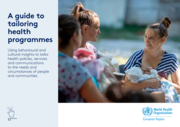
WHO/Europe has launched a new guide, providing support to countries on how to apply behavioural and cultural insights (BCI) for health. It presents a simple step-wise approach, complemented by a rich collection of detailed considerations, tools and exercises. The guide is the first of its kind, spec
...
ifically developed for use by public health professionals developing policies, services and communications informed by BCI across health topics.
Some of the most persistent public health challenges involve human behaviour. Using a BCI lens means that health policies, services and communications can be tailored to the needs and circumstances of people and communities, and thereby help combat these challenges. The new Tailoring Health Programmes (THP) guide describes how this can be done.
Building on several topic-specific guides that focused on applying BCI to routine and influenza vaccination and tackling antimicrobial resistance, as well as external evaluations and a rigorous peer-review process, this guide is the result of over a decade of work by WHO/Europe. The THP approach has already been adopted in over 20 countries and has received positive feedback from public health agencies.
“This guide is the culmination of a decade of work involving many colleagues at country, regional and global levels. The guide is our “BCI bible”, guiding our work with and in countries to help tackle persistent health challenges,” said Katrine Bach Habersaat, Regional Advisor for BCI at WHO/Europe.
Karina Godoy, Senior Analyst and National Focal Point for Behavioural Insights at the Public Health Agency of Sweden, who is employing the approach described in the guide across several health projects, comments: “The THP guide is easy to use and at the same time provides detailed guidance and inspiration where needed. We have decided to translate the document into Swedish and use the approach widely”.
more
The Advancing Climate-Resilient Education Technical Guidance builds on the USAID 2022–2030 Climate Strategy and the 2018 USAID Education Policy to support USAID Missions and partners who seek to integrate climate action and awareness into education programs and are committed to achieving climate-r
...
esilient education systems and fostering climate-resilient learners. It outlines how to identify opportunities for climate action that respond to known climate hazards through mitigative, adaptive, and transformative actions.
The guidance is designed for use at the activity design and monitoring and evaluation stages of the USAID Program Cycle. It does not prescribe new processes, but rather serves to aid Missions and partners in integrating climate considerations into existing processes
more
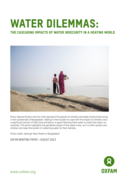
Climate-induced water insecurity poses one of the biggest threats to humanity and will lead to more hunger, disease and displacement
Oxfam water engineers are having to drill deeper, more expensive and harder-to-maintain water boreholes used by some of the poorest communities around the world, mo
...
re often now only to find dry, depleted or polluted reservoirs.
Today, during World Water Week, Oxfam publishes the first of its series of reports, “Water Dilemmas”, about the growing water crisis, in large part driven by global heating from greenhouse gas emissions. The report describes how climate change will impact water security in different regions, leading to more hunger, disease and displacement.
Carlos Calderon, Humanitarian Advocacy and Partnerships Lead for Oxfam Aotearoa said, “This new Oxfam research is focused on the global Water, Sanitation and Hygiene (WaSH) situation, but it paints a picture that illustrates the complexity of elements that, combined, will continue to increasingly affect women, girls, boys and men in the decades to come. Changing weather, poverty, inequality, gender-based violence, political instability and conflicts are impacting the availability and quality of adequate water systems. All governments, particularly those from rich countries, should responsively take action at a global scale. The clock is ticking. Our children will judge us for our actions today, or for the lack of them.”
more

The Commission on Macroeconomics and Health (CMH) was established by World Health Organization Director-General Gro Harlem Brundtland in January 2000 to assess the place of health in global economic development. Although health is widely understood to be both a central goal and an important outcome
...
of development, the importance of investing in health to promote economic development and poverty reduction has been much less appreciated. We have found that extending the coverage of crucial health services, including a relatively small number of specific interventions, to the world’s poor could save millions of lives each year, reduce poverty, spur economic development, and promote global security.
more
A corruption event in 2009 led to changes in how donors supported the Zambian health system. Donor funding was withdrawn from the district basket mechanism, originally designed to pool donor and government financing for primary care. The withdrawal of these funds from the pooled financing mechanism
...
raised questions from Government and donors regarding the impact on primary care financing during this period of aid volatility.
more

There is growing understanding and high-level endorsement of the importance of strong collaborative multisectoral approaches to address a broad range of social, economic and governance issues for the prevention and control of noncommunicable disease (NCDs) and mental health conditions. In 2019, Worl
...
d Health Organization (WHO) Member States requested the WHO Director-General to provide an analysis across countries of successful approaches for the prevention and control of NCDs that used multisectoral action.This report describes the experiences of different countries, areas and territories in implementing multisectoral actions to tackle NCDs and is the first step to address their request for an analysis of such efforts
more

Developmental disabilities are common. Yet, children with developmental disabilities have been neglected in health systems planning and policy provisions for health and continue to experience stigmatization, institutionalization, barriers to access health care and inequalities in health and educatio
...
n outcomes.
Using findings from research and practice and guided by the tenets of international human rights conventions, this WHO-UNICEF Global Report on children with developmental disabilities provides principles and approaches to intentionally include the needs and aspirations of children and young people with developmental disabilities in policy, programming and public health monitoring. It makes the case for greater accountability and proposes 10 priority actions to accelerate changes towards inclusive environments and responsive multisectoral care systems for children with developmental disabilities.
more

While there has been real progress in addressing the burden of disease in the WHO African region, the COVID-19 pandemic has highlighted the link between health, economics and security, as the region saw decades of progress threatened, including positive trends in decreasing inequality. In the Africa
...
n Region the momentum towards achieving the 2030 SDG disease burden reduction targets (SDG targets 3.3, 3.4 and 3B) has stalled.
The COVID-19 pandemic was also a major threat to gains made, such as the eradication of polio in the region, declared in 2020; reduced numbers of new HIV infections in 2021 compared to 2010; and passing the 2020 milestone of the End TB Strategy, with a 22% reduction in new cases compared with 2015. However, the pandemic also disrupted essential health services in 92% of countries globally, 22.7 million children missed basic immunization, there was an increase in malaria and TB, and global deaths from TB rose for the first time since 2015.
more

Access to safe blood and blood products is recognized as one of the key requirements for delivery of modern health care in the journey towards health for all. The foundation of safe and sustainable blood supplies depends on the collection of blood from voluntary non-remunerated and low-risk donors.
...
Data from the WHO Global Database for Blood Safety (GDBS) brings out several inadequacies related to the supply and safety of blood and blood products. These inadequacies include a number of variations in safe blood practices across the world, including the quantity of blood donated (voluntary and replacement types), quality and adequate testing of the donated blood (immunohaematology [IH] and transfusion-transmitted infections [TTIs]), rational use of blood and blood components such as appropriate patient blood management protocols. These variations are very high in countries of the South-East Asian Region and most of them are either low- or middle-income countries (LMICs).
more

This report compiles data for the first time on the far-reaching consequences of uncontrolled hypertension, including heart attacks, strokes and premature death, along with substantial economic losses for communities and countries. It also contains information on the global, regional and country-lev
...
el burden of hypertension and progress of control efforts.
more
Previous advocacy efforts have achieved tangible goals in terms garnering political commitments
to increase financing for TB—as seen at the 2018 UN High-Level Meeting on TB. The challenge
now is to ensure that these commitments are actually met within a global biomedical research
ecosystem that
...
is designed and incentivized to prioritize the health needs of wealthy populations
more
This action plan is intended for senior-level decision-makers in ministries of health, malaria
programme managers, entomologists, and epidemiologists working on malaria and other vectorborne diseases programmes. It is also intended for decision-makers and technical and advocacy
staff at other orga
...
nizations and stakeholders involved in public health, malaria control and
elimination, and urban and rural development.
more
Little is known about the patterns of development assistance (DA) for each component of reproductive, maternal, newborn, child and adolescent health (RMNCAH) in conflict-affected countries nor about the DA allocation in relation to the burden of disease
