Filter
234
Text search:
Instituto
Nacional
de
Salud
Colombia
Featured
Recommendations
7
New Publications
59
Language
Document type
No document type
93
Guidelines
51
Studies & Reports
50
Strategic & Response Plan
15
Manuals
11
Fact sheets
8
Training Material
3
Situation Updates
2
Resource Platforms
1
Countries / Regions
Colombia
75
Latin America and the Carribbean
46
Venezuela
36
Paraguay
11
Peru
8
Bolivia
7
Argentina
4
Brazil
4
Ecuador
4
Ethiopia
1
Uganda
1
Haiti
1
Thailand
1
Bangladesh
1
Mozambique
1
El Salvador
1
Guatemala
1
Chile
1
Asia
1
North America
1
Authors & Publishers
Publication Years
Category
Countries
153
Clinical Guidelines
11
Public Health
5
Women & Child Health
5
Key Resources
2
Pharmacy & Technologies
1
Toolboxes
TB
35
COVID-19
32
NTDs
23
Zika
10
HIV
9
Mental Health
9
AMR
6
Planetary Health
5
Pharmacy
5
Disability
4
Caregiver
3
Rapid Response
2
Global Health Education
2
Refugee
1
Malaria
1
Antimicrobial resistance (AMR) surveillance plays an important role in the early detection of resistant strains of public health importance and prompt response to outbreaks in hospitals and the community. Surveillance findings are needed to inform medical practice, antibiotic stewardship, and policy
...

Caribbean Sub-regional Training Workshop. Introducing the new guidelines: Preparedness and Response for Chikungunya Virus Introduction in the Americas in the context of Dengue

Rev Esp Sanid Penit 2012; 14: 11-16 11

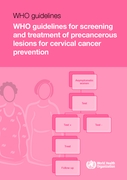
Cervical intraepithelial neoplasia (CIN) is a premalignant lesion that may exist at any one of three stages: CIN1, CIN2, or CIN3. If left untreated, CIN2 or CIN3 (collectively referred to as CIN2+) can progress to cervical cancer. Instead of screening and diagnosis by the standard sequence of cytolo
...
This document provides interim recommendations for the surveillance of Zika virus infection, microcephaly and Guillain-Barré syndrome, in four different contexts and describes reporting requirements to WHO. Transmission refers to vector-borne transmission, unless specified differently. Autochthonou
...
The report focuses on antibacterial resistance (ABR) in common bacterial pathogens. There is a major gap in knowledge about the magnitude of this problem. Antimicrobial resistance (AMR) threatens the effective revention and treatment of an ever-increasing range of infections caused by bacteria, para
...
July 2016

The document is structured into five sections. The first presents the key experiences and challenges that justify a renewal of the EPHFs. The second section updates the groundwork for the exercise of public health and provides a framework to inform the exercise of the new essential functions. The th
...

As a public good, antimicrobial medicines require rational use if their effectiveness is to be preserved. However, up to 50% of antibiotic use is inappropriate, adding considerable costs to patient care, and increasing morbidity and mortality. In addition, there is compelling evidence that antimicro
...