
Filter
4387
Text search:
district
health
system
Featured
384
1490
Language
4188
144
39
38
31
28
12
11
9
7
4
2
2
1
1
1
1
1
1
1
1
1
1
1
1
1
1
1
1
1
1
1
1
1
1
1
Document type
2670
661
475
244
187
72
35
30
4
4
3
2
Countries
339
179
170
157
138
129
127
127
107
107
99
96
93
90
89
87
74
62
59
53
47
46
45
44
43
43
41
36
34
30
30
27
26
24
24
22
21
20
18
18
17
17
16
16
13
13
13
13
12
11
11
11
11
11
11
10
10
9
8
8
8
8
7
7
7
7
7
7
7
6
6
6
6
5
4
4
4
4
4
3
3
3
3
3
3
3
2
2
2
2
2
2
2
2
2
2
2
2
1
1
1
1
1
1
1
1
1
1
1
1
1
1
1
1
1
1
1
1
1
1
1
1
1
1
1
1
1
Authors & Publishers
492
172
101
98
94
92
89
58
51
34
34
32
29
26
25
24
23
22
22
21
20
20
19
18
18
17
17
17
17
16
16
15
15
15
14
14
14
13
13
13
13
12
11
11
11
11
11
11
11
11
11
11
10
10
10
10
10
10
9
9
9
9
9
9
9
9
9
8
8
8
8
8
8
7
7
7
7
7
7
7
7
7
7
7
7
7
7
7
7
7
6
6
6
6
6
6
6
6
6
6
6
6
6
6
6
6
6
6
6
6
5
5
5
5
5
5
5
5
5
5
5
5
5
5
5
5
5
5
5
5
5
5
5
5
5
5
5
5
5
5
5
5
5
5
5
5
5
5
4
4
4
4
4
4
4
4
4
4
4
4
4
4
4
4
4
4
4
4
4
4
4
4
4
4
4
4
4
4
4
4
4
4
4
4
4
4
4
4
4
4
4
4
4
4
3
3
3
3
3
3
3
3
3
3
3
3
3
3
3
3
3
3
3
3
3
3
3
3
3
3
3
3
3
3
3
3
3
3
3
3
3
3
3
3
3
3
3
3
3
3
3
3
3
3
3
3
3
3
3
3
3
3
3
3
3
3
3
3
3
3
3
3
3
3
3
3
3
3
3
3
3
3
3
3
3
3
3
3
3
3
3
3
2
2
2
2
2
2
2
2
2
2
2
2
2
2
2
2
2
2
2
2
2
2
2
2
2
2
2
2
2
2
2
2
2
2
2
2
2
2
2
2
2
2
2
2
2
2
2
2
2
2
2
2
2
2
2
2
2
2
2
2
2
2
2
2
2
2
2
2
2
2
2
2
2
2
2
2
2
2
2
2
2
2
2
2
2
2
2
2
2
2
2
2
2
2
2
2
2
2
2
2
2
2
2
2
2
2
2
2
2
2
2
2
2
2
2
2
2
2
2
2
2
2
2
2
2
2
2
2
2
2
2
2
2
2
2
2
2
2
2
2
2
2
2
2
2
2
2
2
2
2
2
2
2
2
2
2
2
2
2
2
2
2
2
2
2
2
2
2
2
2
2
2
2
2
2
2
2
2
2
2
2
2
2
2
2
2
2
2
2
2
2
2
2
2
2
2
2
2
2
2
2
2
2
2
2
2
2
2
2
2
2
2
2
2
2
2
2
2
2
2
2
2
2
2
2
2
2
2
2
2
2
2
2
2
2
2
2
2
2
2
2
2
2
2
2
2
2
1
1
1
1
1
1
1
1
1
1
1
1
1
1
1
1
1
1
1
1
1
1
1
1
1
1
1
1
1
1
1
1
1
1
1
1
1
1
1
1
1
1
1
1
1
1
1
1
1
1
1
1
1
1
1
1
1
1
1
1
1
1
1
1
1
1
1
1
1
1
1
1
1
1
1
1
1
1
1
1
1
1
1
1
1
1
1
1
1
1
1
1
1
1
1
1
1
1
1
1
1
1
1
1
1
1
1
1
1
1
1
1
1
1
1
1
1
1
1
1
1
1
1
1
1
1
1
1
1
1
1
1
1
1
1
1
1
1
1
1
1
1
1
1
1
1
1
1
1
1
1
1
1
1
1
1
1
1
1
1
1
1
1
1
1
1
1
1
1
1
1
1
1
1
1
1
1
1
1
1
1
1
1
1
1
1
1
1
1
1
1
1
1
1
1
1
1
1
1
1
1
1
1
1
1
1
1
1
1
1
1
1
1
1
1
1
1
1
1
1
1
1
1
1
1
1
1
1
1
1
1
1
1
1
1
1
1
1
1
1
1
1
1
1
1
1
1
1
1
1
1
1
1
1
1
1
1
1
1
1
1
1
1
1
1
1
1
1
1
1
1
1
1
1
1
1
1
1
1
1
1
1
1
1
1
1
1
1
1
1
1
1
1
1
1
1
1
1
1
1
1
1
1
1
1
1
1
1
1
1
1
1
1
1
1
1
1
1
1
1
1
1
1
1
1
1
1
1
1
1
1
1
1
1
1
1
1
1
1
1
1
1
1
1
1
1
1
1
1
1
1
1
1
1
1
1
1
1
1
1
1
1
1
1
1
1
1
1
1
1
1
1
1
1
1
1
1
1
1
1
1
1
1
1
1
1
1
1
1
1
1
1
1
1
1
1
1
1
1
1
1
1
1
1
1
1
1
1
1
1
1
1
1
1
1
1
1
1
1
1
1
1
1
1
1
1
1
1
1
1
1
1
1
1
1
1
1
1
1
1
1
1
1
1
1
1
1
1
1
1
1
1
1
1
1
1
1
1
1
1
1
1
1
1
1
1
1
1
1
1
1
1
1
1
1
1
1
1
1
1
1
1
1
1
1
1
1
1
1
1
1
1
1
1
1
1
1
1
1
1
1
1
1
1
1
1
1
1
1
1
1
1
1
1
1
1
1
1
1
1
1
1
1
1
1
1
1
1
1
1
1
1
1
1
1
1
1
1
1
1
1
1
1
1
1
1
1
1
1
1
1
1
1
1
1
1
1
1
1
1
1
1
1
1
1
1
1
1
1
1
1
1
1
1
1
1
1
1
1
1
1
1
1
1
1
1
1
1
1
1
1
1
1
1
1
1
1
1
1
1
1
1
1
1
1
1
1
1
1
1
1
1
1
1
1
1
1
1
1
1
1
1
1
1
1
1
1
1
1
1
1
1
1
1
1
1
1
1
1
1
1
1
1
1
1
1
1
1
1
1
1
1
1
1
1
1
1
1
1
1
1
1
1
1
1
1
1
1
1
1
1
1
1
1
1
1
1
1
1
1
1
1
1
1
1
1
1
1
1
1
1
1
1
1
1
1
1
1
1
1
1
1
1
1
1
1
1
1
1
1
1
1
1
1
1
1
1
1
1
1
1
1
1
1
1
1
1
1
1
1
1
1
1
1
1
1
1
1
1
1
1
1
1
1
1
1
1
1
1
1
1
1
1
1
1
1
1
1
1
1
1
1
1
1
1
1
1
1
1
1
1
1
1
1
1
1
1
1
1
1
1
1
1
1
1
1
1
1
1
1
1
1
1
1
1
1
1
1
1
1
1
1
1
1
1
1
1
1
1
1
1
1
1
1
1
1
1
1
1
1
1
1
1
1
1
1
1
1
1
1
1
1
1
1
1
1
1
1
1
1
1
1
1
1
1
1
1
1
1
1
1
1
1
1
1
1
1
1
1
1
1
1
1
1
1
1
1
1
1
1
1
1
1
1
1
1
1
1
1
1
1
1
1
1
1
1
1
1
1
1
1
1
1
1
1
1
1
1
1
1
1
1
1
1
1
1
1
1
1
1
1
1
1
1
1
1
1
1
1
1
1
1
1
1
1
1
1
1
1
1
1
1
1
1
1
1
1
1
1
1
1
1
1
1
1
1
1
1
1
1
1
1
1
1
1
1
1
1
1
1
1
1
1
1
1
1
1
1
1
1
1
1
1
1
1
1
1
1
1
1
1
1
1
1
1
1
1
1
1
1
1
1
1
1
1
1
1
1
1
1
1
1
1
1
1
1
1
1
1
1
1
1
1
1
1
1
1
1
1
1
1
1
1
1
1
1
1
1
1
1
1
1
1
1
1
1
1
1
1
1
1
1
1
1
1
1
1
1
1
1
1
1
1
1
1
1
1
1
1
1
1
1
1
1
1
1
1
1
1
1
1
1
1
1
1
1
1
1
1
1
1
1
1
1
1
1
1
1
1
1
1
1
1
1
1
1
1
1
1
1
1
1
1
1
1
1
1
1
1
1
1
1
1
1
1
1
1
1
1
1
1
1
1
1
1
1
1
1
1
1
1
1
1
1
1
1
1
1
1
1
1
1
1
1
1
1
1
1
1
1
1
1
1
1
1
1
1
1
1
1
1
1
1
1
1
1
1
1
1
1
1
1
1
1
1
1
1
1
1
1
1
1
1
1
1
1
1
1
1
1
1
1
1
1
1
1
1
1
1
1
1
1
1
1
1
1
1
1
1
1
1
1
1
1
1
1
1
1
1
1
1
1
1
1
1
1
1
1
1
1
1
1
1
1
1
1
1
1
1
1
1
1
1
1
1
1
1
1
1
1
1
1
1
1
1
1
1
1
1
1
1
1
1
1
1
1
1
1
1
1
1
1
1
1
1
1
1
1
1
1
1
1
1
1
1
1
1
1
1
1
1
1
1
1
1
1
1
1
1
1
1
1
1
1
1
1
1
1
1
1
1
1
1
1
1
1
1
1
1
1
1
1
1
1
1
1
1
1
1
1
1
1
1
1
1
1
1
1
1
1
1
1
1
1
1
1
1
1
1
1
1
1
1
1
1
1
1
1
1
1
1
1
1
1
1
1
1
1
1
1
1
1
1
1
1
1
1
1
1
1
1
1
1
1
1
1
1
1
1
1
1
1
1
1
1
1
1
1
1
1
1
1
1
1
1
1
1
1
1
1
1
1
1
1
1
1
1
1
1
1
1
1
1
1
1
1
1
1
1
1
1
1
1
1
1
1
1
1
1
1
1
1
1
1
1
1
1
1
1
1
1
1
1
1
1
1
1
1
1
1
1
1
1
1
1
1
1
1
1
1
1
1
1
1
1
1
1
1
1
1
1
1
1
1
1
1
1
1
1
1
1
1
1
1
1
1
1
1
1
1
1
1
1
1
1
1
1
1
1
1
1
1
1
1
1
1
1
1
1
1
1
1
1
1
1
1
1
1
1
1
1
1
1
1
1
1
1
1
1
1
1
1
1
1
1
1
1
1
1
1
1
1
1
1
1
1
1
1
1
1
1
1
1
1
1
1
1
1
1
1
1
1
1
1
1
1
1
1
1
1
1
1
1
1
1
1
1
1
1
1
1
1
1
1
1
1
1
1
1
1
1
1
1
1
1
1
1
1
1
1
1
1
1
1
1
1
1
1
1
1
1
1
1
1
1
1
1
1
1
1
1
1
1
1
1
1
1
1
1
1
1
1
1
1
1
1
1
1
1
1
1
1
1
1
1
1
1
1
1
1
1
1
1
1
1
1
1
1
1
1
1
1
1
1
1
1
1
1
1
1
1
1
1
1
1
1
1
1
1
1
1
1
1
1
1
1
1
1
1
1
1
1
1
1
1
1
1
1
1
1
1
1
1
1
1
1
1
1
1
1
1
1
1
1
1
1
1
1
1
1
1
1
1
1
1
1
1
1
1
1
1
1
1
1
1
1
1
1
1
1
1
1
1
1
1
1
1
1
1
1
1
1
1
1
1
1
1
1
1
1
1
1
1
1
1
1
1
1
1
1
1
1
1
1
1
1
1
1
1
1
1
1
1
1
1
1
1
1
1
1
1
1
1
1
1
1
1
1
1
1
1
1
1
1
1
1
1
1
1
1
1
1
1
1
1
1
1
1
1
1
1
1
1
1
1
1
1
1
1
1
1
1
1
1
1
1
1
1
1
1
1
1
1
1
1
1
1
1
1
1
1
1
1
1
1
1
1
1
1
1
1
1
1
1
1
1
1
1
1
1
1
1
1
1
1
1
1
1
1
1
1
1
1
1
1
1
1
1
1
1
1
1
1
1
1
1
1
1
1
1
1
1
1
1
1
1
1
1
1
1
1
1
1
1
1
1
1
1
1
1
1
1
1
1
1
1
1
1
1
1
1
1
1
1
1
1
1
1
1
1
1
1
1
1
1
1
1
1
1
1
1
1
1
1
1
1
1
1
1
1
1
1
1
1
1
1
1
1
1
1
1
1
1
1
1
1
1
1
1
1
1
1
1
1
1
1
1
1
1
1
1
1
1
1
1
1
1
1
1
1
1
1
1
1
1
1
1
1
1
1
1
1
1
1
1
1
1
1
1
1
1
1
1
1
1
1
1
1
1
1
1
1
1
1
1
1
1
1
1
1
1
1
1
1
1
1
1
1
1
1
1
1
1
1
1
1
1
1
1
1
1
1
1
1
1
1
1
1
1
1
1
1
1
1
1
1
1
1
1
1
1
1
1
1
1
1
1
1
1
1
1
1
1
1
1
1
1
1
1
1
1
1
1
1
1
1
1
1
1
1
1
1
1
1
1
1
1
1
1
1
1
1
1
1
1
1
1
1
1
1
1
1
1
1
1
1
1
1
1
1
1
1
1
1
1
1
1
1
1
1
1
1
1
1
1
1
1
1
1
1
1
1
1
1
1
1
1
1
1
1
1
1
1
1
1
1
1
1
1
1
1
1
1
1
1
1
1
1
1
1
1
1
1
1
1
1
1
1
1
1
1
1
1
1
1
1
1
1
1
1
1
1
1
1
1
1
1
1
1
1
1
1
1
1
1
1
1
1
1
1
1
1
1
1
1
1
1
1
1
1
1
1
1
1
1
1
1
1
1
1
1
1
1
1
1
1
1
1
1
1
1
1
1
1
1
1
1
1
1
1
1
1
1
1
1
1
1
1
1
1
1
1
1
1
1
1
1
1
1
1
1
1
1
1
1
1
1
1
1
1
1
1
1
1
1
1
1
1
1
1
1
1
1
1
1
1
1
1
1
1
1
1
1
1
1
1
1
1
1
1
1
1
1
1
1
1
1
1
1
1
1
1
1
1
1
1
1
1
1
1
1
1
1
1
1
1
1
1
1
1
1
1
1
1
1
1
1
1
1
1
1
1
1
1
1
1
1
1
1
1
1
1
1
1
1
1
1
1
1
1
1
1
1
1
1
1
1
1
1
1
1
1
1
1
1
1
1
1
1
1
1
1
1
1
1
1
1
1
1
1
1
1
1
1
1
1
1
1
1
1
1
1
1
1
1
1
1
1
1
1
1
1
1
1
1
1
1
1
1
1
1
1
1
1
1
1
1
1
1
1
1
1
1
1
1
1
1
1
1
1
1
1
1
1
1
1
1
1
1
1
1
1
1
1
1
1
1
1
1
1
1
1
1
1
1
1
1
1
1
1
1
1
1
1
1
1
1
1
1
1
1
1
1
1
1
1
1
1
1
1
1
1
1
1
1
1
1
1
1
1
1
1
1
1
1
1
1
1
1
1
1
1
1
1
1
1
1
1
1
1
1
1
1
1
1
1
1
1
1
1
1
1
1
1
1
1
1
1
1
1
1
1
1
1
1
1
1
1
1
1
1
1
1
1
1
1
1
1
1
1
1
1
1
1
1
1
1
1
1
1
1
1
1
1
1
1
1
1
1
1
1
1
1
1
1
1
1
1
1
1
1
1
1
1
1
1
1
1
1
1
1
1
1
1
1
1
1
1
1
1
1
1
1
1
1
1
1
1
1
1
1
1
1
1
1
1
1
1
1
1
1
1
1
1
1
1
1
1
1
1
1
1
1
1
1
1
1
1
1
1
1
1
1
1
1
1
1
1
1
1
1
1
1
1
1
1
1
1
1
1
1
1
1
1
1
1
1
1
1
1
1
1
1
1
1
1
1
1
1
1
1
1
1
1
1
1
1
1
1
1
1
1
1
1
1
1
1
1
1
1
1
1
1
1
1
1
1
1
1
1
1
1
1
1
1
1
1
1
1
1
1
1
1
1
1
1
1
1
1
1
1
1
1
1
1
1
1
1
1
1
1
1
1
1
1
1
1
1
1
1
1
1
1
1
1
1
1
1
1
1
1
1
1
1
1
1
1
1
1
1
1
1
1
1
1
1
1
1
1
1
1
1
1
1
1
1
1
1
1
1
1
1
1
1
1
1
1
1
1
1
1
1
1
1
1
1
1
1
1
1
1
1
1
1
1
1
1
1
1
1
1
1
1
1
1
1
1
1
1
1
1
1
1
1
1
1
1
1
1
1
1
1
1
1
1
1
1
1
1
1
1
1
1
1
1
1
1
1
1
1
1
1
1
1
1
1
1
1
1
1
1
1
1
1
1
1
1
1
1
1
1
1
Publication Years
987
2926
442
31
1
Category
2320
279
264
241
186
86
36
Toolboxes
204
200
193
182
180
180
122
102
102
92
91
90
77
69
60
56
55
49
46
34
34
23
15
11
8
3
1

This document is an output of a WHO cross-programme initiative aiming to improve the prevention, diagnosis and management of anaemia and thereby accelerate reduction in its prevalence. It comes at an important time, midway through the era of the Sustainable Development Goals, when progress in reduci
...
ng anaemia has stagnated. This framework is based on the core principles of primary health care: meeting people’s health needs through comprehensive promotive, protective, curative, and rehabilitative care along the life course; systematically addressing the broader determinants of health; and empowering individuals, families, and communities to optimize their health
more

This publication is part of WHO 75th anniversary and aims to capture key successes in public health globally and in Namibia. It includes contributory messages from the Head of State, Prime Minister and the Minister of
...
Health and Social Services.
more

This publication describes the first WHO public-benefit Target Product Profiles (TPPs) for snakebite antivenoms. It focuses on antivenoms for treatment of snakebite envenoming in sub-Saharan Africa. Four TPPs are described in the document:
Broad spectrum Pan-African polyvalent antivenoms: products
...
that are intended for widespread utility throughout sub-Saharan Africa for treatment of envenoming irrespective of the species of snake causing a bite. Monovalent antivenoms for specific use cases: for products for a single species (or genus) of snake (e.g., boomslangs or carpet viper antivenoms).
Syndromic Pan-African polyvalent antivenoms for neurotoxic envenoming: products that are intended for treatment of envenoming by species whose venoms are neurotoxic. Syndromic Pan-African polyvalent antivenoms for non-neurotoxic envenoming: products for snakebite envenoming where the effects are largely haemorrhagic, necrotic or procoagulant.
more

Ebola disease and Marburg disease outbreaks continue to occur in Africa, with increased frequency. In addition to resulting in high mortality and morbidity, the outbreaks generate fear and mistrust about the response activities within the communities affected.
Infection prevention and control (IP
...
C) is a key pillar in the outbreak response; adherence to IPC practices can prevent and control transmission of infections to health and care workers, patients and their family members.
During the 2014-2016 West African Ebola disease outbreak, there was an urgent need for rapid IPC guidance to help support ministries of health, health-care providers and non-governmental organizations (NGOs). In response, WHO produced several documents related to the outbreak based on expert opinion, including IPC-specific documents and documents on clinical management that also referenced key IPC principles and practices. Since that time, many practices in the field have become institutionalized.
more

Significant progress has been made in the eradication of three priority diseases in the African Region, as a result of extensive collaboration between the Regional Office, WHO country offices and countries. For example, in August 2020, the region was certified free of wild poliovirus. In the area of
...
neglected tropical diseases, Guinea worm disease is on the verge of eradication, and 12 member states are within reach of being certified as having eradicated yaws by the end of this year.
more

Objective: To identify gaps in national stroke guidelines that could be bridged to enhance the quality of stroke care services in low- and
middle-income countries.
Methods: We systematically searched medical databases and websites of medical societies and contacted international organizations.
Co
...
untry-specific guidelines on care and control of stroke in any language published from 2010 to 2020 were eligible for inclusion. We reviewed
each included guideline for coverage of four key components of stroke services (surveillance, prevention, acute care and rehabilitation).
We also assessed compliance with the eight Institute of Medicine standards for clinical practice guidelines, the ease of implementation of
guidelines and plans for dissemination to target audiences.
Findings: We reviewed 108 eligible guidelines from 47 countries, including four low-income, 24 middle-income and 19 high-income countries.
Globally, fewer of the guidelines covered primary stroke prevention compared with other components of care, with none recommending
surveillance. Guidelines on stroke in low- and middle-income countries fell short of the required standards for guideline development;
breadth of target audience; coverage of the four components of stroke services; and adaptation to socioeconomic context. Fewer low- and
middle-income country guidelines demonstrated transparency than those from high-income countries. Less than a quarter of guidelines
encompassed detailed implementation plans and socioeconomic considerations.
Conclusion: Guidelines on stroke in low- and middle-income countries need to be developed in conjunction with a wider category of
health-care providers and stakeholders, with a full spectrum of translatable, context-appropriate interventions.
more

Diabetes is a serious, chronic disease that occurs either when the pancreas does not produce enough insulin (a hormone that regulates blood sugar, or glucose), or when the body cannot effectively use the insulin it produces. Diabetes is an important public
...
health problem, one of four priority noncommunicable diseases (NCDs) targeted for action by world leaders. Both the number of cases and the prevalence of diabetes have been steadily increasing over the past few decades.
more

Communicable and non-communicable diseases in Africa in 2021/22
World Health Organization Africa Region; WHO Africa
World Health Organization Africa Region; WHO Africa
(2023)
C_WHO
This report is one of the first major products of the newly established Precision Public Health Metrics unit of the UCN cluster of the WHO Regional Office for Africa. The report presents national trends in communicable and non-communicable disease b
...
urden and control in the WHO African region. It tracks progress made with respect to disease burden reduction, elimination and eradication. It also highlights major emerging threats, opportunities and priorities in the fight against commu- nicable and non-communicable diseases in the region. It covers the period 2000-2022, but for some indicators, information is available only up to 2021.
The report shows the number of reported cases for malaria and vaccine preventable diseases (meningitis, measles, yellow fever, pertussis, diphtheria, tetanus, and polio); disease incidence due to HIV, tuberculosis and four major noncommunicable diseases (cardiovas- cular diseases, cancers, diabetes and chronic respira- tory diseases).
more

Sharing successful strategies from the Eastern Mediterranean Region in mitigating noncommunicable diseases and mentalhealth disorders during the COVID-19pandemic and beyond
World Health Organization (WHO) Regional Office for the Eastern Mediterranean
World Health Organization (WHO) Regional Office for the Eastern Mediterranean
(2023)
C_WHO
The "Stories from the field" document by the WHO Regional Office for the Eastern Mediterranean shares effective strategies from the Eastern Mediterranean Region for addressing noncommunicable diseases (NCDs) and mental health challenges, particularl
...
y during the COVID-19 pandemic. It highlights regional success stories in mitigating NCDs and mental health conditions through innovative, country-specific interventions. The report emphasizes multisectoral collaboration, community engagement, and resilience in public health responses. It aims to inspire further action and knowledge-sharing to enhance health outcomes in challenging settings across the region.
more

National action plans on antimicrobial resistance (AMR) often overlook the critical intersection of gender, despite evidence that exposure and susceptibility to infection, health-seeking behaviours, as well as antimicrobial prescribing and use patte
...
rns are all influenced by gender.
more

About one fourth of the world’s population is estimated to have been infected with the tuberculosis (TB) bacilli, and about 5–10% of those infected develop TB disease in their lifetime. The risk for TB disease after infection depends on several factors, the most important being the person’s im
...
munological status. TB preventive treatment (TPT) given to people at highest risk of progressing from TB infection to disease remains a critical element to achieve the global targets of the End TB Strategy, as reiterated by the second UN High Level Meeting on TB in 2023. Delivering TPT effectively and safely necessitates a programmatic approach to implement a comprehensive package of interventions along a cascade of care: identifying individuals at highest risk, screening for TB and ruling out TB disease, testing for TB infection, and choosing the preventive treatment option that is best suited to an individual, managing adverse events, supporting medication adherence and monitoring programmatic performance
more

The key to a lasting world free of all forms of poliovirus lies in rapidly interrupting all remaining endemic transmission of WPV in the endemic areas of Pakistan and Afghanistan. This is the only way to ensure that such strains do not re-emerge globally through international spread. It lays the cor
...
nerstone for the eventual cessation of all oral polio vaccine use, in order to eliminate the long-term risks associated with variant poliovirus strains, which is the GPEI’s top operational priority. The target for certifying the
world free of all WPV remains end-2026.
more

Kangaroo mother care (KMC) is a critical strategy to care for preterm and low birth weight infants in resource-limited settings. Despite evidence of its effectiveness and low cost, coverage has remained low, largely due to sociocultural barriers. We aimed to better understand social norms and commun
...
ity perceptions of preterm infants and KMC (facility-initiated and community-continued) in Malawi, a country with a high preterm birth rate, to inform a pilot social and behavior change program.
more
This report on global leishmaniasis surveillance follows those published in 2016–2023.2–6 Six indicators of leishmaniasis are publicly available from the Global Health Observatory (GHO).7 In addition to the GHO, country profiles with up to 30 in
...
dicators are published, with detailed data received from 45 Member States.
more

The Ministry of Health and Social Services has the mandate to fulfil one of the aspirations in Namibia’s Vision 2030 to “transform Namibia into a healthy and food-secure nation”. Namibia strives to provide quality
...
health and social welfare services efficiently and effectively to the population across the country in its quest to achieve universal health coverage. Namibia has identified eHealth as one of its key enablers to achieve universal health coverage.
more
The World Health Organization provides regional and national strategies and operational plans that aim to support countries in work to achieve measles control and elimination. These are guided by high level frameworks including the Immunization Agen
...
da 2030 and the Measles and Rubella Strategic Framework 2021–2030. These frameworks promote improvements in routine immunization programmes to reach all children, reduce immunity gaps and prevent outbreaks within the context of universal health care.
This interim guidance on Targeted and selective strategies in measles and rubella vaccination campaigns adds to the suite of guidance documents. It provides expanded description of methods to determine age groups for inclusion in preventive and outbreak response measles and rubella vaccination campaigns; and operational considerations that are specific to targeted and selective strategies in measles and rubella vaccination campaigns. This guidance also updates definitions for tailored, targeted and selective campaigns.The World Health Organization provides regional and national strategies and operational plans that aim to support countries in work to achieve measles control and elimination. These are guided by high level frameworks including the Immunization Agenda 2030 and the Measles and Rubella Strategic Framework 2021–2030. These frameworks promote improvements in routine immunization programmes to reach all children, reduce immunity gaps and prevent outbreaks within the context of universal health care.
This interim guidance on Targeted and selective strategies in measles and rubella vaccination campaigns adds to the suite of guidance documents. It provides expanded description of methods to determine age groups for inclusion in preventive and outbreak response measles and rubella vaccination campaigns; and operational considerations that are specific to targeted and selective strategies in measles and rubella vaccination campaigns. This guidance also updates definitions for tailored, targeted and selective campaigns.
more

Men lag behind women regarding use of HIV services and represent the majority of individuals living with uncontrolled HIV, advanced HIV, and who experience HIV-related mortality. Men (15+) globally are less likely than women (15+) to know their HIV status (83% for men vs 91% for women), be on antire
...
troviral treatment (ART) (72% for men vs 83% for women) and reach viral suppression (67% for men vs 78% for women).
more
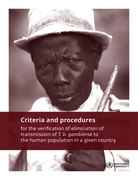
Having established the goal of eliminating transmission of gambiense human African trypanosomiasis (g-HAT) to humans, the HAT-e-TAG considered which elements should be developed to assess this goal.

Trachoma is the leading infectious cause of blindness worldwide. In April 2023, it was a public health problem
in approximately 40 countries, with an estimated 116 million people at risk and 1.5 million people affected
by the late blinding stage o
...
f the disease (1). About 84% of those at risk of trachoma are in the World Health
Organization (WHO)’s African Region; about 52% of those at risk of trachoma live in Ethiopia
more

The WHO guidelines for malaria bring together the Organization’s most up-to-date recommendations for malaria in one user-friendly and easy-to-navigate online platform.
The WHO guidelines for malaria bring together the Organization’s most up-to-date recommendations for malaria in one user-frie
...
ndly and easy-to-navigate online platform. The Guidelines supersedes 2 previous WHO publications: the Guidelines for the treatment of malaria, third edition and the Guidelines for malaria vector control. Recommendations on malaria will continue to be reviewed and, where appropriate, updated based on the latest available evidence. Any updated recommendations will always display the date of the most recent revision in the MAGICapp platform. With each update, a new PDF version of the consolidated guidelines will also be available for download on the WHO website.
This version of the Guidelines includes an updated recommendation for malaria vaccines, new recommendations on the use of near-patients qualitative and semiquantitative G6PD tests to guide anti-relapse treatment of P. vivax and P. ovale, updated recommendations on primaquine and the recommendation on the use of tafenoquine. It replaces the versions published on 16 February 2021, 13 July 2021, 18 February 2022, 31 March 2022, 3 June 2022, 25 November 2022, 14 March 2023 and 16 October 2023.
more
