Search database
Filter
754
Text search: rapid antigen test
Featured
Language
Document type
307
205
106
60
29
24
10
3
3
2
2
1
1
Countries / Regions
51
40
22
21
17
17
16
14
13
13
13
12
11
11
10
10
9
9
9
8
8
7
7
7
6
6
6
6
5
5
5
5
4
4
3
3
3
3
3
2
2
2
2
2
2
2
2
2
2
2
2
1
1
1
1
1
1
1
1
1
1
1
1
1
1
1
1
1
1
1
1
1
1
1
1
1
1
Authors & Publishers
168
30
23
23
23
19
13
10
10
10
7
7
6
6
5
5
5
5
5
5
5
5
5
4
4
4
4
4
4
4
3
3
3
3
3
3
3
3
3
3
3
3
3
3
3
3
3
3
3
2
2
2
2
2
2
2
2
2
2
2
2
2
2
2
2
2
2
2
2
2
2
2
2
2
2
2
2
2
2
2
2
2
2
2
2
2
2
2
2
2
2
2
2
2
2
1
1
1
1
1
1
1
1
1
1
1
1
1
1
1
1
1
1
1
1
1
1
1
1
1
1
1
1
1
1
1
1
1
1
1
1
1
1
1
1
1
1
1
1
1
1
1
1
1
1
1
1
1
1
1
1
1
1
1
1
1
1
1
1
1
1
1
1
1
1
1
1
1
1
1
1
1
1
1
1
1
1
1
1
1
1
1
1
1
1
1
1
1
1
1
1
1
1
1
1
1
1
1
1
1
1
1
1
1
1
1
1
1
1
1
1
1
1
1
1
1
1
1
1
1
1
1
1
1
1
1
1
1
1
1
1
1
1
1
1
1
1
1
1
1
1
1
1
1
1
1
1
1
1
1
1
1
1
1
1
1
1
1
1
1
1
1
1
1
1
1
1
1
1
1
1
1
1
1
1
1
1
1
1
1
1
1
1
1
1
1
1
1
1
1
1
1
1
1
1
1
1
1
1
1
1
1
1
1
1
1
1
1
1
1
1
1
1
1
1
1
1
1
1
1
1
1
1
1
1
1
1
1
1
1
1
1
1
1
1
1
1
1
1
1
1
1
1
1
1
1
1
1
1
1
1
1
1
1
1
1
1
1
1
1
1
1
1
1
1
1
1
1
1
1
1
1
1
1
1
1
1
1
1
1
1
1
1
1
1
1
1
1
1
1
1
1
1
1
1
1
1
1
1
1
1
1
1
1
1
1
1
1
1
1
1
1
1
1
1
1
1
1
1
1
1
1
1
1
1
1
1
1
1
1
1
1
1
1
1
1
1
1
1
1
1
1
1
1
1
1
1
1
1
1
1
1
1
1
1
1
1
1
1
1
1
1
1
1
1
1
1
1
1
1
1
1
1
1
1
1
1
1
1
1
1
1
1
1
1
1
1
1
1
1
1
1
1
1
1
1
1
1
1
1
1
1
1
1
1
1
1
1
1
1
1
1
1
1
1
1
1
1
1
1
1
1
1
1
1
1
1
1
1
1
1
1
1
1
1
1
1
1
1
1
1
1
1
1
1
1
1
1
1
1
1
1
1
1
1
1
1
1
1
1
1
1
1
1
1
1
1
1
1
1
1
1
1
1
1
1
1
1
1
1
1
1
1
1
1
1
1
1
1
1
1
1
1
1
1
1
1
1
Publication Years
Category
310
110
39
24
16
10
7
Toolboxes
144
79
69
50
28
21
20
17
13
12
8
8
7
7
7
6
6
4
4
2
2
1
2nd edition
Journal of The Association of Physicians of India, Vol. 63 November 2015,, pp.77-96
The Zambia Population Based HIV impact assessment of 2016, reported the prevalence of viral hepatitis in Zambia as ranging between 5.6% among adults aged 15 to 59% in the general population, and 7.1% among HIV infected individuals. It is estimated that the majority of persons with chronic hepatitis ... more
Since 2000, concerted efforts by national programmes, supported by public–private partnerships, nongovernmental organizations, donors and academia under the auspices and coordination of the World Health Organization (WHO), have produced important achievements in the control of human African trypan ... more
This document summarizes current WHO guidance for public health surveillance of coronavirus disease 2019 (COVID-19) in humans caused by infection with severe acute respiratory syndrome coronavirus 2 (SARS-CoV-2). New elements include: update of contact definitions, in line with latest cont ... more
This analysis focused on the chronic form of HAT caused by T. b. gambiense, as it contributes to the majority of disease burden. Information from the literature review, product development landscape, and stakeholder interviews was compiled to: - Identify use cases and understand current diagnosti ... more
This guide provides a comprehensive overview of essential information related to immunization, including technical information about vaccines, a review of immunization program management best practices, guidance on the delivery of immunization services, monitoring and evaluation, disease surveillanc ... more

Laboratory diagnosis of Buruli ulcer

Portaels, F- World Health Organization WHO (2014) C_WHO
A manual for health care providers. This manual provides expert guidance on the laboratory techniques and procedures used in the diagnosis of Buruli ulcer, a disease caused by Mycobacterium ulcerans. Aimed at laboratory technicians and scientists working on this disease, the manual details the exac ... more
Successes and lessons
The curriculum, which complements the national pediatric ART training, was finalized in 2011 and was subsequently implemented nationally. The training curriculum includes a 15-module Trainer Manual, a Participant Manual, and accompanying PowerPoint slides.
Interim emergency guidelines
A printable copy of the article published in Morbidity and Mortality Weekly Report (MMWR) can be found on the CDC Homepage. Follow the Download Link for redirection to CDC.
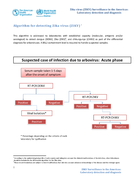
This algorithm is addressed to laboratories with established capacity(molecular, antigenic and/orserological) to detect dengue (DENV), Zika (ZIKV), and chikungunya(CHIKV) as part of the differential diagnosis for arborviruses. A BSL2 containment level is required to handle suspected samples.
This Training module on malaria elimination has been developed by WHO to support health professionals in planning, managing, monitoring and evaluating malaria elimination programmes
Bulletin of the World Health Organization; http://dx.doi.org/10.2471/BLT.16.176677