
Filter
3885
Text search:
environmental
factors
Featured
388
925
Language
3766
101
87
60
44
34
23
11
7
5
4
3
3
3
3
3
3
3
3
3
3
2
2
2
2
2
2
2
2
2
2
2
2
2
1
1
1
1
1
1
1
1
1
1
1
1
1
1
1
1
1
1
1
Document type
1856
866
540
260
194
62
59
18
10
6
4
4
3
1
Countries
235
150
103
81
79
77
75
72
65
65
59
58
55
53
51
51
47
47
44
43
38
31
28
27
26
25
24
21
21
21
21
20
20
18
18
18
17
17
17
17
15
15
15
14
13
12
12
12
11
10
10
10
10
10
10
9
9
9
9
8
7
7
6
6
6
6
5
5
4
4
4
4
3
3
3
3
3
3
3
3
3
3
2
2
2
2
2
2
2
2
2
2
2
2
2
2
1
1
1
1
1
1
1
1
1
1
1
1
1
1
1
1
1
1
1
1
1
1
1
1
1
1
1
1
1
1
1
1
Authors & Publishers
545
144
123
118
107
60
58
50
47
42
32
28
27
20
18
16
15
15
14
14
14
14
13
13
13
13
13
13
12
12
12
12
11
11
11
11
11
10
10
10
10
9
9
9
9
9
9
9
9
9
9
8
8
8
8
8
8
8
8
8
8
7
7
7
7
7
7
7
7
7
7
7
6
6
6
6
6
6
6
6
6
6
6
6
6
6
6
6
6
5
5
5
5
5
5
5
5
5
5
5
5
5
5
5
5
5
5
5
5
5
5
5
5
5
4
4
4
4
4
4
4
4
4
4
4
4
4
4
4
4
4
4
4
4
4
4
4
4
4
4
4
4
4
4
4
4
4
3
3
3
3
3
3
3
3
3
3
3
3
3
3
3
3
3
3
3
3
3
3
3
3
3
3
3
3
3
3
3
3
3
3
3
3
3
3
3
3
3
3
3
3
3
3
3
3
3
3
3
3
3
3
3
3
3
3
3
3
3
3
3
3
3
3
3
3
3
3
3
3
3
3
3
3
3
3
3
3
3
3
2
2
2
2
2
2
2
2
2
2
2
2
2
2
2
2
2
2
2
2
2
2
2
2
2
2
2
2
2
2
2
2
2
2
2
2
2
2
2
2
2
2
2
2
2
2
2
2
2
2
2
2
2
2
2
2
2
2
2
2
2
2
2
2
2
2
2
2
2
2
2
2
2
2
2
2
2
2
2
2
2
2
2
2
2
2
2
2
2
2
2
2
2
2
2
2
2
2
2
2
2
2
2
2
2
2
2
2
2
2
2
2
2
2
2
2
2
2
2
2
2
2
2
2
2
2
2
2
2
2
2
2
2
2
2
2
2
2
2
2
2
2
2
2
2
2
2
2
2
2
2
2
2
2
2
2
2
2
2
2
2
2
2
2
2
2
2
2
2
2
2
2
2
2
2
2
2
2
2
2
2
2
2
2
2
2
2
2
2
2
2
2
2
2
2
2
2
2
2
2
2
2
2
2
2
2
2
2
2
2
2
2
2
2
2
2
2
2
2
1
1
1
1
1
1
1
1
1
1
1
1
1
1
1
1
1
1
1
1
1
1
1
1
1
1
1
1
1
1
1
1
1
1
1
1
1
1
1
1
1
1
1
1
1
1
1
1
1
1
1
1
1
1
1
1
1
1
1
1
1
1
1
1
1
1
1
1
1
1
1
1
1
1
1
1
1
1
1
1
1
1
1
1
1
1
1
1
1
1
1
1
1
1
1
1
1
1
1
1
1
1
1
1
1
1
1
1
1
1
1
1
1
1
1
1
1
1
1
1
1
1
1
1
1
1
1
1
1
1
1
1
1
1
1
1
1
1
1
1
1
1
1
1
1
1
1
1
1
1
1
1
1
1
1
1
1
1
1
1
1
1
1
1
1
1
1
1
1
1
1
1
1
1
1
1
1
1
1
1
1
1
1
1
1
1
1
1
1
1
1
1
1
1
1
1
1
1
1
1
1
1
1
1
1
1
1
1
1
1
1
1
1
1
1
1
1
1
1
1
1
1
1
1
1
1
1
1
1
1
1
1
1
1
1
1
1
1
1
1
1
1
1
1
1
1
1
1
1
1
1
1
1
1
1
1
1
1
1
1
1
1
1
1
1
1
1
1
1
1
1
1
1
1
1
1
1
1
1
1
1
1
1
1
1
1
1
1
1
1
1
1
1
1
1
1
1
1
1
1
1
1
1
1
1
1
1
1
1
1
1
1
1
1
1
1
1
1
1
1
1
1
1
1
1
1
1
1
1
1
1
1
1
1
1
1
1
1
1
1
1
1
1
1
1
1
1
1
1
1
1
1
1
1
1
1
1
1
1
1
1
1
1
1
1
1
1
1
1
1
1
1
1
1
1
1
1
1
1
1
1
1
1
1
1
1
1
1
1
1
1
1
1
1
1
1
1
1
1
1
1
1
1
1
1
1
1
1
1
1
1
1
1
1
1
1
1
1
1
1
1
1
1
1
1
1
1
1
1
1
1
1
1
1
1
1
1
1
1
1
1
1
1
1
1
1
1
1
1
1
1
1
1
1
1
1
1
1
1
1
1
1
1
1
1
1
1
1
1
1
1
1
1
1
1
1
1
1
1
1
1
1
1
1
1
1
1
1
1
1
1
1
1
1
1
1
1
1
1
1
1
1
1
1
1
1
1
1
1
1
1
1
1
1
1
1
1
1
1
1
1
1
1
1
1
1
1
1
1
1
1
1
1
1
1
1
1
1
1
1
1
1
1
1
1
1
1
1
1
1
1
1
1
1
1
1
1
1
1
1
1
1
1
1
1
1
1
1
1
1
1
1
1
1
1
1
1
1
1
1
1
1
1
1
1
1
1
1
1
1
1
1
1
1
1
1
1
1
1
1
1
1
1
1
1
1
1
1
1
1
1
1
1
1
1
1
1
1
1
1
1
1
1
1
1
1
1
1
1
1
1
1
1
1
1
1
1
1
1
1
1
1
1
1
1
1
1
1
1
1
1
1
1
1
1
1
1
1
1
1
1
1
1
1
1
1
1
1
1
1
1
1
1
1
1
1
1
1
1
1
1
1
1
1
1
1
1
1
1
1
1
1
1
1
1
1
1
1
1
1
1
1
1
1
1
1
1
1
1
1
1
1
1
1
1
1
1
1
1
1
1
1
1
1
1
1
1
1
1
1
1
1
1
1
1
1
1
1
1
1
1
1
1
1
1
1
1
1
1
1
1
1
1
1
1
1
1
1
1
1
1
1
1
1
1
1
1
1
1
1
1
1
1
1
1
1
1
1
1
1
1
1
1
1
1
1
1
1
1
1
1
1
1
1
1
1
1
1
1
1
1
1
1
1
1
1
1
1
1
1
1
1
1
1
1
1
1
1
1
1
1
1
1
1
1
1
1
1
1
1
1
1
1
1
1
1
1
1
1
1
1
1
1
1
1
1
1
1
1
1
1
1
1
1
1
1
1
1
1
1
1
1
1
1
1
1
1
1
1
1
1
1
1
1
1
1
1
1
1
1
1
1
1
1
1
1
1
1
1
1
1
1
1
1
1
1
1
1
1
1
1
1
1
1
1
1
1
1
1
1
1
1
1
1
1
1
1
1
1
1
1
1
1
1
1
1
1
1
1
1
1
1
1
1
1
1
1
1
1
1
1
1
1
1
1
1
1
1
1
1
1
1
1
1
1
1
1
1
1
1
1
1
1
1
1
1
1
1
1
1
1
1
1
1
1
1
1
1
1
1
1
1
1
1
1
1
1
1
1
1
1
1
1
1
1
1
1
1
1
1
1
1
1
1
1
1
1
1
1
1
1
1
1
1
1
1
1
1
1
1
1
1
1
1
1
1
1
1
1
1
1
1
1
1
1
1
1
1
1
1
1
1
1
1
1
1
1
1
1
1
1
1
1
1
1
1
1
1
1
1
1
1
1
1
1
1
1
1
1
1
1
1
1
1
1
1
1
1
1
1
1
1
1
1
1
1
1
1
1
1
1
1
1
1
1
1
1
1
1
1
1
1
1
1
1
1
1
1
1
1
1
1
1
1
1
1
1
1
1
1
1
1
1
1
1
1
1
1
1
1
1
1
1
1
1
1
1
1
1
1
1
1
1
1
1
1
1
1
1
1
1
1
1
1
1
1
1
1
1
1
1
1
1
1
1
1
1
1
1
1
1
1
1
1
1
1
1
1
1
1
1
1
1
1
1
1
1
1
1
1
1
1
1
1
1
1
1
1
1
1
1
1
1
1
1
1
1
1
1
1
1
1
1
1
1
1
1
1
1
1
1
1
1
1
1
1
1
1
1
1
1
1
1
1
1
1
1
1
1
1
1
1
1
1
1
1
1
1
1
1
1
1
1
1
1
1
1
1
1
1
1
1
1
1
1
1
1
1
1
1
1
1
1
1
1
1
1
1
1
1
1
1
1
1
1
1
1
1
1
1
1
1
1
1
1
1
1
1
1
1
1
1
1
1
1
1
1
1
1
1
1
1
1
1
1
1
1
1
1
1
1
1
1
1
1
1
1
1
1
1
1
1
1
1
1
1
1
1
1
1
1
1
1
1
1
1
1
1
1
1
1
1
1
1
1
1
1
1
1
1
1
1
1
1
1
1
1
1
1
1
1
1
1
1
1
1
1
1
1
1
1
1
1
1
1
1
1
1
1
1
1
1
1
1
1
1
1
1
1
1
1
1
1
1
1
1
1
1
1
1
1
1
1
1
1
1
1
1
1
1
1
1
1
1
1
1
1
1
1
1
1
1
1
1
1
1
1
1
1
1
1
1
1
1
1
1
1
1
1
1
1
1
1
1
1
1
1
1
1
1
1
1
1
1
1
1
1
1
1
1
1
1
1
1
1
1
1
1
1
1
1
1
1
1
1
1
1
1
1
1
1
1
1
1
1
1
1
1
1
1
1
1
1
1
1
1
1
1
1
1
1
1
1
1
1
1
1
1
1
1
1
1
1
1
1
1
1
1
1
1
1
1
1
1
1
1
1
1
1
1
1
1
1
1
1
1
1
1
1
1
1
1
1
1
1
1
1
1
1
1
1
1
1
1
1
1
1
1
1
1
1
1
1
1
1
1
1
1
1
1
1
1
1
1
1
1
1
1
1
1
1
1
1
1
1
1
1
1
1
1
1
1
1
1
1
1
1
1
1
1
1
1
1
1
1
1
1
1
1
1
1
1
1
1
1
1
1
1
1
1
1
1
1
1
1
1
1
1
1
1
1
1
1
1
1
1
1
1
1
1
1
1
1
1
1
1
1
1
1
1
1
1
1
1
1
1
1
1
1
1
1
1
1
1
1
1
1
1
1
1
1
1
1
1
1
1
1
1
1
1
1
1
1
1
1
1
1
1
1
1
1
1
1
1
1
1
1
1
1
1
1
1
1
1
1
1
1
1
1
1
1
1
1
1
1
1
1
1
1
1
1
1
1
1
1
1
1
1
1
1
1
1
1
1
1
1
1
1
1
1
1
1
1
1
1
1
1
1
1
1
1
1
1
1
1
1
1
1
1
1
1
1
1
1
1
1
1
1
1
1
1
1
1
1
1
1
1
1
1
1
1
1
1
1
1
1
1
1
1
1
1
1
1
1
1
1
1
1
1
1
1
1
1
1
1
1
1
1
1
1
1
1
1
1
1
1
1
1
1
1
1
1
1
1
1
1
1
1
1
1
1
1
1
1
1
1
1
1
1
1
1
1
1
1
1
1
1
1
1
1
1
1
1
1
1
1
1
1
1
1
1
1
1
1
1
1
1
1
1
1
1
1
1
1
1
1
1
1
1
1
1
1
1
1
1
1
1
1
1
1
1
1
1
1
1
1
1
1
1
1
1
1
1
1
1
1
1
1
1
1
1
1
1
1
1
1
1
1
1
1
1
1
1
1
1
1
1
1
1
1
1
1
1
1
1
1
1
1
1
1
1
1
1
1
1
1
1
1
1
1
1
1
1
1
1
1
1
1
1
1
1
1
1
1
1
1
1
1
1
1
1
1
1
1
1
1
1
1
1
1
1
1
1
1
1
1
1
1
1
1
1
1
1
1
1
1
1
1
1
1
1
1
1
1
1
1
1
1
1
1
1
1
1
1
1
1
1
1
1
1
1
1
1
1
1
1
1
1
1
1
1
1
1
1
1
1
1
1
1
1
1
1
1
1
1
1
1
1
1
1
1
1
1
1
1
1
1
1
1
1
1
1
1
1
1
1
1
1
1
1
1
1
1
1
1
1
1
1
1
1
1
1
1
1
1
1
1
1
1
1
1
1
1
1
1
1
1
1
1
1
1
1
1
1
1
1
1
1
1
1
1
1
1
1
1
1
1
1
1
1
1
1
1
1
1
1
1
1
1
1
1
1
1
1
1
1
1
1
1
1
1
1
1
1
1
1
1
1
1
1
1
1
1
1
1
1
1
1
1
1
1
1
1
1
1
1
1
1
1
1
1
1
1
1
1
1
1
1
1
1
1
1
1
1
1
1
1
1
1
1
1
1
1
1
1
1
1
1
1
1
1
1
1
1
1
1
1
1
1
1
1
1
1
1
1
1
1
1
1
1
1
1
1
1
1
1
1
1
1
1
1
1
1
1
1
1
1
1
1
1
1
1
1
1
1
1
1
1
1
1
1
1
1
1
1
1
1
1
1
1
1
1
1
1
1
1
1
1
1
1
1
1
1
1
1
1
1
1
1
1
1
1
1
1
1
1
1
1
1
1
1
1
1
1
1
1
1
1
1
1
1
1
1
1
1
1
1
1
1
1
1
1
1
1
1
1
1
1
1
1
1
1
1
1
1
1
1
1
1
1
1
1
1
1
1
1
1
1
1
1
1
1
1
1
1
1
1
1
1
1
1
1
1
1
1
1
1
1
1
1
1
1
1
1
1
1
1
1
1
1
1
1
1
1
1
1
1
1
1
1
1
1
1
1
1
1
1
1
1
1
1
1
1
1
1
1
1
1
1
1
1
1
1
1
1
1
1
1
1
1
1
1
1
1
1
1
1
1
1
1
1
1
1
1
1
1
1
1
1
1
1
1
1
1
1
1
1
1
1
1
1
1
1
1
1
1
1
1
1
1
1
1
1
1
1
1
1
1
1
1
1
1
1
1
1
1
1
1
1
1
1
1
1
1
1
1
1
1
1
1
1
1
1
1
1
1
1
1
1
1
1
1
1
1
1
1
1
1
1
1
1
1
1
1
1
1
1
1
1
1
1
1
1
1
1
1
1
1
1
1
1
1
1
1
1
1
1
1
1
1
1
1
1
1
1
1
1
1
1
1
1
1
1
1
1
1
1
1
1
1
1
1
1
1
1
1
1
1
1
1
1
1
1
1
1
1
1
1
1
1
1
1
1
1
1
1
1
1
1
1
1
1
1
1
1
1
1
1
1
1
1
1
1
1
1
1
1
1
1
1
1
1
1
1
1
1
1
1
1
1
1
1
1
1
1
1
1
1
1
1
1
1
1
1
1
1
1
1
1
1
1
1
1
1
1
1
1
1
1
1
1
1
1
1
1
1
1
1
1
1
1
1
1
1
1
1
1
1
1
1
1
1
1
1
1
1
1
1
1
1
1
1
1
1
1
1
1
1
1
1
1
1
1
1
1
1
1
1
1
1
1
1
1
1
1
1
1
1
1
1
1
1
1
1
1
1
1
1
1
1
1
1
1
1
1
1
1
1
1
1
1
1
1
1
1
1
1
1
1
1
1
1
1
1
1
1
1
1
1
1
1
1
1
1
1
1
1
1
1
1
1
1
1
1
1
1
1
1
1
1
1
1
1
1
1
1
1
1
1
1
1
1
1
1
1
1
1
1
1
1
1
1
1
1
1
1
1
1
1
1
1
1
1
1
1
1
1
1
1
1
1
1
1
1
1
1
1
1
1
1
1
1
1
1
1
1
1
1
1
1
1
1
1
1
1
1
1
1
1
1
1
1
1
1
1
1
1
1
1
1
1
1
1
1
1
1
1
1
1
1
1
1
1
1
1
1
1
1
1
1
1
1
1
1
1
1
1
1
1
1
1
1
1
1
1
1
1
1
1
1
1
1
1
1
1
1
1
1
1
1
1
1
1
1
1
1
1
1
1
1
1
1
1
1
1
1
1
1
1
1
1
1
1
1
1
1
1
1
1
1
1
1
1
1
1
1
1
1
1
1
1
1
1
1
1
1
1
1
1
1
1
1
1
1
1
1
1
1
1
Publication Years
1
1252
2241
363
25
3
Category
1333
350
321
213
147
63
36
1
Toolboxes
363
314
265
234
158
139
131
122
119
116
111
92
72
72
68
55
55
55
46
45
45
33
33
26
14
2
2

As our world changes, so too does the burden of disease. Globalisation, evolving trade and consumption patterns, and increased access to life-saving medical care are just some of the factors that have transformed the global health landscape.
This policy brief has been developed in response to the contemporary challenge of antibiotic resistance (ABR). ABR poses a formidable threat to global health and sustainable development. It is now increasingly recognized that the systematic neglect of cultural
...
factors is one of the biggest obstacles to achieving better health outcomes and better standards of living worldwide. Using a cultural contexts of health approach, the policy brief explores the centrality of culture to the challenge of ABR. The brief examines how the prescription and use of antibacterial medicines, the transmission of resistance, and the regulation and funding of research are influenced by cultural, social and commercial, as well as biological and technological factors. The brief moves beyond the ready equation of culture with individual behaviours and demonstrates how culture serve as an enabler of health and provide new possibilities for change.
more
A Step-by-Step Guide.
It is intended for health planners, dengue or vector control programme managers and individuals, nongovernmental organizations (NGOs) and other agencies with interests and/or expertise in developing biological, chemical, environmenta
...
l and communication interventions to prevent and control dengue fever.
more
Humanitarian emergencies, regardless of type and cause, have a number of common risk factors for communicable diseases inextricably linked to excess risk of morbidity and mortality which can come from vaccine–preventable diseases (VPDs). The reduc
...
tion of VPDs is a significant aim of public-health interventions during crises.
The WHO Strategic Advisory Group of Experts (SAGE) on Immunization carried out a comprehensive review of evidence on vaccination decision-making processes and considerations in humanitarian emergencies.
more

The purpose of the WHO Manual for the Public Health Management of Chemical Incidents is to provide a comprehensive overview of the principles and roles of public health in the management of chemical incidents and emergencies. While this information is provided for each phase of the emergency cycle,
...
including prevention, planning and preparedness, detection and alert, response and recovery, it is recognized that the management of chemical incidents and emergencies requires a multi-disciplinary and multi-sectoral approach and that the health sector may play an influencing, complementary or a leadership role at various stages of the management process. The target audience includes public health and environmental professionals, as well as any other person involved in the management of chemical incidents.
WHO and all those involved in the development of the publication hope that the publication will have wide application, especially in developing countries and countries with economies in transition, and that in the future the health sector will be better prepared to acknowledge and fulfill its roles and responsibilities in the management of chemical incidents and emergencies, thereby contributing to the prevention and mitigation of their health consequences.
The publication is also available in French: http://apps.who.int/iris/bitstream/handle/10665/246117/9789242598148-fre.pdf?sequence=1 and in Spanish: http://apps.who.int/iris/bitstream/handle/10665/246118/9789243598147-spa.pdf?sequence=1
more
The publication conveys the quantitative surveillance results focusing on tobacco use and noncommunicable disease (NCD) related behaviours among youth (13–15 years) in Member States of the WHO South-East Asia Region, namely, the Global School-based Student Health Survey (GSHS) and the Global Youth
...
Tobacco Survey (GYTS). This publication contains selected indicators relating to tobacco use and other related risk behaviours of youth (aged 13–15 years) in Member States of the WHO South-East Asia Region. The tobacco indicators are mainly taken from GYTS and other indicators relating to risk behaviours (dietary behaviours, physical activity, alcohol use, drug use, mental health, violence and unintentional injury, sexual behaviours, protective factors and hygiene) are taken from GSHS. The latest findings from surveys conducted in Member States are presented in the publication.
more

Community-Based Rehabilitation Services in Low and Middle-Income Countries in the Asia-Pacific Region: Successes and Challenges in the Implementation of the CBR Matrix
Adela Cayetano, R.D.; and J. Elkins
Disability, CBR & Inclusive Development Journal (DCIDJ)
(2016)
CC
Conclusion: CBR has improved the quality of life, access to medical services, functional independence, autonomy, community inclusion, and empowerment of people with disabilities in LMICs in the Asia-Pacific region. However, challenges in the implementation of CBR remain. These include lack of awaren
...
ess and understanding of CBR, and physical, environmental, socio-economical and personal barriers.
more
This Review summarizes many of the persistent biological alterations associated with childhood maltreatment including changes in neuroendocrine and neurotransmitter systems and pro-inflammatory cytokines in addition to specific alterations in brain areas associated with mood regulation. Finally, I d
...
iscuss several candidate gene polymorphisms that interact with childhood maltreatment to modulate vulnerability to major depression and PTSD and epigenetic mechanisms thought to transduce environmental stressors into disease vulnerability.
Neuron Review, vol. 89, March 2, 2016 pp.892-909
more

Public Health Aspects of Mental Health Among Migrants and Refugees: A Review of the Evidence on Mental Health Care for Refugees, Asylum Seekers and Irregular Migrants in the WHO European Region
Priebe, S.; D. Giacco, and Rawda El-Nagib.
World Health Organization WHO; Regional Office Europe
(2016)
C_WHO
Health Evidence Network Synthesis Report, No. 47
The increasing number of refugees, asylum seekers and irregular migrants poses a challenge for mental health services in Europe. This review found that these groups are exposed to risk factors for me
...
ntal disorders before, during and after migration. The prevalence rates of psychotic, mood and substance use disorders in these groups are variable but overall are similar to those in the host populations; however, the rates of post-traumatic stress disorder in refugees and asylum seekers are higher.
more
Technical guidance.
This technical guidance aims to inform policy and practice development specifically related to improving the health of older refugees and migrants within the European Union and the larger WHO European Region. Both ageing and migration are in themselves complex multidimensional p
...
rocesses shaped by a range of factors at the micro, meso and macro levels over the life-course of the individual, but also with intertwined trajectories. Relevant areas for policy-making include healthy ageing over the life-course, supportive environments, people-centred health and long-term care services, and strengthening the evidence base and research
more
The toolkit's purpose is to:
improve the primary health care response for older persons.
sensitize and educate primary health care workers about the specific needs of their older clients.
provide primary care health workers with a set of tools/instruments to assess older people's hea
...
lth.
raise awareness among primary care health workers of the accumulation of minor/major disabilities experienced by older people.
provide guidance on how to make primary health care management procedures more responsive to the needs of older people's needs.
offer direction on how to do environmental audits to test primary health care centres for their age-friendliness.
The toolkit comprises a number of instruments (evaluation forms, slides, figures, graphs, diagrams, scale tables, country guidelines, exam sheets, screening tools, cards, checklists, etc.) that can be used by primary health care workers to assess and address older persons' health. These resources are meant to supplement and not to replace local and national materials and guidelines
more
The booklet starts with a general overview of how illicit drugs and the environment are linked within the bigger picture of the Sustainable Development Goals, climate change and environmental sustainability. It highlights direct and indirect linkage
...
s and gives examples of the significant local and individual-level impact that drugs can have on the environment. This is followed by a more in-depth overview of the latest scientific evidence for plant-based drugs and for synthetic drugs. For plant-based drugs, for example, this includes an analysis of the relationship between illicit crop cultivation and deforestation. For synthetic drugs, it includes an analysis of waste composition, volumes, and dumping and discharge, as well as the relation with wastewater treatment.
more

Antimicrobial resistance (AMR) is a serious public health concern with economic, social and political implications that are global in scope, and cross all environmental and ethnic boundaries. As a global threat, AMR risks the ach
...
ievements of modern medicine, and has the potential to impact overall global development. It is important, therefore, to elevate AMR beyond health as part of a larger development agenda in the context of the Sustainable Development Goals (SDGs). This report provides in-depth technical discussions in areas that have direct implications to the containment of AMR as a development agenda. The report is organized in five chapters which served as the technical background documents for the Biregional Technical Consultation on AMR in Asia, 14-15 April 2016. More information from the meeting is available in the WHO Meeting Report: Biregional Technical Consultation on Antimicrobial Resistance in Asia. The meeting was the first time senior officials from the Ministry of Health and Ministry of Agriculture across Asia came together to tackle AMR
more
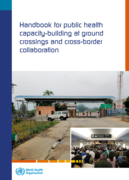
This handbook follows a comprehensive approach to health system strengthening at borders in order to support IHR national focal points and other national agencies in developing and implementing evidence-based action plans for IHR capacity development at ground crossings. The approach includes the mo
...
vement of travellers and baggage, cargo, containers, conveyances, goods and postal parcels across ground crossings, as well as the interaction with adjacent border communities. Other factors can be considered, if needed, throughout the risk assessment.
more
The escalating antimicrobial resistance (AMR) pandemic is a global public health threat with extensive health, economic and societal implications. Resistance emerges because of selection pressure from rational and indiscriminate antimicrobial use in human health as well as in the veterinary, agricul
...
ture and environmental sectors. Infections caused by resistant bacteria result in longer duration of illness, higher mortality rates and increased costs associated with alternative treatment. AMR further constrains procedures that rely on antimicrobial prophylaxis, and AMR is recognized as a threat to theworld economy.
Journal of Public Health | Vol. 39, No. 1, pp. 8–13 | doi:10.1093/pubmed/fdw015 | Advance Access Publication March 3 2016
more

As part of our commitment to the fight against NCDs, Nigeria was signatory to the political declaration at the UN General Assembly High Level Meeting on NCDs in September 2011. Thus, the purpose of this document is to develop and ensure the implementation of policies and p
...
rogrammes that will engender and guarantee a healthy lifestyle and quality health for all Nigerians. The core sections include background, scope of the policy, policy goal, strategic thrusts for implementation, programme management and coordination, roles of stakeholders and partnership coordination. It is expected that with the adoption of this policy, the control and prevention of NCDs and their associated risk factors will be well integrated at all levels of government and health care delivery system in Nigeria. This policy document is therefore a stepping stone towards the development of guidelines for the prevention and management of NCDs.
more
5 May 2021
This Information Note is intended to assist national TB programmes and health personnel worldwide to maintain essential tuberculosis (TB) services during the COVID-19 pandemic and in the recovery phase. It is important that recent progress made in TB prevention and care is not reversed b
...
y COVID-19. The WHO Global TB Programme, along with WHO regional and country offices, developed this note in response to questions received from Member States and other partners since the start of the pandemic. The note includes references to other published WHO information products relevant to TB practitioners. WHO continues to monitor the situation closely for any changes that may influence this note and will issue updates should any factors change.
more
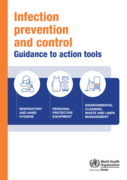
No country can claim to be free from health-care associated infections, therefore, improvement of infection prevention and control (IPC) strategies is essential. WHO recommends the use of multimodal improvement strategies to implement IPC interventions. These include each item of standard and transm
...
ission-based precautions according to national guidelines or standard operating procedures and under the coordination of the national IPC focal point (or team, if existing). This publication consists of three focused improvement tools, called “aide-memoires”, which focus on 1) respiratory and hand hygiene, 2) personal protective equipment, and 3) environmental cleaning, waste and linen management, all elements of standard, droplet/contact and airborne precautions.
more
Ghana's attempt to regulate health care waste management started in 2002 with the development of guidelines on health care waste manage-ment by the Environmental Protection Agency (EPA). In 2006, the Ghana Health Service (GHS) also developed the Hea
...
lth Care Waste Management Policy and Guidelines as a single document.
Although awareness on Health Care Waste Management (HCWM) has improved in recent years, there is the need for a systematic approach to improve on effective segregation, safe collection, and storage, as well as ultimate treatment before disposal.
This guideline seeks to ensure that HCW is managed effectively in compliance with existing International Conventions that Ghana is a signatory to, national laws and regulations, and others to be passed in future.
Recommendations for better management of HCW in the nation's health care facilities have been presented in this document. Also, standard operating procedures (SOPs) have been developed to provide
guidance to various levels of the health facilities.
more
To guide One Health capacity building efforts in the Republic of Guinea in the wake of the 2014–2016 Ebola virus disease (EVD) outbreak, we sought to identify and assess the existing systems and structures for zoonotic disease detection and control. We partnered with the government ministries resp
...
onsible for human, animal, and environmental health to identify a list of zoonotic diseases – rabies, anthrax, brucellosis, viral hemorrhagic fevers, trypanosomiasis and highly pathogenic avian influenza – as the country's top priorities. We used each priority disease as a case study to identify existing processes for prevention, surveillance, diagnosis, laboratory confirmation, reporting and response across the three ministries. Results were used to produce disease-specific systems “maps” emphasizing linkages across the systems, as well as opportunities for improvement. We identified brucellosis as a particularly neglected condition. Past efforts to build avian influenza capabilities, which had degraded substantially in less than a decade, highlighted the challenge of sustainability. We observed a keen interest across sectors to reinvigorate national rabies control, and given the regional and global support for One Health approaches to rabies elimination, rabies could serve as an ideal disease to test incipient One Health coordination mechanisms and procedures. Overall, we identified five major categories of gaps and challenges: (1) Coordination; (2) Training; (3) Infrastructure; (4) Public Awareness; and (5) Research. We developed and prioritized recommendations to address the gaps, estimated the level of resource investment needed, and estimated a timeline for implementation. These prioritized recommendations can be used by the Government of Guinea to plan strategically for future One Health efforts, ideally under the auspices of the national One Health Platform. This work demonstrates an effective methodology for mapping systems and structures for zoonotic diseases, and the benefit of conducting a baseline review of systemic capabilities prior to embarking on capacity building efforts.
more
