
Filter
3163
Text search:
disability
data
Featured
277
734
Language
3071
78
73
48
37
31
19
12
9
8
5
4
4
3
3
3
3
3
3
3
3
3
3
3
3
2
2
2
2
2
2
2
2
2
2
1
1
1
1
1
1
1
1
1
1
1
1
1
1
1
1
1
1
Document type
1775
605
332
185
144
46
40
21
9
4
2
Countries
187
128
87
72
69
62
56
55
55
52
52
51
46
44
39
39
37
35
34
34
33
30
30
28
28
25
23
22
22
21
18
18
15
12
12
12
12
12
11
10
10
10
9
9
9
9
8
8
8
8
8
7
7
7
7
7
6
6
6
6
6
6
6
5
5
5
5
5
5
4
4
4
4
4
3
3
3
3
2
2
2
2
2
2
2
2
2
2
2
2
2
2
2
1
1
1
1
1
1
1
1
1
1
1
1
1
1
1
1
1
1
1
1
1
1
1
1
1
1
1
1
1
1
1
1
1
1
1
1
Authors & Publishers
423
137
115
97
89
72
56
50
49
36
30
27
23
23
22
19
19
17
16
16
14
13
13
13
12
11
11
11
11
10
10
10
10
10
10
10
10
10
9
9
9
8
8
8
8
8
8
8
7
7
7
7
7
7
7
7
7
7
7
6
6
6
6
6
6
6
6
6
6
6
5
5
5
5
5
5
5
5
5
5
5
5
5
5
5
5
5
5
5
5
5
5
4
4
4
4
4
4
4
4
4
4
4
4
4
4
4
4
4
4
4
4
4
4
4
4
4
4
4
4
4
4
4
4
3
3
3
3
3
3
3
3
3
3
3
3
3
3
3
3
3
3
3
3
3
3
3
3
3
3
3
3
3
3
3
3
3
3
3
3
3
3
3
3
3
3
3
3
3
3
3
3
3
3
3
3
3
3
3
3
3
2
2
2
2
2
2
2
2
2
2
2
2
2
2
2
2
2
2
2
2
2
2
2
2
2
2
2
2
2
2
2
2
2
2
2
2
2
2
2
2
2
2
2
2
2
2
2
2
2
2
2
2
2
2
2
2
2
2
2
2
2
2
2
2
2
2
2
2
2
2
2
2
2
2
2
2
2
2
2
2
2
2
2
2
2
2
2
2
2
2
2
2
2
2
2
2
2
2
2
2
2
2
2
2
2
2
2
2
2
2
2
2
2
2
2
2
2
2
2
2
2
2
2
2
2
2
2
2
2
2
2
2
2
2
2
2
2
2
2
2
2
2
2
2
2
2
2
2
2
2
2
2
1
1
1
1
1
1
1
1
1
1
1
1
1
1
1
1
1
1
1
1
1
1
1
1
1
1
1
1
1
1
1
1
1
1
1
1
1
1
1
1
1
1
1
1
1
1
1
1
1
1
1
1
1
1
1
1
1
1
1
1
1
1
1
1
1
1
1
1
1
1
1
1
1
1
1
1
1
1
1
1
1
1
1
1
1
1
1
1
1
1
1
1
1
1
1
1
1
1
1
1
1
1
1
1
1
1
1
1
1
1
1
1
1
1
1
1
1
1
1
1
1
1
1
1
1
1
1
1
1
1
1
1
1
1
1
1
1
1
1
1
1
1
1
1
1
1
1
1
1
1
1
1
1
1
1
1
1
1
1
1
1
1
1
1
1
1
1
1
1
1
1
1
1
1
1
1
1
1
1
1
1
1
1
1
1
1
1
1
1
1
1
1
1
1
1
1
1
1
1
1
1
1
1
1
1
1
1
1
1
1
1
1
1
1
1
1
1
1
1
1
1
1
1
1
1
1
1
1
1
1
1
1
1
1
1
1
1
1
1
1
1
1
1
1
1
1
1
1
1
1
1
1
1
1
1
1
1
1
1
1
1
1
1
1
1
1
1
1
1
1
1
1
1
1
1
1
1
1
1
1
1
1
1
1
1
1
1
1
1
1
1
1
1
1
1
1
1
1
1
1
1
1
1
1
1
1
1
1
1
1
1
1
1
1
1
1
1
1
1
1
1
1
1
1
1
1
1
1
1
1
1
1
1
1
1
1
1
1
1
1
1
1
1
1
1
1
1
1
1
1
1
1
1
1
1
1
1
1
1
1
1
1
1
1
1
1
1
1
1
1
1
1
1
1
1
1
1
1
1
1
1
1
1
1
1
1
1
1
1
1
1
1
1
1
1
1
1
1
1
1
1
1
1
1
1
1
1
1
1
1
1
1
1
1
1
1
1
1
1
1
1
1
1
1
1
1
1
1
1
1
1
1
1
1
1
1
1
1
1
1
1
1
1
1
1
1
1
1
1
1
1
1
1
1
1
1
1
1
1
1
1
1
1
1
1
1
1
1
1
1
1
1
1
1
1
1
1
1
1
1
1
1
1
1
1
1
1
1
1
1
1
1
1
1
1
1
1
1
1
1
1
1
1
1
1
1
1
1
1
1
1
1
1
1
1
1
1
1
1
1
1
1
1
1
1
1
1
1
1
1
1
1
1
1
1
1
1
1
1
1
1
1
1
1
1
1
1
1
1
1
1
1
1
1
1
1
1
1
1
1
1
1
1
1
1
1
1
1
1
1
1
1
1
1
1
1
1
1
1
1
1
1
1
1
1
1
1
1
1
1
1
1
1
1
1
1
1
1
1
1
1
1
1
1
1
1
1
1
1
1
1
1
1
1
1
1
1
1
1
1
1
1
1
1
1
1
1
1
1
1
1
1
1
1
1
1
1
1
1
1
1
1
1
1
1
1
1
1
1
1
1
1
1
1
1
1
1
1
1
1
1
1
1
1
1
1
1
1
1
1
1
1
1
1
1
1
1
1
1
1
1
1
1
1
1
1
1
1
1
1
1
1
1
1
1
1
1
1
1
1
1
1
1
1
1
1
1
1
1
1
1
1
1
1
1
1
1
1
1
1
1
1
1
1
1
1
1
1
1
1
1
1
1
1
1
1
1
1
1
1
1
1
1
1
1
1
1
1
1
1
1
1
1
1
1
1
1
1
1
1
1
1
1
1
1
1
1
1
1
1
1
1
1
1
1
1
1
1
1
1
1
1
1
1
1
1
1
1
1
1
1
1
1
1
1
1
1
1
1
1
1
1
1
1
1
1
1
1
1
1
1
1
1
1
1
1
1
1
1
1
1
1
1
1
1
1
1
1
1
1
1
1
1
1
1
1
1
1
1
1
1
1
1
1
1
1
1
1
1
1
1
1
1
1
1
1
1
1
1
1
1
1
1
1
1
1
1
1
1
1
1
1
1
1
1
1
1
1
1
1
1
1
1
1
1
1
1
1
1
1
1
1
1
1
1
1
1
1
1
1
1
1
1
1
1
1
1
1
1
1
1
1
1
1
1
1
1
1
1
1
1
1
1
1
1
1
1
1
1
1
1
1
1
1
1
1
1
1
1
1
1
1
1
1
1
1
1
1
1
1
1
1
1
1
1
1
1
1
1
1
1
1
1
1
1
1
1
1
1
1
1
1
1
1
1
1
1
1
1
1
1
1
1
1
1
1
1
1
1
1
1
1
1
1
1
1
1
1
1
1
1
1
1
1
1
1
1
1
1
1
1
1
1
1
1
1
1
1
1
1
1
1
1
1
1
1
1
1
1
1
1
1
1
1
1
1
1
1
1
1
1
1
1
1
1
1
1
1
1
1
1
1
1
1
1
1
1
1
1
1
1
1
1
1
1
1
1
1
1
1
1
1
1
1
1
1
1
1
1
1
1
1
1
1
1
1
1
1
1
1
1
1
1
1
1
1
1
1
1
1
1
1
1
1
1
1
1
1
1
1
1
1
1
1
1
1
1
1
1
1
1
1
1
1
1
1
1
1
1
1
1
1
1
1
1
1
1
1
1
1
1
1
1
1
1
1
1
1
1
1
1
1
1
1
1
1
1
1
1
1
1
1
1
1
1
1
1
1
1
1
1
1
1
1
1
1
1
1
1
1
1
1
1
1
1
1
1
1
1
1
1
1
1
1
1
1
1
1
1
1
1
1
1
1
1
1
1
1
1
1
1
1
1
1
1
1
1
1
1
1
1
1
1
1
1
1
1
1
1
1
1
1
1
1
1
1
1
1
1
1
1
1
1
1
1
1
1
1
1
1
1
1
1
1
1
1
1
1
1
1
1
1
1
1
1
1
1
1
1
1
1
1
1
1
1
1
1
1
1
1
1
1
1
1
1
1
1
1
1
1
1
1
1
1
1
1
1
1
1
1
1
1
1
1
1
1
1
1
1
1
1
1
1
1
1
1
1
1
1
1
1
1
1
1
1
1
1
1
1
1
1
1
1
1
1
1
1
1
1
1
1
1
1
1
1
1
1
1
1
1
1
1
1
1
1
1
1
1
1
1
1
1
1
1
1
1
1
1
1
1
1
1
1
1
1
1
1
1
1
1
1
1
1
1
1
1
1
1
1
1
1
1
1
1
1
1
1
1
1
1
1
1
1
1
1
1
1
1
1
1
1
1
1
1
1
1
1
1
1
1
1
1
1
1
1
1
1
1
1
1
1
1
1
1
1
1
1
1
1
1
1
1
1
1
1
1
1
1
1
1
1
1
1
1
1
1
1
1
1
1
1
1
1
1
1
1
1
1
1
1
1
1
1
1
1
1
1
1
1
1
1
1
1
1
1
1
1
1
1
1
1
1
1
1
1
1
1
1
1
1
1
1
1
1
1
1
1
1
1
1
1
1
1
1
1
1
1
1
1
1
1
1
1
1
1
1
1
1
1
1
1
1
1
1
1
1
1
1
1
1
1
1
1
1
1
1
1
1
1
1
1
1
1
1
1
1
1
1
1
1
1
1
1
1
1
1
1
1
1
1
1
1
1
1
1
1
1
1
1
1
1
1
1
1
1
1
1
1
1
1
1
1
1
1
1
1
1
1
1
1
1
1
1
1
1
1
1
1
1
1
1
1
1
1
1
1
1
1
1
1
1
1
1
1
1
1
1
1
1
1
1
1
1
1
1
1
1
1
1
1
1
1
1
1
1
1
1
1
1
1
1
1
1
1
1
1
1
1
1
1
1
1
1
1
1
1
1
1
1
1
1
1
1
1
1
1
1
1
1
1
1
1
1
1
1
1
1
1
1
1
1
1
1
1
1
1
1
1
1
1
1
1
1
1
1
1
1
1
1
1
1
1
1
1
1
1
1
1
1
1
1
1
1
1
1
1
1
1
1
1
1
1
1
1
1
1
1
1
1
1
1
1
1
1
1
1
1
1
1
1
1
1
1
1
1
1
1
1
1
1
1
1
1
1
1
1
1
1
1
1
1
1
1
1
1
1
1
1
1
1
1
1
1
1
1
1
1
1
1
1
1
1
1
1
1
1
1
1
1
1
1
1
1
1
1
1
1
1
1
1
1
1
1
1
1
1
1
1
1
1
1
1
1
1
1
1
1
1
1
1
1
1
1
1
1
1
1
1
1
1
1
1
1
1
1
1
1
1
1
1
1
1
1
1
1
1
1
1
1
1
1
1
1
1
1
1
1
1
1
1
1
1
1
1
1
1
1
1
1
1
1
1
1
1
1
1
1
1
1
1
1
1
1
1
1
1
1
1
1
1
1
1
1
1
1
1
1
1
1
1
1
1
1
1
1
1
1
1
1
1
1
1
1
1
1
1
1
1
1
1
1
1
1
1
1
1
1
1
1
1
1
1
1
1
1
1
1
1
1
1
1
1
1
1
1
1
1
1
1
1
1
1
1
1
1
1
1
1
1
1
1
1
1
1
1
1
1
1
1
1
1
1
1
1
1
1
1
1
1
1
1
1
1
1
1
1
1
1
1
1
1
1
1
1
1
1
1
1
1
1
1
1
1
1
1
1
1
1
1
1
1
1
1
1
1
1
1
1
1
1
1
1
1
1
1
1
1
1
1
1
1
1
1
1
1
1
1
1
1
1
1
1
1
1
1
1
1
1
1
1
1
1
1
1
1
1
1
1
1
1
1
1
1
1
1
1
1
1
1
1
1
1
1
1
1
1
1
1
1
1
1
1
1
1
1
1
1
1
1
1
1
1
1
1
1
1
1
1
1
1
1
1
1
1
1
1
1
1
1
1
1
1
1
1
1
1
1
1
1
1
1
1
1
1
1
1
1
1
1
1
1
1
1
1
1
1
1
1
1
1
1
1
1
1
1
1
1
1
1
1
1
1
1
1
1
1
1
1
1
1
1
1
1
1
1
1
1
1
1
1
1
1
1
1
1
1
1
1
1
1
1
1
1
1
1
1
1
1
1
1
1
1
1
1
1
1
1
1
1
1
1
1
1
1
1
1
1
1
1
1
1
1
1
1
1
1
1
1
1
1
1
1
1
1
1
1
1
1
1
1
1
1
1
1
1
1
1
1
1
1
1
1
1
1
1
1
1
1
1
1
1
1
1
1
1
1
1
1
1
1
1
1
1
1
1
1
1
1
1
1
1
1
1
1
1
1
1
1
1
1
1
1
1
Publication Years
1
933
1972
246
10
1
Category
1107
251
212
197
191
47
11
2
Toolboxes
455
439
181
160
115
108
105
85
76
65
56
55
43
38
33
29
25
22
16
14
13
8
5
3
1
1
Health in All Policies: A Guide for State and Local Governments was created by the Public Health Institute, the California Department of Public Health, and the American Public Health Association in response to growing interest in using collaborative approaches to improve population health by embedd
...
ing health considerations into decision-making processes across a broad array of sectors. The Guide draws heavily on the experiences of the California Health in All Policies Task Force and incorporates information from the published and gray literature and interviews with people across the country.
The guide was developed through funding from the American Public Health Association and The California Endowment.
more

This report makes the case for a major new initiative—to rapidly recruit, train and deploy 2 million community health workers in Africa. Drawing on a vast body of evidence and substantial regional experience, the report shows how community health workers save lives and improve quality of life and
...
how investments in community health workers effectively harness the demographic dividend, reduce gender inequality and accelerate economic growth and development. Indeed, the benefits of community health workers stretch from one end of the Agenda for Sustainable Development to the other.
more

The overall goal of this strategy is to ensure accurate understanding of the
benefits of covid-19 vaccination and alleviate apprehension about the vaccine, to ensure its acceptance and encourage uptake across various audiences.
Objectives
x Create demand, promote acceptability and accessibility o
...
f COVID-19
vaccine among at least 90% of the general public.
x Develop appropriate messages and identify channels to communicate
the potential benefits and risks of the vaccine to all concerned parties,
including decision-makers at all levels.
x Provide timely and accurate information to address misinformation,
rumors and other crisis situations.
x Effectively mobilize and empower communities to ensure participation
and ownership of the vaccination process
x Strengthen communication mechanisms and partnerships among key
stakeholders to support the national communication effort.
more

Community health nurses have the potential to make significant contributions to meet the health care needs of various population groups in a variety of community settings. In order to assess the extent to which CHNs are achieving this potential, WHO conducted a study between 2010 and 2014 that exami
...
ned the status of community health nursing in 22 countries, 13 of which were experiencing a critical shortage of health care workers. The study revealed that the countries surveyed had the basic and operational framework for optimizing CHN in their health systems as evidenced by the availability of PHC structures to guide interventions. However, challenges were identified related to the education, practice and management of CHNs in these countries. The major challenges identified were: Limited availability of career opportunities; poor worker retention; low recognition for CHNs; inadequate and unsupportive working conditions and environments; absence of educational standards; varying educational entry-level requirements for CHN programmes; and a lack of consensus on the scope of practice for CHNs.
more

he WHO South-East Region in 2019 accounted for nearly a million missing TB patients from the estimated incidence. Active case-finding (ACF) or systematic screening for tuberculosis is an important tool to reach out to missing TB patients. When appropriately implemented, the activity is cost effectiv
...
e, helps to reduce diagnosis and treatment delays, and prevents the spread of the disease. This document presents an analysis of published ACF studies from the Region. It can be used by Member States for effective planning, implementation and monitoring of these activities.
more

Noma (cancrum oris) is a severe gangrenous disease of the mouth and face. It mostly affects children between the ages of 2 and 6 years living in extreme poverty. In addition to the known factors such as malnutrition, lack of vaccination in children and poor oral hygiene, several social and environme
...
ntal factors such as maternal malnutrition and close spacing of pregnancies that result in offspring with increasingly weakened immune systems are potentially related to the onset of the disease.
The aim of this guide is to assist the ministries of health (MoHs) to identify a general goal to be attained by the end of five years, with a view to sustainably reducing the incidence of noma as a public health problem through programmes that are fully integrated with national health planning, strengthening of primary health care (PHC) and attainment of UHC.
more
Burns are a global public health problem, accounting for close to 200,000 deaths annually. The majority of these occur in low- and middle-income countries, where a number of constraints complicate the public health task of addressing burns. While the primary prevention of burns in low- and middle-in
...
come countries is a pressing need, the World Health Organization (WHO) also actively encourages further development of burn-care systems, including the training of health-care providers in the appropriate triage and management of people with burns.
more
This is a guidance document for countries and implementing partners on the technical requirements for developing digital information systems for issuing standards-based interoperable digital certificates for COVID-19 vaccination status, and considerations for implementation of such systems, for the
...
purposes of continuity of care, and proof of vaccination.
more

The framework sets out a response to current mental health challenges arising from the negative impact that the COVID-19 pandemic has had on population mental health and well-being. The EFAMH provides a coherent basis for intensified efforts to mainstream, promote and safeguard mental well-being as
...
an integral element of COVID-19 response and recovery; to counter the stigma and discrimination associated with mental health conditions;
more
This inter-agency guidance document aims to supplement the COVAX demand creation package for COVID-19 vaccines with key considerations for humanitarian contexts and marginalized populations with specific access and communication needs.
21 Sept.2021
A clinical case definition of post COVID-19 condition by a Delphi consensus, 6 October 2021
recommended
WHO has developed a clinical case definition of post COVID-19 condition by Delphi methodology that includes 12 domains, available for use in all settings. This first version was developed by patients, researchers and others, representing all WHO regions, with the understanding that the definition ma
...
y change as new evidence emerges and our understanding of the consequences of COVID-19 continues to evolve.
Post COVID-19 condition occurs in individuals with a history of probable or confirmed SARS CoV-2 infection, usually 3 months from the onset of COVID-19 with symptoms and that last for at least 2 months and cannot be explained by an alternative diagnosis. Common symptoms include fatigue, shortness of breath, cognitive dysfunction but also others and generally have an impact on everyday functioning. Symptoms may be new onset following initial recovery from an acute COVID-19 episode or persist from the initial illness. Symptoms may also fluctuate or relapse over time.
more
Self-help Plus (SH+)
recommended
A group-based stress managment course for adults.
Self-Help Plus (SH+) is WHO’s 5-session stress management course for large groups of up to 30 people. It is delivered by supervised, non-specialist facilitators who complete a short training course and use pre-recorded audio and an illustrated gui
...
de (Doing What Matters in Times of Stress) to teach stress management skills. The course is suitable for adults who experiences stress, wherever they live and whatever their circumstances. It has been shown to reduce psychological distress and prevent the onset of mental disorders. The format of SH+ makes it well-suited for use alongside other mental health interventions, as a first step in a stepped care programme, or as a community intervention delivered alongside broader community programming.
Download the audio files in English directly from the WHO Website https://www.who.int/publications/i/item/9789240035119
more

Using Epidemiology to Support Primary Health Care. Updated version of the WHO handbook published in the early 1990's entitled: Manual of Epidemiology for District Health Management or those with an interest in applied epidemiology in primary health care and district health systems
For most people in displacement contexts, there are simply not enough vaccines available in the places where they are hosted: 85% of refugees are hosted in lower- and middle-income countries, while in the first six months of this year 85% of vaccines went to wealthy countries; lower- and middle inco
...
me countries have still received only a fraction of the vaccine doses they require.3 Shortages in these countries can also pose particular risks to vaccination campaigns aimed at displaced populations, as they can result in them being deprioritized.
more
2nd edition. The purpose of the WHO human health risk assessment toolkit: chemical hazards is to provide its users with guidance to identify, acquire and use the information needed to assess chemical hazards, exposures and the corresponding health risks in their given health risk assessment contexts
...
at local and/or national levels.
The Toolkit provides road maps for conducting a human health risk assessment, identifies information that must be gathered to complete an assessment and provides electronic links to international resources from which the user can obtain information and methods essential for conducting the human health risk assessment
more
This Global Competency Standards sets the benchmark for the health workforce in providing equality of care to refugees and migrants. Refugee and migrant populations are highly diverse, with significant variation in life experiences, health needs and access to health care. The standards described out
...
line expected behaviours of health workers in delivering quality care to refugees and migrants and can be used to inform the outcomes of education programmes aligned with standards for care. The Competency Standards is designed to provide a foundation to support the development of competency-based curricula tailored to the local context and for health workers to achieve a minimum level of competence. The importance of person-centred, culturally responsive care is emphasized in the nine competency standards, which recognize the need for health workers to be trained, supported and empowered within strong health systems
more
This Curriculum Guide accompanies the Refugee and Migrant Health: Global Competency Standards for Health Workers and the Knowledge Guide to support the operationalization of the Standards. The Curriculum Guide provides guidance for institutions, health organizations and individuals engaged in the ed
...
ucation and training of health practitioners and health administrators to support incorporation of the knowledge, skills and attitudes set out in the Knowledge Guide into curricula and for assessment of the achievement of the relevant learning outcomes and Competency Standards.
more
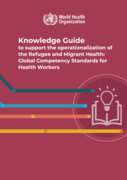
The Knowledge Guide provides guidance on how health workers can apply the Standards to their own practice. For each of the nine competencies and their specific behaviours in the Standards, the Knowledge Guide examines in detail how a health worker's knowledge, skills and attitudes can reach the stat
...
ed benchmark for providing people-centred health services to refugees and migrants. The Knowledge Guide also details the learning outcomes that reflect the behaviours that a health worker will demonstrate once they have achieved the Competency Standards.
The Knowledge Guide is designed for educators and health workers to assist in designing or integrating learning content to enable attainment of the identified knowledge, skills and attitudes.
more
