
Filter
2447
Text search:
humanitarian
response
plan
Featured
268
695
Language
Document type
1163
447
266
206
183
82
49
36
5
5
4
1
Countries
142
116
100
64
61
60
60
59
56
52
45
42
40
40
39
38
34
33
33
31
30
29
29
24
22
19
17
17
17
17
17
16
16
15
15
14
13
13
13
12
11
11
10
10
9
9
9
9
8
8
8
7
7
7
7
7
7
7
7
7
7
6
6
6
6
5
5
5
5
5
4
4
4
4
4
3
3
3
3
3
3
3
3
2
2
2
2
2
2
2
2
2
2
2
2
2
1
1
1
1
1
1
1
1
1
1
1
1
1
1
1
1
1
1
1
1
1
1
1
1
1
1
Authors & Publishers
Publication Years
Category
846
378
149
107
90
43
6
3
Toolboxes
356
273
168
124
123
111
102
97
62
49
48
41
38
30
25
25
23
20
18
16
13
10
10
7
6
4
1

The development of this draft Proposed programme budget 2022–2023 comes at a unique moment for WHO. The world is in the grip of the coronavirus disease (COVID-19) pandemic and faces health, social and economic consequences on an unprecedented scale. Although it is not known when the COVID-19 pande
...

This report makes clear that there is a path to end AIDS. Taking that path will help ensure preparedness to address other pandemic challenges, and advance progress across the Sustainable Development Goals. The data and real-world examples in the report make it very clear what that path is. It is not
...

Financing Global Health 2014 is the sixth edition of this annually produced report on global health financing. As in previous years, this report captures trends in development assistance for health (DAH) and government health expenditure (GHE). Health financing is one of IHME’s core research areas
...

Financing Global Health 2015 is the seventh edition of IHME’s annual series on global health financing. This report captures trends in development assistance for health (DAH) and government health expenditure as source (GHE-S) in low- and middle-income countries. Annually updated GHE-S and DAH est
...

This guide presents a basis for understanding how diarrhoeal diseases are currently influenced by climate and weather, and may be further exacerbated by climate change. It is a technical guide on how to conduct a Vulnerability & Adaptation assessment for diarrhoeal diseases and climate change, and p
...

In an ambitious new era for health development under the 2030 Agenda for Sustainable Development, WHO and
its partners have a solid foundation of success on which to build. Health plays a fundamental role in development
and is the central focus of Sustainable Development Goal 3, “Ensure healthy
...

The World Health Organization (WHO) is releasing the second edition of its Global Accelerated Action for the Health of Adolescents (AA-HA!) guidance. The document aims to equip governments to respond to the health and well-being challenges, opportunities and needs of adolescents.
The guidance pro
...

Significant progress has been made in the eradication of three priority diseases in the African Region, as a result of extensive collaboration between the Regional Office, WHO country offices and countries. For example, in August 2020, the region was certified free of wild poliovirus. In the area of
...

WHO-OHCHR launch new guidance to improve laws addressing human rights abuses in mental health care
Ahead of World Mental Health Day, the World Health Organization (WHO) and the Office of the High Commissioner on Human Rights (OHCHR) are jointly launching a new guidance, entitled "Mental health, h
...

Reproductive health needs are particularly acute in countries affected by armed conflict. Reliable information
on aid investment for reproductive health in these countries is essential for improving the efficiency and effectiveness of
aid. The purpose of this study was to analyse official developm
...

Sound periodic programme reviews provide opportunities for countries to objectively assess progress and take corrective action to sustain or get back on track towards achieving their medium and long-term programme goals. It reflects people’s diverse needs, enables efficient use of health system re
...
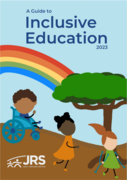
A Guide to Inclusive Education 2023
recommended
Refugee children with disabilities experience a reality of exclusion and marginalisation that makes them among the most vulnerable displaced persons in the world. Excluded from participation in social activities and access to school, not only because of their disability, but especially because of so
...

In April 2020, Gavi and COVAX joined the Access to COVID-19 Tools Accelerator (ACT-A) to provide equitable global access to COVID-19 vaccines to tackle the pandemic. In June 2020, the Gavi COVAX Advance Market Commitment (AMC) was launched to finance equitable access in 92 lower-income countries. Si
...

The document is a comprehensive practical guide for managing cholera epidemics. It includes detailed instructions on outbreak investigation, control measures, case management, and the organization of treatment facilities. It emphasizes strategies such as rehydration therapy, water sanitation, hygien
...

Around the world, more than 2 billion people lack access to safely managed water, sanitation and hygiene services, with conflicts and climate change exacerbating the issue.
Unsafe and insufficient WASH facilities, especially in rural and remote areas, can lead to increased health complications fo
...
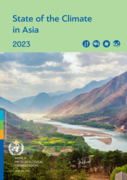
State of the Climate in Asia 2023
recommended
Asia remained the world’s most disaster-hit region from weather, climate and water-related hazards in 2023. Floods and storms caused the highest number of reported casualties and economic losses, whilst the impact of heatwaves became more severe, according to a new report from the World Meteorolog
...

Unmet mental health needs in the Region of the Americas are a leading source of morbidity and mortality, which result in tremendous health, social, and economic consequences. The COVID-19 pandemic has exacerbated the mental health crisis in the Region, necessitating urgent action at the highest leve
...

Noncommunicable diseases (NCDs) – chief among them, cardiovascular diseases (heart disease and stroke), cancer, diabetes and chronic respiratory diseases – along with mental health, cause nearly three quarters of deaths in the world. Their drivers are social, environmental, commercial and geneti
...

Noncommunicable diseases (NCDs) – chief among them, cardiovascular diseases (heart disease and stroke), cancer, diabetes and chronic respiratory diseases – along with mental health, cause nearly three quarters of deaths in the world. Their drivers are social, environmental, commercial and geneti
...

The coronavirus disease (COVID-19) pandemic exacerbated pre-existing inequalities in the treatment and care of noncommunicable diseases (NCDs). This report examines the effect of the COVID-19 pandemic on access to NCD medicines, and the policies and strategies implemented by countries and health sys
...
