
Filter
2109
Text search:
multiple
sexual
partners
Featured
198
647
Language
2083
36
29
25
19
11
10
4
3
2
2
2
2
2
1
1
1
1
1
1
1
1
1
1
1
Document type
1267
309
244
104
91
38
24
18
5
3
1
1
1
Countries / Regions
84
80
78
59
59
53
49
46
45
44
43
41
39
39
37
36
35
34
31
27
26
26
25
24
24
23
19
17
17
16
14
13
12
12
11
11
9
9
9
8
7
7
7
7
7
6
6
6
6
5
5
5
5
5
5
5
4
4
4
3
3
3
3
3
3
3
3
3
3
2
2
2
2
2
2
2
2
2
2
2
2
2
1
1
1
1
1
1
1
1
1
1
1
1
1
1
1
1
1
1
1
1
1
1
1
1
1
Authors & Publishers
222
96
78
74
60
51
45
33
26
22
21
21
18
17
17
16
16
16
16
15
15
15
14
13
13
12
12
12
12
12
11
11
9
9
9
8
8
7
7
7
7
7
7
6
6
6
6
6
6
6
6
6
6
6
6
6
5
5
5
5
5
5
5
5
5
5
5
5
5
5
5
5
5
4
4
4
4
4
4
4
4
4
4
4
4
4
4
4
4
4
4
4
4
4
4
4
4
4
4
3
3
3
3
3
3
3
3
3
3
3
3
3
3
3
3
3
3
3
3
3
3
3
3
3
3
3
3
3
3
3
3
3
3
3
3
3
3
3
3
3
3
3
3
3
3
3
3
3
3
3
3
2
2
2
2
2
2
2
2
2
2
2
2
2
2
2
2
2
2
2
2
2
2
2
2
2
2
2
2
2
2
2
2
2
2
2
2
2
2
2
2
2
2
2
2
2
2
2
2
2
2
2
2
2
2
2
2
2
2
2
2
2
2
2
2
2
2
2
2
2
2
2
2
2
2
2
2
2
2
2
2
2
2
2
2
2
2
2
2
2
2
2
2
2
2
2
2
2
2
2
2
2
2
2
2
2
2
2
2
2
2
2
2
2
2
2
2
2
2
2
2
2
2
2
2
2
2
2
2
2
2
2
2
2
2
2
2
2
2
2
2
2
2
2
2
1
1
1
1
1
1
1
1
1
1
1
1
1
1
1
1
1
1
1
1
1
1
1
1
1
1
1
1
1
1
1
1
1
1
1
1
1
1
1
1
1
1
1
1
1
1
1
1
1
1
1
1
1
1
1
1
1
1
1
1
1
1
1
1
1
1
1
1
1
1
1
1
1
1
1
1
1
1
1
1
1
1
1
1
1
1
1
1
1
1
1
1
1
1
1
1
1
1
1
1
1
1
1
1
1
1
1
1
1
1
1
1
1
1
1
1
1
1
1
1
1
1
1
1
1
1
1
1
1
1
1
1
1
1
1
1
1
1
1
1
1
1
1
1
1
1
1
1
1
1
1
1
1
1
1
1
1
1
1
1
1
1
1
1
1
1
1
1
1
1
1
1
1
1
1
1
1
1
1
1
1
1
1
1
1
1
1
1
1
1
1
1
1
1
1
1
1
1
1
1
1
1
1
1
1
1
1
1
1
1
1
1
1
1
1
1
1
1
1
1
1
1
1
1
1
1
1
1
1
1
1
1
1
1
1
1
1
1
1
1
1
1
1
1
1
1
1
1
1
1
1
1
1
1
1
1
1
1
1
1
1
1
1
1
1
1
1
1
1
1
1
1
1
1
1
1
1
1
1
1
1
1
1
1
1
1
1
1
1
1
1
1
1
1
1
1
1
1
1
1
1
1
1
1
1
1
1
1
1
1
1
1
1
1
1
1
1
1
1
1
1
1
1
1
1
1
1
1
1
1
1
1
1
1
1
1
1
1
1
1
1
1
1
1
1
1
1
1
1
1
1
1
1
1
1
1
1
1
1
1
1
1
1
1
1
1
1
1
1
1
1
1
1
1
1
1
1
1
1
1
1
1
1
1
1
1
1
1
1
1
1
1
1
1
1
1
1
1
1
1
1
1
1
1
1
1
1
1
1
1
1
1
1
1
1
1
1
1
1
1
1
1
1
1
1
1
1
1
1
1
1
1
1
1
1
1
1
1
1
1
1
1
1
1
1
1
1
1
1
1
1
1
1
1
1
1
1
1
1
1
1
1
1
1
1
1
1
1
1
1
1
1
1
1
1
1
1
1
1
1
1
1
1
1
1
1
1
1
1
1
1
1
1
1
1
1
1
1
1
1
1
1
1
1
1
1
1
1
1
1
1
1
1
1
1
1
1
1
1
1
1
1
1
1
1
1
1
1
1
1
1
1
1
1
1
1
1
1
1
1
1
1
1
1
1
1
1
1
1
1
1
1
1
1
1
1
1
1
1
1
1
1
1
1
1
1
1
1
1
1
1
1
1
1
1
1
1
1
1
1
1
1
1
1
1
1
1
1
1
1
1
1
1
1
1
1
1
1
1
1
1
1
1
1
1
1
1
1
1
1
1
1
1
1
1
1
1
1
1
1
1
1
1
1
1
1
1
1
1
1
1
1
1
1
1
1
1
1
1
1
1
1
1
1
1
1
1
1
1
1
1
1
1
1
1
1
1
1
1
1
1
1
1
1
1
1
1
1
1
1
1
1
1
1
1
1
1
1
1
1
1
1
1
1
1
1
1
1
1
1
1
1
1
1
1
1
1
1
1
1
1
1
1
1
1
1
1
1
1
1
1
1
1
1
1
1
1
1
1
1
1
1
1
1
1
1
1
1
1
1
1
1
1
1
1
1
1
1
1
1
1
1
1
1
1
1
1
1
1
1
1
1
1
1
1
1
1
1
1
1
1
1
1
1
1
1
1
1
1
1
1
1
1
1
1
1
1
1
1
1
1
1
1
1
1
1
1
1
1
1
1
1
1
1
1
1
1
1
1
1
1
1
1
1
1
1
1
1
1
1
1
1
1
1
1
1
1
1
1
1
1
1
1
1
1
1
1
1
1
1
1
1
1
1
1
1
1
1
1
1
1
1
1
1
1
1
1
1
1
1
1
1
1
1
1
1
1
1
1
1
1
1
1
1
1
1
1
1
1
1
1
1
1
1
1
1
1
1
1
1
1
1
1
1
1
1
1
1
1
1
1
1
1
1
1
1
1
1
1
1
1
1
1
1
1
1
1
1
1
1
1
1
1
1
1
1
1
1
1
1
1
1
1
1
1
1
1
1
1
1
1
1
1
1
1
1
1
1
1
1
1
1
1
1
1
1
1
1
1
1
1
1
1
1
1
1
1
1
1
1
1
1
1
1
1
1
1
1
1
1
1
1
1
1
1
1
1
1
1
1
1
1
1
1
1
1
1
1
1
1
1
1
1
1
1
1
1
1
1
1
1
1
1
1
1
1
1
1
1
1
1
1
1
1
1
1
1
1
1
1
1
1
1
1
1
1
1
1
1
1
1
1
1
1
1
1
1
1
1
1
1
1
1
1
1
1
1
1
1
1
1
1
1
1
1
1
1
1
1
1
1
1
1
1
1
1
1
1
1
1
1
1
1
1
1
1
1
1
1
1
1
1
1
1
1
1
1
1
1
1
1
1
1
1
1
1
1
1
1
1
1
1
1
1
1
1
1
1
1
1
1
1
1
1
1
1
1
1
1
1
1
1
1
1
1
1
1
1
1
1
1
1
1
1
1
1
1
1
1
1
1
1
1
1
1
1
1
1
1
1
1
1
1
1
1
1
1
1
1
1
1
1
1
1
1
1
1
1
1
1
1
1
1
1
1
1
1
1
1
1
1
1
1
1
1
1
1
1
1
1
1
1
1
1
1
1
1
1
1
1
1
1
1
1
1
1
1
1
1
1
1
1
1
1
1
1
1
1
1
1
1
1
1
1
1
1
1
1
1
1
1
1
1
1
1
1
1
1
1
1
1
1
1
1
1
1
1
1
1
1
1
1
1
1
1
1
1
1
1
1
1
1
1
1
1
1
1
1
1
1
1
1
1
1
1
1
1
1
1
1
1
1
1
1
1
1
1
1
1
1
1
1
1
1
1
1
1
1
1
1
1
1
1
1
1
1
1
1
1
1
1
1
1
1
1
1
1
1
1
1
1
1
1
1
1
1
1
1
1
1
1
1
1
1
1
1
1
1
1
1
1
1
1
1
1
1
1
1
1
1
1
1
1
1
1
1
1
1
1
1
1
1
1
1
1
1
1
1
1
1
1
1
1
1
1
1
1
1
1
1
1
1
1
1
1
1
1
1
1
1
1
1
1
1
1
1
1
1
1
1
1
1
1
1
1
1
1
1
1
1
1
1
1
1
1
1
1
1
1
1
1
1
1
1
1
1
1
1
1
1
1
1
1
1
1
1
1
1
1
1
1
1
1
1
1
1
1
1
1
1
1
1
1
1
1
1
1
1
1
1
1
1
1
1
1
1
1
1
1
1
1
1
1
1
1
1
1
1
1
1
1
1
1
1
1
1
1
1
1
1
1
1
1
1
1
1
1
1
1
1
1
1
1
1
1
1
1
1
1
1
1
1
1
Publication Years
601
1350
155
3
Category
923
189
127
99
87
64
6
Toolboxes
288
160
104
98
83
71
41
37
36
33
26
26
20
20
15
15
13
11
9
7
4
3
3
1
1
1
Midwifery Capacity Building Strategy for Northern Syria
2017-2021
Available in Arabic

Best practice guidelines are systematically developed statements designed to assist nurses working in partnership with persons and their families to make decisions about health care and services (Field & Lohr, 1990). This nursing Best Practice Guideline (BPG) is intended to replace the RNAO BPGs Scr
...
eening for Delirium, Dementia and Depression in Older Adults (2010b) and Caregiving Strategies for Older Adults with Delirium, Dementia and Depression (2010a).
more

The primary audience of this report with the compendium of resources are youth engagement practitioners in the Red Cross Red Crescent National Societies as well as technical experts and policy makers across the humanitarian landscape that thrive for meaningful interventions with and for children, ad
...
olescents, and young adults experiencing the impact of the COVID-19 pandemic.
more

This is the sixth of our 11-paper supplement entitled “Community Health Workers at the Dawn of New Era”. Expectations of community health workers (CHWs) have expanded in recent years to encompass a wider array
of services to numerous subpopulations, engage communities to collaborate with and to
...
assist health systems in responding to complex and sometimes intensive threats. In this paper, we explore a set of key considerations for training of CHWs in response to their enhanced and changing roles and provide actionable recommendations based on
current evidence and case examples for health systems leaders and other stakeholders to utilize.
more
African Antibiotic Treatment Guidelines for Common Bacterial Infections and Syndromes – Final Report
Africa Centres for Disease Control and Prevention Center for Disease Dynamics, Economics & Policy
Africa Centres for Disease Control and Prevention Center for Disease Dynamics, Economics & Policy
(2021)
CC


The world is facing an unprecedented range of emergencies. In reaction to these complex adversities, many people experience considerable distress and impairment, and a minority may even go on to develop mental health conditions. Meanwhile, those with pre-existing mental health conditions may experie
...
nce a worsening of their condition and are at risk of neglect, abandonment, abuse and lack of access to support. Unfortunately, evidence-based mental health care is often extremely limited in humanitarian settings. In response, the World Health Organization (WHO) and the United Nations High Commissioner for Refugees (UNHCR) published the Mental Health Gap Action Programme (mhGAP) Humanitarian Intervention Guide (mhGAP-HIG) in 2015. This practical tool supports health-care providers in assessing and offering first-line management of mental, neurological and substance use (MNS) conditions in humanitarian emergency settings.
2 December 2021. The current report, Stories of change from four countries: Building capacity for integrating mental health care within health services across humanitarian settings, describes efforts in four countries to build evidence-based mental health systems in humanitarian emergency settings using the mhGAP-HIG. This report includes three sections, the first describing the importance of scaling up mental health care in emergency contexts, the second outlining case studies (“stories of change”) to scale up the Mental Health Gap Action Programme (mhGAP) programme in four settings and the third describing lessons learned by stakeholders.
more

The World Health Organization and the Global Fund to Fight AIDS, Tuberculosis and Malaria are part of a group of agencies working together to accelerate progress towards the health-related SDGs through the Global Action Plan for Healthy Lives and Well-being for All. Understanding patterns of inequal
...
ities in these diseases is essential for taking strategic, evidence-informed action to realize our shared vision of ending the epidemics of HIV, TB and malaria.
This report presents the first comprehensive analysis of the magnitude and patterns of socioeconomic, demographic and geographic inequalities in disease burden and access to services for prevention and treatment.
The results confirm there have been improvements in service coverage and decreased disease burden at the national level over the past decade. But they also reveal an uncomfortable reality: unfair inequalities between population subgroups within countries are widespread and have remained largely unchanged over the past decade. For some disease indicators, inequalities are even worsening.
Moreover, the report points to the persistent lack of available data to fully understand inequality patterns in HIV, TB and malaria. Collecting data to improve the monitoring of inequalities in these diseases is vital to develop targeted responses for impact.
There are, encouragingly, isolated successes in reducing inequities. Change is possible when deliberate action is taken to reach disadvantaged populations.
more
English Manual and Guideline on World about Food and Nutrition, Health and Epidemic; published on 30 Nov 2021 by USAID
Against the backdrop of the COVID-19 pandemic, health is receiving unprecedented public and political attention. Yet the fact that climate change also presents us with a health crisis deserves further recognition. From more deaths due to heat stress to increased transmission of infectious diseases,
...
climate change affects the social and environmental determinants of health in ways that are profound and far-reaching. The fundamental interdependency of human health and the health of the environment is encapsulated in the concept of planetary health, a scientific field and social movement that has been gaining force since the 2015 publication of the Rockefeller Foundation-Lancet Commission report “Safeguarding human health in the Anthropocene epoch”.
We see an urgent need for strategic communication to raise awareness of climate-health synergies in order to overcome the misperception that climate and health are two independent agendas. The fragmented and sector-focused nature of thinking and action remains a significant barrier to integrating health considerations into climate planning and project development. Inevitably, collaboration across sectors requires a community of practice. Despite recent efforts focused on the climate-health nexus, much work remains to be done to translate scientific findings for policymakers, mobilise climate financing resources in support of health co-benefits, and promote genderjust solutions within climate change projects.
more
Guidelines for Maternity Care in South Africa - fourth edition 2016
Maternal Health Committee of the National Department of Health (NDoH) South Africa
NDoH South Africa
(2016)
CC
These guidelines have been prepared by the Sub directorate: Maternal Health for the guidance of health workers (doctors and midwives) providing obstetric, surgical and anaesthetic services for pregnant women in district clinics, health centres and district hospitals. These guidelines are intended fo
...
r use in clinics, community health centres and district hospitals where specialist services are not normally available. The guidelines deal mainly with the diagnosis and especially the management of common and serious pregnancy problems. The assumption is made that the reader has a basic knowledge and understanding about the care of pregnant women. With a few exceptions (e.g. pre-eclampsia), there is no mention of aetiology and pathogenesis of the conditions described.https://www.knowledgehub.org.za/elibrary/guidelines-maternity-care-south-africa-2016
more

Occupational health and safety programmes aim to prevent diseases and injuries arising out of, linked with or occurring in the course of work, while improving the quality and safety of care, safeguarding the health workforce and promoting environmental sustainability in the health sector.
This gu
...
ide provides an overview of the key elements of occupational health and safety programmes for health workers at national, subnational and facility levels, as well as advice for the development and implementation of such programmes. Health workers exposure risk assessment and management in the context of COVID-19 virus
more

Transforming Health Systems: Achieving Universal Health Coverage by 2022. The development of the Kenya Health Sector Strategic Plan 2018–2023 is guided by the Constitution of 2010, the Kenya Vision 2030 and the Kenya Health Policy 2014–2030.
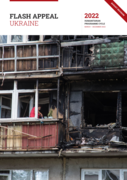
This document is the third iteration of the Flash Appeal for Ukraine, which was originally published on 1 March 2022 and revised once in mid-April. This updated Flash Appeal covers the period of 10 months following the onset of the war in Ukraine that started on 24 February 2022 (i.e., from March to
...
December 2022). The financial requirement of this Flash Appeal reflects the humanitarian needs from March until the end of 2022, taking into account the funding status and the response achievements to date, as well as the realistic projection of response capacity in the second half of the year.
more
It aims to enable participants to:
know more about reactions to distress
know what psychological first aid is and what it is not
understand the three action principles of ‘Look, Listen and Link’
have practised providing PFA to someone in distress
have considered comple
...
x reactions and situations
be aware of the importance of self-care when helping others.
This training module is one of four on psychological first aid, which accompany a set of materials on psychological first aid
more
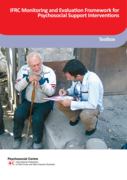
The toolbox contains guidance and tools (sample templates) for data collection in M&E of PSS programmes. The tools can be adapted to PSS programme, depending upon target group, activities and scope. These are tools that may be useful for your programme and many are drawn from existing PSS programme
...
M&E tools, but they are not an exhaustive list. They can act as an inspiration and supplement to other existing tools.
The Toolbox is also available in word format for easy use and adaptation here:
more

Mental health is critically important to everyone, everywhere. All over the world, mental health needs are high but responses are insufficient and inadequate. The World mental health report: transforming mental health for all is designed to inspire and inform better mental health for everyone everyw
...
here. Drawing on the latest evidence available, showcasing examples of good practice from around the world, and voicing people’s lived experience, it highlights why and where change is most needed and how it can best be achieved. It calls on all stakeholders to work together to deepen the value and commitment given to mental health, reshape the environments that influence mental health, and strengthen the systems that care for mental health.
more
