Filter
3214
Text search:
Vaccines
Featured
355
733
Language
2906
229
141
93
82
65
35
23
9
7
4
3
3
3
3
3
2
2
2
2
2
2
2
2
2
2
2
1
1
1
1
1
1
1
1
1
1
1
1
1
1
1
1
1
Document type
1220
615
534
209
199
180
63
61
48
39
18
16
10
Countries
192
102
76
68
65
63
61
60
60
59
57
50
47
46
40
38
33
31
30
30
30
28
28
28
28
27
26
26
25
22
22
21
20
20
19
19
18
17
17
16
15
14
14
14
13
12
12
12
11
11
9
8
8
8
8
7
7
7
7
7
6
6
6
5
5
5
5
5
4
4
4
4
4
4
4
4
4
4
3
3
3
3
3
3
3
3
3
2
2
2
2
2
2
1
1
1
1
1
1
1
1
1
1
1
1
1
1
1
1
1
1
1
1
1
1
1
1
1
1
1
1
1
1
1
1
1
Authors & Publishers
694
140
100
85
76
56
46
43
42
41
40
34
29
28
26
23
22
22
15
15
14
14
13
13
11
11
11
10
10
10
10
10
10
10
9
9
9
9
9
8
8
8
8
8
8
7
7
7
7
7
7
7
7
7
6
6
6
6
6
6
6
6
6
6
6
6
6
5
5
5
5
5
5
5
5
5
5
5
5
5
5
5
5
5
5
5
5
5
5
5
4
4
4
4
4
4
4
4
4
4
4
4
4
4
4
4
4
4
4
4
4
4
4
4
4
4
4
4
4
4
4
4
4
4
4
4
4
4
3
3
3
3
3
3
3
3
3
3
3
3
3
3
3
3
3
3
3
3
3
3
3
3
3
3
3
3
3
3
3
3
3
3
3
3
3
3
3
3
3
3
3
3
3
3
3
3
3
3
3
3
3
3
3
3
3
3
3
3
3
3
3
3
3
3
2
2
2
2
2
2
2
2
2
2
2
2
2
2
2
2
2
2
2
2
2
2
2
2
2
2
2
2
2
2
2
2
2
2
2
2
2
2
2
2
2
2
2
2
2
2
2
2
2
2
2
2
2
2
2
2
2
2
2
2
2
2
2
2
2
2
2
2
2
2
2
2
2
2
2
2
2
2
2
2
2
2
2
2
2
2
2
2
2
2
2
2
2
2
2
2
2
2
2
2
2
2
2
2
2
2
2
2
2
2
2
2
2
2
2
2
2
2
2
2
2
2
2
2
2
2
2
2
2
2
2
2
2
2
2
2
2
2
2
2
2
2
2
2
2
2
2
2
2
2
2
2
2
2
2
2
2
2
1
1
1
1
1
1
1
1
1
1
1
1
1
1
1
1
1
1
1
1
1
1
1
1
1
1
1
1
1
1
1
1
1
1
1
1
1
1
1
1
1
1
1
1
1
1
1
1
1
1
1
1
1
1
1
1
1
1
1
1
1
1
1
1
1
1
1
1
1
1
1
1
1
1
1
1
1
1
1
1
1
1
1
1
1
1
1
1
1
1
1
1
1
1
1
1
1
1
1
1
1
1
1
1
1
1
1
1
1
1
1
1
1
1
1
1
1
1
1
1
1
1
1
1
1
1
1
1
1
1
1
1
1
1
1
1
1
1
1
1
1
1
1
1
1
1
1
1
1
1
1
1
1
1
1
1
1
1
1
1
1
1
1
1
1
1
1
1
1
1
1
1
1
1
1
1
1
1
1
1
1
1
1
1
1
1
1
1
1
1
1
1
1
1
1
1
1
1
1
1
1
1
1
1
1
1
1
1
1
1
1
1
1
1
1
1
1
1
1
1
1
1
1
1
1
1
1
1
1
1
1
1
1
1
1
1
1
1
1
1
1
1
1
1
1
1
1
1
1
1
1
1
1
1
1
1
1
1
1
1
1
1
1
1
1
1
1
1
1
1
1
1
1
1
1
1
1
1
1
1
1
1
1
1
1
1
1
1
1
1
1
1
1
1
1
1
1
1
1
1
1
1
1
1
1
1
1
1
1
1
1
1
1
1
1
1
1
1
1
1
1
1
1
1
1
1
1
1
1
1
1
1
1
1
1
1
1
1
1
1
1
1
1
1
1
1
1
1
1
1
1
1
1
1
1
1
1
1
1
1
1
1
1
1
1
1
1
1
1
1
1
1
1
1
1
1
1
1
1
1
1
1
1
1
1
1
1
1
1
1
1
1
1
1
1
1
1
1
1
1
1
1
1
1
1
1
1
1
1
1
1
1
1
1
1
1
1
1
1
1
1
1
1
1
1
1
1
1
1
1
1
1
1
1
1
1
1
1
1
1
1
1
1
1
1
1
1
1
1
1
1
1
1
1
1
1
1
1
1
1
1
1
1
1
1
1
1
1
1
1
1
1
1
1
1
1
1
1
1
1
1
1
1
1
1
1
1
1
1
1
1
1
1
1
1
1
1
1
1
1
1
1
1
1
1
1
1
1
1
1
1
1
1
1
1
1
1
1
1
1
1
1
1
1
1
1
1
1
1
1
1
1
1
1
1
1
1
1
1
1
1
1
1
1
1
1
1
1
1
1
1
1
1
1
1
1
1
1
1
1
1
1
1
1
1
1
1
1
1
1
1
1
1
1
1
1
1
1
1
1
1
1
1
1
1
1
1
1
1
1
1
1
1
1
1
1
1
1
1
1
1
1
1
1
1
1
1
1
1
1
1
1
1
1
1
1
1
1
1
1
1
1
1
1
1
1
1
1
1
1
1
1
1
1
1
1
1
1
1
1
1
1
1
1
1
1
1
1
1
1
1
1
1
1
1
1
1
1
1
1
1
1
1
1
1
1
1
1
1
1
1
1
1
1
1
1
1
1
1
1
1
1
1
1
1
1
1
1
1
1
1
1
1
1
1
1
1
1
1
1
1
1
1
1
1
1
1
1
1
1
1
1
1
1
1
1
1
1
1
1
1
1
1
1
1
1
1
1
1
1
1
1
1
1
1
1
1
1
1
1
1
1
1
1
1
1
1
1
1
1
1
1
1
1
1
1
1
1
1
1
1
1
1
1
1
1
1
1
1
1
1
1
1
1
1
1
1
1
1
1
1
1
1
1
1
1
1
1
1
1
1
1
1
1
1
1
1
1
1
1
1
1
1
1
1
1
1
1
1
1
1
1
1
1
1
1
1
1
1
1
1
1
1
1
1
1
1
1
1
1
1
1
1
1
1
1
1
1
1
1
1
1
1
1
1
1
1
1
1
1
1
1
1
1
1
1
1
1
1
1
1
1
1
1
1
1
1
1
1
1
1
1
1
1
1
1
1
1
1
1
1
1
1
1
1
1
1
1
1
1
1
1
1
1
1
1
1
1
1
1
1
1
1
1
1
1
1
1
1
1
1
1
1
1
1
1
1
1
1
1
1
1
1
1
1
1
1
1
1
1
1
1
1
1
1
1
1
1
1
1
1
1
1
1
1
1
1
1
1
1
1
1
1
1
1
1
1
1
1
1
1
1
1
1
1
1
1
1
1
1
1
1
1
1
1
1
1
1
1
1
1
1
1
1
1
1
1
1
1
1
1
1
1
1
1
1
1
1
1
1
1
1
1
1
1
1
1
1
1
1
1
1
1
1
1
1
1
1
1
1
1
1
1
1
1
1
1
1
1
1
1
1
1
1
1
1
1
1
1
1
1
1
1
1
1
1
1
1
1
1
1
1
1
1
1
1
1
1
1
1
1
1
1
1
1
1
1
1
1
1
1
1
1
1
1
1
1
1
1
1
1
1
1
1
1
1
1
1
1
1
1
1
1
1
1
1
1
1
1
1
1
1
1
1
1
1
1
1
1
1
1
1
1
1
1
1
1
1
1
1
1
1
1
1
1
1
1
1
1
1
1
1
1
1
1
1
1
1
1
1
1
1
1
1
1
1
1
1
1
1
1
1
1
1
1
1
1
1
1
1
1
1
1
1
1
1
1
1
1
1
1
1
1
1
1
1
1
1
1
1
1
1
1
1
1
1
1
1
1
1
1
1
1
1
1
1
1
1
1
1
1
1
1
1
1
1
1
1
1
1
1
1
1
1
1
1
1
1
1
1
1
1
1
1
1
1
1
1
1
1
1
1
1
1
1
1
1
1
1
1
1
1
1
1
1
1
1
1
1
1
1
1
1
1
1
1
1
1
1
1
1
1
1
1
1
1
1
1
1
1
1
1
1
1
1
1
1
1
1
1
1
1
1
1
1
1
1
1
1
1
1
1
1
1
1
1
1
1
1
1
1
1
1
1
1
1
1
1
1
1
1
1
1
1
1
1
1
1
1
1
1
1
1
1
1
1
1
1
1
1
1
1
1
1
1
1
1
1
1
1
1
1
1
1
1
1
1
1
1
1
1
1
1
1
1
1
1
1
1
1
1
1
1
1
1
1
1
1
1
1
1
1
1
1
1
1
1
1
1
1
1
1
1
1
1
1
1
1
1
1
1
1
1
1
1
1
1
1
1
1
1
1
1
1
1
1
1
1
1
1
1
1
1
1
1
1
1
1
1
1
1
1
1
1
1
1
1
1
1
1
1
1
1
1
1
1
1
1
1
1
1
1
1
1
1
1
1
1
1
1
1
1
1
1
1
1
1
1
1
1
1
1
1
1
1
1
1
1
1
1
1
1
1
1
1
1
1
1
1
1
1
1
1
1
1
1
1
1
1
1
1
1
1
1
1
1
1
1
1
1
1
1
1
1
1
1
1
1
1
1
1
1
1
1
1
1
1
1
1
1
1
1
1
1
1
1
1
1
1
1
1
1
1
1
1
1
1
1
1
1
1
1
1
1
1
1
1
1
1
1
1
1
1
1
1
1
1
1
1
1
1
1
1
1
1
1
1
1
1
1
1
1
1
1
1
1
1
1
1
1
1
1
1
1
1
1
1
1
1
1
1
1
1
1
1
1
1
1
1
1
1
1
1
1
1
1
1
1
1
1
1
1
1
1
1
1
1
1
1
1
1
1
1
1
1
1
1
1
1
1
1
1
1
1
1
1
1
1
1
1
1
1
1
1
1
1
1
1
1
1
1
1
1
1
1
1
1
1
1
1
1
1
1
1
1
1
1
1
1
1
1
1
1
1
1
1
1
1
1
1
1
Publication Years
1554
1446
201
13
Category
1164
262
160
152
132
46
30
2
Toolboxes
727
156
154
114
108
93
90
85
79
77
75
70
62
59
59
56
55
50
49
25
23
19
18
12
2

2018 monitoring report: current status and strategic priorities
The report sets out the status of women’s, children’s and adolescents’ health, and on health systems and social and environmental determinants. Regional dashboards on 16 key indicators highlight where progress is being made o ... r lagging. There is progress overall, but not at the level required to achieve the 2030 goals. There are some areas where progress has stalled or is reversing, namely neonatal mortality, gender inequalities and health in humanitarian settings. more
The report sets out the status of women’s, children’s and adolescents’ health, and on health systems and social and environmental determinants. Regional dashboards on 16 key indicators highlight where progress is being made o ... r lagging. There is progress overall, but not at the level required to achieve the 2030 goals. There are some areas where progress has stalled or is reversing, namely neonatal mortality, gender inequalities and health in humanitarian settings. more

The Health Sector Policy gives general orientations for the sector which are further developed in the various sub-sector policies guiding key health programs and departments. All health sub-sector policies will be updated in line with this new policy. The Health Sector Policy is the basis of nationa
...
l health planning and the first point of reference for all actors working in the health sector. The overall aim of this policy is to ensure universal accessibility (in geographical and financial terms) of equitable and affordable quality health services (preventative, curative, rehabilitative and promotional services) for all Rwandans. It sets the health sector’s objectives, identifies the priority health interventions for meeting these objectives, outlines the role of each level in the health system, and provides guidelines for improved planning and evaluation of activities in the health sector. A companion Health Sector Strategic Plan (HSSP) elaborates the strategic directions defined in the Health Sector Policy in order to support and achieve the implementation of the policy, and more detailed annual operational plans describe the activities under each strategy.
more

This National Food and Nutrition Policy developed in 2013 builds on several achievements that have improved the status of nutrition and household food security in Rwanda during the past six years. The outlines ambitious but necessary strategies needed to solve serious and
persistent problems includ
...
ing the high prevalence of child stunting and high levels of anaemia in children and women. The NFNP also takes into account major differences in the economic development environment and the higher national and international priority placed on improving nutrition and related household food security problems in the second decade of the new millennium compared to 2007 when the country’s first National Nutrition Policy was adopted.
more

These guidelines for the National Pharmacovigilance and Medicine Information System in Rwanda have been developed to ensure that safe, efficacious and quality medicines are made available to all Rwandans.

Rwanda’s fourth health sector strategic plan (HSSP4) is meant to provide the health sector with a Strategic Plan that will highlight its commitments and priorities for the coming 6 years. It will be fully integrated in the overall economic development plan of the Government. HSSP4 will fulfill the
...
country’s commitment expressed in the national constitution, National Strategy for Transformation (NST) and the aspirations of the Health Sector Policy 2015. The strategies herein adhere to the Universal Health Coverage (UHC) principles towards realisation of the Sustainable Development Goals (SDGs). HSSP4 therefore lays a foundation for Vision 2050 (“The Rwanda We Want”), which will transform Rwanda into a high-income country by 2050. HSSP4 anticipates the epidemiological transition of the country, the increase in population and life expectancy and the expected increase of the health needs of the elderly, notably in Non Communicable Diseases (NCDs). HSSP4 also anticipates a decrease in external financial inflows, hence it is imperative to build secure / resilient health systems.
more
This report outlines the Ministry of Health’s National Health Research Agenda in which it identifies research priorities in health. It will be implemented in the same time frame as the Health Sector Strategic Plain 2012-2018. The Ministry of Health being the implementing agency of this document, i
...
s calling upon all partners, relevant ministries, higher learning institutions, students, development partners, etc to embrace this research agenda and ensure that researches conducted in Rwanda address priority areas identifies.
more
This document, Ghana’s National Newborn Health Strategy and Action Plan 2014–2018 outlines a targeted strategy for accelerating the reduction of newborn deaths in Ghana. Furthermore it provides a costed action plan with clearly marked timelines for implementation to facilitate resource mobilisat
...
ion, monitoring and evaluation, and scaling up of proposed newborn interventions. It is expected that all stakeholders working towards improving the health of children in Ghana will buy into this plan and collaborate towards attainment of the goals and objectives outlined here.
more

The Ministry of Health has developed the first version of the Service Standards and Service Delivery Standards for the health sector in Uganda. The main objective is to provide a common understanding of what is expected by the public, service users and service providers in ensuring provision of cons
...
istently high quality service delivery. These standards also provide a roadmap for improving the quality, safety and reliability of healthcare in Uganda.
The application of these standards is expected to improve transparency and accountability in service delivery; fairness and equity in service provision; building a culture of quality management; regulation, management and control of public and private providers; and management of expectations of service recipients. more
The application of these standards is expected to improve transparency and accountability in service delivery; fairness and equity in service provision; building a culture of quality management; regulation, management and control of public and private providers; and management of expectations of service recipients. more
India contributes to 16% of the global maternal deaths and around 27% of global newborn deaths. Reducing the burden of maternal and newborn mortality and morbidity in urban poor settings today requires an expansion of effective Maternal and Newborn Health (MNH) care services and lowering the barrier
...
s to the use of such services, especially availability and accessibility.
For designing sensitive, responsive and relevant urban health policy and action, it is important for planners and programme managers to understand the context with regard to current systems and mechanisms, potential organisations and best practices.
In order to adres this need, Save the Children’s Saving Newborn Lives programme commissioned a study that reviewed the literature and looked at available secondary data on MNH in urban poor settings.
more

The Newborn Situational Analysis reports of 2009 and 2011, as well as the “Bottleneck analysis on neonatal health” of 2013, culminated in the Nigeria launch of “Call to action on Newborn health” at the first National Newborn Health Conference in 2014. This call to action provided the framewo
...
rk for the development of the Nigeria Every Newborn Action
Plan (NiENAP). The NiENAP lays out a vision to end preventable stillbirths and newborn deaths by accelerating progress and scaling up evidence- based high-impact and cost effective interventions. The plan is guided by the principles of country-leadership, integration, accountability, equity, human rights, innovation and research. This blue print outlines our commitment as government and stakeholders to repositioning newborn health as we implement approaches that impact on the lives of newborns for improved health outcome.
more
The role of an essential health benefit in health systems in east and southern Africa: Learning from regional research
R. Loewenson, M. Mamdani and others
Regional Network for Equity in Health in east and southern Africa (EQUINET)
(2018)
C1
Regional Network for Equity in Health in east and southern Africa (EQUINET): Disussion Paper 113
This report synthesises the learning across the full programme of work. It presents the methods used, the context and policy motivations for developing EHBs; how they are being defined, costed, di ... sseminated and used in health systems, including for service provision and quality, resourcing and purchasing services and monitoring and accountability on service delivery and performance, and for learning, useful practice and challenges faced. more
This report synthesises the learning across the full programme of work. It presents the methods used, the context and policy motivations for developing EHBs; how they are being defined, costed, di ... sseminated and used in health systems, including for service provision and quality, resourcing and purchasing services and monitoring and accountability on service delivery and performance, and for learning, useful practice and challenges faced. more

A case study of the Essential Health Care Package in Swaziland
Magagula, Samuel V.
Regional Network for Equity in Health in east and southern Africa (EQUINET)
(2017)
C1
Regional Network for Equity in Health in east and southern Africa (EQUINET): Disussion Paper 112
The Essential Health Benefit (EHB) is known as Essential Health Care Package (EHCP) in Swaziland. This desk review provides evidence on the experience of EHCPs in Swaziland and includes available po ... licy documents and research reports. more
The Essential Health Benefit (EHB) is known as Essential Health Care Package (EHCP) in Swaziland. This desk review provides evidence on the experience of EHCPs in Swaziland and includes available po ... licy documents and research reports. more

Regional Network for Equity in Health in east and southern Africa (EQUINET): Disussion Paper 110
This report compiles evidence from published, grey literature and key informants on the UNMHCP since its introduction in Uganda’s health system, and findings were further validated during a oneda ... y national stakeholder meeting.
Three main factors motivated introduction of the UNMHCP. First, Uganda, along with other lowincome countries, was unable to implement holistically the primary healthcare (PHC) concepts as set out in the Alma Ata Declaration. Second, the macro-economic restructuring carried out in the 1990s, which was an international conditionality for low-income countries to access development financing, influenced the trend towards more stringent prioritisation of health interventions as a means of rationing and targeting use of resources. Third, the government sought to achieve equity with a service package that would be universally available for all people. more
This report compiles evidence from published, grey literature and key informants on the UNMHCP since its introduction in Uganda’s health system, and findings were further validated during a oneda ... y national stakeholder meeting.
Three main factors motivated introduction of the UNMHCP. First, Uganda, along with other lowincome countries, was unable to implement holistically the primary healthcare (PHC) concepts as set out in the Alma Ata Declaration. Second, the macro-economic restructuring carried out in the 1990s, which was an international conditionality for low-income countries to access development financing, influenced the trend towards more stringent prioritisation of health interventions as a means of rationing and targeting use of resources. Third, the government sought to achieve equity with a service package that would be universally available for all people. more
A case study of the Essential Health Benefit in Tanzania mainland
Todd G.; Nswilla A.; Kisanga O.; Mamdani M.
Regional Network for Equity in Health in east and southern Africa (EQUINET)
(2017)
C1
Regional Network for Equity in Health in east and southern Africa (EQUINET): Disussion Paper 109
This report describes the evolution of mainland Tanzania’s EHB; the motivations for developing the EHBs, the methods used to develop, define and cost them; how it is being disseminated, communicat ... ed, and used; and the facilitators (and barriers) to its development, uptake or use. Findings presented in this report are from three stages of analysis: literature review, key informant perspectives and a national consultative meeting. more
This report describes the evolution of mainland Tanzania’s EHB; the motivations for developing the EHBs, the methods used to develop, define and cost them; how it is being disseminated, communicat ... ed, and used; and the facilitators (and barriers) to its development, uptake or use. Findings presented in this report are from three stages of analysis: literature review, key informant perspectives and a national consultative meeting. more
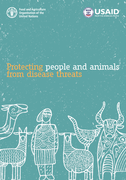
The Global Health Security Agenda programme develops national capacity to prevent zoonotic and non-zoonotic diseases while quickly and effectively detecting and controlling diseases when they do emerge. The Emerging Pandemic Threats programme improves national capacity to pre-empt the emergence and
...
re-emergence of infectious zoonotic disease and to prevent the next pandemic.
Action against emerging pandemic threats is taken through projects on: Avian influenza, Middle East respiratory syndrome, Africa Sustainable Livestock 2050 and Emergency equipment stockpile. With high-impact diseases that jump from animals to humans on the rise, these programmes are reducing the risk to lives and livelihoods from national, regional and global disease spread. more
Action against emerging pandemic threats is taken through projects on: Avian influenza, Middle East respiratory syndrome, Africa Sustainable Livestock 2050 and Emergency equipment stockpile. With high-impact diseases that jump from animals to humans on the rise, these programmes are reducing the risk to lives and livelihoods from national, regional and global disease spread. more

Emergency response framework, 2nd ed.
recommended
The purpose of this Emergency Response Framework (ERF) is to clarify WHO’s roles and responsibilities in this regard and to provide a common approach for its work in emergencies. Ultimately, the ERF requires WHO to act with urgency and predictability to best serve and be accountable to populations
...
affected by emergencies.
more
Vitamin D deficiency is thought to be common among pregnant women, particularly during the winter months, and has been found to be associated with an increased risk of pre-eclampsia, gestational diabetes mellitus, preterm birth, and other tissue-specific conditions.
This guideline is intended for
...
a wide audience including policy-makers, their expert advisers, and technical and programme staff at organizations involved in the design, implementation and scaling-up of nutrition actions for public health.
more
Attraction and Retention of Rural Primary Health-care Workers in the Asia Pacific Region
Liu Xiaoyun; Zhu, Anna; Tang, Shenglan
World Health Organization, Regional Office for South-East Asia
(2018)
C_WHO
The Asia Pacific Observatory on Health Systems and Policies is a collaborative partnership which supports and promotes evidence-based health policy making in the Asia Pacific Region. Based in WHO’s Regional Office for South-East Asia, it brings together governments, international agencies, foundat
...
ions, civil society and the research community with the aim of linking systematic and scientific analysis of health systems in the Asia Pacific Region with the decision-makers who shape policy and practice.
more

Polymerase Chain Reaction (PCR) has significantly helped in early diagnosis and commencement of specific interventions for diseases control. It also plays a critical role in understanding the disease epidemiology and unraveling the transmission dynamics of the disease. This manual intends to p
...
rovide primary guidelines to assist health lab personnel in developing countries to establish a PCR diagnostic facility for efficient support to patient care as well as public health actions.
more