
Filter
6939
Filtered Results: 6939
Text search:
Statistica
Featured
Recommendations
345
New Publications
1958
Language
Document type
No document type
4244
Studies & Reports
1293
Guidelines
460
Manuals
215
Situation Updates
182
Strategic & Response Plan
164
Fact sheets
150
Resource Platforms
95
Infographics
60
Training Material
53
Dashboards/Maps
12
Brochures
6
Online Courses
4
App
1
Countries / Regions
Global
256
India
220
Kenya
214
Ethiopia
174
Nepal
166
Uganda
160
Rwanda
153
Nigeria
143
Malawi
143
Sierra Leone
141
South Africa
136
Western and Central Europe
133
Zambia
133
Myanmar / Burma
120
Tanzania
119
Indonesia
117
Liberia
115
Bangladesh
111
Namibia
109
Ukraine
107
Ghana
105
Africa
91
Senegal
89
Latin America and the Carribbean
89
Germany
84
Congo, Democratic Republic of
81
Lesotho
79
Philippines
76
Syria
73
Venezuela
68
Zimbabwe
64
Burkina Faso
63
Cambodia
59
Eastern Europe
59
Haiti
57
Mozambique
56
Brazil
53
Botswana
49
Paraguay
40
Russia
39
Eswatini/ Swaziland
37
Benin
34
Cameroon
34
Asia
34
South Sudan
34
Colombia
32
South–East Asia Region
28
Guinea
26
East and Southern Africa
25
Pakistan
25
West and Central Africa
24
Argentina
22
Peru
20
Central African Republic
20
Madagascar
20
Tajikistan
17
Jordan
17
Middle East and North Africa
17
Afghanistan
16
Bolivia
16
Yemen
16
Eastern Europe and Central Asia
15
Sudan
15
China
14
Albania
14
Mali
14
Thailand
13
Moldova
13
Chile
12
Lebanon
12
Georgia
12
Iraq
12
Somalia
12
Ecuador
12
Togo
11
USA
11
Vietnam
11
Western Pacific Region
10
Turkey
9
North America
8
Côte d’Ivoire / Ivory Coast
8
Sri Lanka
7
Egypt
7
Laos
6
Niger
6
Burundi
6
Guatemala
6
North Macedonia
5
Kazakhstan
5
Kyrgyzstan
5
Uzbekistan
5
Armenia
5
United Kingdom
5
Papua New Guinea
5
Angola
5
Chad
5
Libya
5
El Salvador
4
Guinea-Bissau
4
Hungary
4
Turkmenistan
4
Portugal
4
Spain
4
Azerbaijan
4
Belarus
4
Greece
4
Poland
4
Honduras
4
Timor Leste/ East Timor
3
Gambia
3
Iran
3
Canada
3
Estonia
3
Malaysia
3
Mauritius
3
Southern Africa
3
Romania
3
Palestine
3
Mexico
2
Serbia
2
Singapore
2
Qatar
2
Bulgaria
2
Italy
2
Saudi Arabia
2
Tunisia
2
Bosnia and Herzegovina
2
Djibouti
2
Slovakia
2
Switzerland
1
Congo-Brazzaville
1
Austria
1
Morocco
1
Mongolia
1
Dominican Republic
1
Croatia
1
Lithuania
1
Ireland
1
Gabon
1
Uruguay
1
Japan
1
Denmark
1
Belgium
1
France
1
Maldives
1
Algeria
1
Israel
1
Latvia
1
Guyana
1
Nicaragua
1
Authors & Publishers
Publication Years
Category
Countries
3581
Women & Child Health
297
Public Health
294
Key Resources
268
Clinical Guidelines
267
Capacity Building
72
Pharmacy & Technologies
36
Annual Report MEDBOX
1
Toolboxes
Mental Health
586
HIV
421
COVID-19
382
TB
340
Disability
302
Planetary Health
229
Refugee
170
Conflict
157
AMR
132
NTDs
131
Global Health Education
124
NCDs
121
Ebola & Marburg
110
Caregiver
103
Health Financing Toolbox
96
Rapid Response
68
Malaria
64
Pharmacy
63
Natural Hazards
56
2.0 Rapid Response
39
Cholera
24
Specific Hazards
20
Polio
19
Zika
18
Social Ethics
12
Typhoon
4
South Sudan
2
To guide One Health capacity building efforts in the Republic of Guinea in the wake of the 2014–2016 Ebola virus disease (EVD) outbreak, we sought to identify and assess the existing systems and structures for zoonotic disease detection and control. We partnered with the government ministries resp...
Follow up to the so called Abuja Declaration ten years later: In April 2001, heads of state of African Union countries met and pledged to set a target of allocating at least 15% of their annual budget to improve the health sector. At the same time, they urged donor countries to "fulfil the yet to be...
Bridging the Gap

The survey was conducted in early 2015. Respondents were 347 people living with HIV in seven (7) towns/districts of five (5) departments of the Republic of the Congo.

RMRP 2020 - Regional Refugee and Migrant Response Plan for Refugees and Migrants from Venezuela 2020
The Venezuelan refugee and migrant crisis is one of the biggest external displacement crises in the world today. The COVID-19 pandemic has compounded an already desperate situation for many refugees and migrants, as well as their hosts, sorely testing health and social welfare systems and the abilit...
Low- and middle-income countries (LMICs) experience a high disease burden for epilepsy, a chronic neurological condition.The authors evaluate the cost-effectiveness of community health workers (CHWs) to improve adherence to medication for epilepsy in South Africa. They found that utilizing CHWs to i...
PLoS ONE 9(6): e99880. doi:10.1371/journal.pone.0099880
Published June 17, 2014

Part of the CBM Prevention Toolkit on “Recognising Impairments at Birth”
A Global Analysis of Antimicrobial Resistance and Its Drivers.
Since the first State of the World’s Antibiotics report in 2015, antimicrobial resistance has leveled off in some high-income countries but continues to rise in many low- and middle-income countries (LMICs), where access to antibiotic...
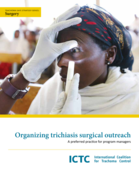
A key component of elimination is to reduce the number
of unmanaged trachomatous trichiasis cases to less than
1 per 1,000 population in affected areas. This will require
not only a large increase in the number of surgeries
performed, but also improvements in the quality of surgery
and in the e...
Note d’orientation
24 juillet 2020
La pandémie de COVID-19 a touché de façon disproportionnée les personnes âgées, en particulier celles qui vivent dans des établissements de soins de longue durée. Dans de nombreux pays, les données probantes montrent que plus de 40 % des décès associ...

Hand Hygiene and COVID-19
recommended
MEDBOX Issue Brief No.2.
The main route of transmission of the Sars-CoV-2 virus are small respiratory droplets. Therefore, thoroughly cleaning of hands with either alcohol-based hand rub or soap and water is one of the corner stones of basic protective measures against COVID-19 for everyone. A part...

The spread of antimicrobial-resistant microorganisms poses anincreasing threat to affordable modern health care. In the Netherlands, efforts to control the dispersal of known and novel antimicrobial-resistant organisms have been mostly implemented at the hospital level. However, recent studies have ...
Although the COVID-19 crisis is, in the first instance, a physical health crisis, it has the seeds of a major mental health crisis as well, if action is not taken. Good mental health is critical to the functioning of society at the best of times. It must be front and centre of every country’s resp...
ПЛАНИРОВАНИЕ И МОНИТОРИНГ ПРОГРЕССА НА ПУТИ К ЭЛИМИНАЦИИ
Recommendations for health care professionals – the experience from Latvia
Based on an increasing body of evidence pointing at the positive impact that social assistance has had in Malawi, the region and beyond, government is encouraged to continue investing in and supporting the expansion and comprehensiveness of social protection programmes in both rural and urban areas,...
