
Filter
1288
Text search:
World
Health
Organization
WHO,
Bangladesh
Featured
130
352
Language
Document type
676
288
160
71
36
22
17
9
4
3
1
1
Countries
137
103
49
39
38
38
24
14
14
12
12
12
11
10
10
9
9
8
8
7
6
6
6
6
5
5
5
5
5
5
4
4
4
4
4
4
3
3
3
3
3
3
3
3
2
2
2
2
2
2
2
2
2
2
2
2
1
1
1
1
1
1
1
1
1
1
1
1
1
1
1
1
1
1
1
1
1
1
1
1
1
1
1
1
1
1
1
Authors & Publishers
Publication Years
Category
324
142
127
126
88
40
13
Toolboxes
95
88
86
84
75
60
51
43
28
26
25
24
21
21
21
20
19
18
17
13
8
7
6
4
3
2


The current SEARVAP (South-East Asia regional vaccine action plan) describes a set of regional goals and objectives for immunization and control of vaccine-preventable diseases for 2016 – 2020 and highlights priority actions, targets and indicators that address the specific needs and challenges of
...
The Strategic Framework for Emergency Preparedness is a unifying framework which identifies the principles and elements of effective country health emergency preparedness. It adopts the major lessons of previous initiatives and lays out the planning
...

Outstanding child and adolescent TB priorities include the need to: find the missing children with active TB and link them to TB care; prevent TB in children who are in contact with infectious TB cases (through implementation of active contact inves
...

Fact Sheet, May 2018.
Nipah virus (NiV) is a zoonotic virus (it is transmitted from animals to humans) and can also be transmitted through contaminated food or directly between people. In infected people, it causes a range of illnesses from asymptomatic (subclinical) infection to acute respiratory
...

El matrimonio infantil viola los derechos humanos independientemente de si la persona involucrada es un niño o una niña, pero sin duda se trata de la forma más generalizada de abuso sexual y explotación de las niñas. Algunas consecuencias negativas son la separación de la
familia y los amigos
...
2nd revised edition. Accessed Apri. 17, 2019
Prevention strategies based on scientific evidence working with families, schools, and communities can ensure that children and youth, especially the most marginalized and poor, grow and stay healthy and safe into adulthood and old age. For every dollar
...
The Compendium of data and evidence-related tools for use in TB planning and programming was developed as a companion document to the People-centred framework for tuberculosis programme planning and prioritization – user guide, published by the
...

The meningitis road map has been designated as a flagship global strategy of the WHO’s Thirteenth General Programme of Work, 2019–2023 and is an essential component in achieving universal health
...
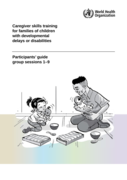
This participants’ guide is part of a five-part Caregiver skills training for families of children with developmental delays or disabilities (CST) package providing guidance on caregiver skills training for families of children aged 2–9 years with developmental delays or disabilities.
This pa
...
The Executive Board at its 150th session noted an earlier version of this report.1 The present report provides an update on the implementation of the Strategic Action Plan on Polio Transition (2018–2023)2 at the start of 2022, within the context of the coronavirus disease (COVID-19) pandemic.
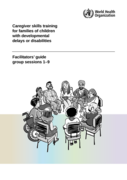
This facilitators’ guide is part of a five-part Caregiver skills training for families of children with developmental delays or disabilities (CST) package providing guidance on caregiver skills training for families of children aged 2–9 years with developmental delays or disabilities.
This fa
...
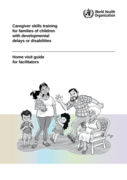
This guide is part of a five-part Caregiver skills training for families of children with developmental delays or disabilities (CST) package providing guidance on caregiver skills training for families of children aged 2–9 years with developmental delays or disabilities.
This guide for facilita
...
This adaptation and implementation guide is part of a five-part Caregiver skills training for families of children with developmental delays or disabilities (CST) package providing guidance on caregiver skills training for families of children aged 2–9 years with developmental delays or disabiliti
...

This document sets out, therefore, to explain the socioeconomic value of investing in the fight against NTDs and highlights priorities for global investment attention. Our work was guided by the need not only for
additional funding and funders but also for the need to understand the current funding
...

Addressing comorbidities and risk factors for TB is a crucial component of Pillar one of the End TB Strategy, which focuses on integrated patient-centred care and prevention, including action on TB and comorbidities. The Framework for collaborative action on TB and comorbidities aims to support coun
...

Due to high routine vaccination coverage, overall counts of diphtheria case have significantly declined in the Western Pacific Region recently. However, diphtheria is still prevalent in several countries and areas of the Region and remains a public health
...
This results report for the biennium 2020–2021 presents the progress towards the triple billion targets, outcomes and outputs, based on the GPW 13 results framework and indicators. It uses structured methodologies, both quantitative and qualitative, for measuring and analysing the achievements and
...

Despite being a preventable and curable infectious disease, tuberculosis (TB) has continued to elude global controll efforts. In 2023, 8.2 milion people with TB were diagnosed and notified to the WHO, the hightest number ever reported since
...
