
Filter
864
Text search:
World
Health
Organization
(WHO),
Regional
Office
for
South-East-Asia
Featured
Recommendations
118
New Publications
231
Language
Document type
No document type
396
Studies & Reports
179
Guidelines
159
Manuals
44
Strategic & Response Plan
39
Training Material
13
Fact sheets
10
Situation Updates
8
Resource Platforms
8
Infographics
4
Brochures
2
Online Courses
2
Countries / Regions
South–East Asia Region
67
Global
64
India
45
Asia
38
Myanmar / Burma
27
Nepal
23
Bangladesh
17
Philippines
12
Indonesia
11
Western Pacific Region
11
Africa
11
Thailand
10
Cambodia
9
Western and Central Europe
9
Afghanistan
5
Sri Lanka
5
Pakistan
4
China
4
South Africa
4
Eastern Europe
4
Laos
4
Russia
4
Vietnam
4
Nigeria
3
Ethiopia
3
Ghana
3
Uganda
3
Syria
3
Kenya
3
East and Southern Africa
3
West and Central Africa
3
Middle East and North Africa
3
Venezuela
3
Timor Leste/ East Timor
3
Burkina Faso
2
Congo, Democratic Republic of
2
Haiti
2
South Sudan
2
Tanzania
2
Rwanda
2
Mozambique
2
Sudan
2
Yemen
2
Latin America and the Carribbean
2
Iran
2
Sierra Leone
1
Liberia
1
Senegal
1
Morocco
1
USA
1
Saudi Arabia
1
Cameroon
1
Iraq
1
Jordan
1
Lebanon
1
Zambia
1
Papua New Guinea
1
Namibia
1
Eswatini/ Swaziland
1
Brazil
1
Ukraine
1
Ecuador
1
Greece
1
Mexico
1
Eastern Europe and Central Asia
1
Other region
1
Paraguay
1
Bhutan
1
Palestine
1
North Korea
1
Albania
1
Mongolia
1
Tajikistan
1
Kazakhstan
1
Georgia
1
Tunisia
1
Bosnia and Herzegovina
1
Authors & Publishers
Publication Years
Category
Countries
187
Clinical Guidelines
125
Public Health
75
Women & Child Health
67
Key Resources
42
Capacity Building
21
Pharmacy & Technologies
14
Toolboxes
HIV
88
Mental Health
72
TB
60
COVID-19
59
NTDs
49
Planetary Health
41
AMR
36
Caregiver
31
Global Health Education
29
Rapid Response
25
NCDs
21
Disability
19
Malaria
19
Pharmacy
16
2.0 Rapid Response
16
Zika
12
Refugee
9
Health Financing Toolbox
9
Conflict
7
Natural Hazards
7
Ebola & Marburg
6
Specific Hazards
6
Cholera
4
Polio
4
Typhoon
1
As part of the Mental Health Gap Action Programme, WHO has developed training manuals (Training of trainers and supervisors training manual and Training of
...
The recommendation in this document thus supersedes the previous WHO recommendation for the prevention of PPH as published in the 2012 guideline, WHO
...

14 January 2021
This practical guide can be used to help countries monitor and analyse the impact of COVID-19 on essential health services to inform planning and decision-making. It provides practical recommendations on how to use key performance i
...
The recommendation in this document thus supersedes the previous WHO recommendation for the prevention of PPH as published in the 2012 guideline, WHO
...

1. Provide treatment for mental disorders in primary care
2. Ensure wider accessibility to essential psychotropic drugs
3. Provide care in the community
4. Educate the public
5. Involve communities, families and consumers
6. Establish national
...

PHSM are vital in reducing the risk and scale of infectious disease transmission and lowering hospitalization and deaths. Examples include contact tracing, quarantine and isolation, mask use, ventilation, school or workplace measures, mobility restrictions and travel requirements.
While these mea
...
To provide a foundation for the strategic policy and programme development needed to ensure the sustainable implementation of effective interventions for reducing the global burden of PPH
This Guide is part of WHO’s overall programme of work on Political Economy of Health Financing Reform: Analysis and Strategy to Support UHC. The impetus
...
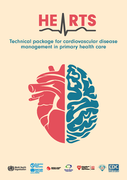
The HEARTS technical package provides a strategic approach to improving cardiovascular health in countries. It comprises six modules and an implementation guide. This package supports Ministries of Health
...

The World Health Organization (WHO) is releasing the second edition of its Global Accelerated Ac
...
Guide for coordinators and data collectors - The WHO Operational Package for Assessing, Monitoring and Evaluating Country Pharmaceutical Situations
...

WHO guidelines for clinical management of arboviral diseases: dengue, chikungunya, Zika and yellow fever
recommended
The new WHO guidelines provide clinical management recommendations for four of the most widespread arboviruses affecting humans: dengue, chikungunya, Zika, and yellow fever.
An integrated approac
...
Consolidated Guidelines
Geneva, 2016
The End TB Strategy

To support countries in adapting their response to different COVID-19 scenarios, the World Health Organization (
...
The standards of care cover the routine care and management of complications occurring for women and their babies during labour, childbirth and the early postnatal period, including those of small babies during the first week of life. They define pr
...

Updated with information on Ebola virus disease and Middle East respiratory syndrome coronavirus
A wide variety of health events ranging in severity may occur related to air transport, requiring different responses or, perhaps, no response at all.
...

