Filter
295
Text search:
Health
Information
Translations
Featured
32
57
Language
Document type
153
64
34
23
8
4
3
2
1
1
1
1
Countries
19
10
7
7
7
7
7
6
6
5
5
5
5
4
4
4
4
3
3
3
3
3
3
2
2
2
2
2
2
2
2
2
2
1
1
1
1
1
1
1
1
1
1
1
1
1
1
1
1
1
1
1
1
1
1
1
1
1
1
1
1
1
1
1
1
1
1
1
1
1
1
1
1
Authors & Publishers
Publication Years
Category
72
25
24
13
12
5
1
1
Toolboxes
51
30
30
25
19
12
10
9
9
7
7
7
6
6
5
4
4
3
3
3
3
2
1
1
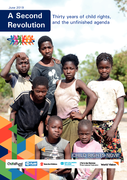
The report showed commitments made three decades ago to protect the rights of children remain unfulfilled for millions. Violence still affects countless children. Discrimination based on age, gender, disability, sexual orientation and religion harms children worldwide.
Key factors include a lack
...

The reader acknowledges that this report is intended as an evidence-based asthma management strategy, for the use of health professionals and policy-makers. It is based, to the best of our knowledge, on current best evidence and medical knowledge an
...

The article "Asthma in South African adolescents: a time trend and risk factor analysis over two decades" investigates the prevalence and risk factors for asthma in Cape Town adolescents from 2002 to 2017. The study finds that while the overall prevalence of asthma remained similar, the severity of
...
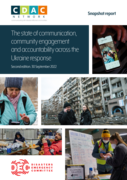
Since the first edition of the CDAC snapshot of communication, community engagement and accountability (CCEA) across the Ukraine response was published in May 2022, a conscious effort has been made by international, national and local responders to ramp up CCEA action. Progress has been made in esta
...

The Strategic Malaria Communication Guide for Central America is intended to facilitate the shift from malaria control to elimination by strengthening communication and advocacy initiatives throughout the region. Based on interviews and a review of literature, the guide offers National Malaria Progr
...

This report provides insights into the prevalence of belief systems and gender norms among young women and men in the region. It looks in depth at the most entrenched beliefs and behaviours among the younger population and provides ample evidence that we must challenge and change the prevailing beli
...

The* Facilitator manual on community-based psychosocial support *and the* Volunteers manual on community-based psychosocial support* provides resources for trainers and participants in key aspects of psychosocial support, including understanding the impact of crisis events, supportive communication,
...


This report presents the findings of the Estimating the Size of Populations through a Household Survey (ESPHS) study that took place in 2011. The study utilized a single household survey to estimate the size of several key populations, including sex workers, men who have sex with men (MSM), injectin
...

In the absence of a such a measure, and building on the success of developing the APCA African
Palliative Outcome Scale (POS) for adults, the African Palliative Care Association has developed the
APCA African Children’s POS. The tool has been validated across diseases, countries, settings and
...


Post-traumatic symptoms in Ghanaian children. Thesis for Master of Philosophy in Peace and Conflict Studies (PECOS). This study investigated whether Ghanaian children exposed to low intensity warfare experience symptoms of PTSD as described in the DSM-IV. It also aimed to find out if there are cultu
...
Education is UNESCO’s top priority because
it is a basic human right and the foundation
on which to build peace and drive sustainable
development. UNESCO is the United Nations’
specialized agency for education and the
Education Sector provides global and
regional leadership in education, s
...

This publication gives a broad vision of what a comprehensive approach to cervical cancer prevention and control means. In particular, it outlines the complementary strategies for comprehensive cervical cancer prevention and control, and highlights the neners. This new guide updates the 2006 edition
...
The importance of growing up in a nurturing and supportive family environment cannot be underestimated. Raising children in a warm, loving environment sets them on a positive developmental trajectory for later life success (Biglan et al, 2012). Conversely, children raised in homes with inconsistent
...