
Filter
249
Text search:
poliovirus
Featured
14
72
Language
Document type
131
47
35
13
8
8
2
2
2
1
Countries
16
10
10
10
9
8
8
8
6
6
6
5
4
4
4
4
4
4
3
3
3
3
3
3
2
2
2
2
2
2
2
2
2
2
2
2
2
2
2
2
1
1
1
1
1
1
1
1
1
1
1
1
1
1
1
1
1
1
1
1
1
1
Authors & Publishers
Publication Years
Category
94
21
17
13
12
4
2
Toolboxes
68
19
14
12
10
10
8
5
5
4
4
3
2
2
2
2
2
2
1
1
1
1
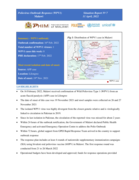
On 16 February 2022, Malawi received confirmation of Wild Poliovirus Type 1 (WPV1) from an acute flaccid paralysis (AFP) case in Lilongwe.

Responding to a poliovirus event and outbreak, Part 1: General (SOPs) describes the general principles and steps to facilitate timely and effective responses to poliovirus events and outbreaks, and
...
The main objectives of the SOPs are to: (i) establish standards and timelines for response activities; and (ii) guide national governments and GPEI partners in key support functions.
This new version of the SOPs presents overall response requirements for dealing with type 1, 2 and 3
...
Disease outbreak news 30 October 2018

The Lancet, Early Online Publication, 11 July 2014
doi:10.1016/S0140-6736(14)60934-X
*Free registration is required to view this article
Version 4
The purpose of these standard operating procedures (SOPs) is to offer policy guidance and to provide performance standards on how to respond to any type of poliovirus outbreak or event in a timely and effective
...


Circulating vaccine-derived poliovirus type 2 in Angola
Ebola virus disease in Democratic Republic of the Congo
Dengue fever in Côte d’Ivoire
Humanitarian crisis in north-east Nigeria.
Summary of new viruses this week: Afghanistan –five wild poliovirus type 1 (WPV1) positive environmental samples. Pakistan –one WPV1 positive environmental sample. Papua New Guinea – three cases of circulating vaccine-derived
...

Summary of new viruses this week: Pakistan—three wild poliovirus type 1 (WPV1) cases and five WPV1-positive environmental samples; Nigeria—one circulating vaccine derived poliovirus type 2 (cVDP
...

Despite Pakistan's progress in reducing the number of wild poliovirus type 1 (WPV1) cases to 8 in 2017 and 12 in 2018, 2019 has seen a significant rise in the number of WPV1 cases (41 cases as of July 8 2019). One of the most intractable challenges
...
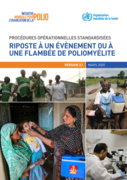
Version 3.1. Le but des procédures opérationnelles standardisées (POS) est d’offrir des orientations politiques et de fournir des normes de performance de riposte à tout type d’épidémie ou d’évènement lié au poliovirus de manière rap
...

The key to a lasting world free of all forms of poliovirus lies in rapidly interrupting all remaining endemic transmission of WPV in the endemic areas of Pakistan and Afghanistan. This is the only way to ensure that such strains do not re-emerge glo
...
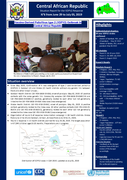
Since May 2019, Confirmation of 4 new emergence of type 2 vaccine-derived poliovirus (VDPV2) in Bambari (2) and Bimbo (2) health districts without any genetic link between them and other known viruses ; Bambari Health District: CAF-RS4-BAM-19-058, o
...
