
Filter
700
Text search:
cascade
Featured
65
216
Language
Document type
329
143
95
47
39
25
11
5
3
1
Countries
28
26
17
16
16
15
14
14
14
13
12
11
11
11
11
10
9
7
7
7
7
7
7
7
6
6
6
5
5
5
5
5
4
4
4
4
4
4
3
3
3
3
3
3
3
3
2
2
2
2
2
2
2
2
2
2
2
2
2
2
1
1
1
1
1
1
1
1
1
1
1
1
1
1
1
1
1
1
1
1
1
1
1
1
1
1
1
1
1
1
1
1
1
Authors & Publishers
Publication Years
Category
309
68
38
23
20
12
6
Toolboxes
101
70
35
29
25
23
22
14
14
11
11
10
8
8
7
7
6
5
5
4
4
3
2
1

Rev Panam Salud Publica 45, 2021 |

Preventive Medicine Reports Volume 46, October 2024, 102870.
The syndemic of HIV, sexually transmitted infections (STIs), and early pregnancy remain a key challenge to global public health. Decision-making around sexual and reproductive health (SRH) behaviours is critical to ensuring the uptake of
...

2nd edition.
T The Compendium has been developed as a clear and concise instrument to facilitate the understanding and planning of delivery of high-quality care for everybody affected by TB. It incorporates all recent policy guidance from WHO; follows the care pathway of persons with signs or sympt
...
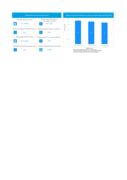
Demographic and socioeconomic data Progress towards HIV testing and treatment cascade targets by 2025 (2023) Health sector cascade (2023) Estimated number of people newly infected with HIV

Consolidated guidelines on person-centred HIV strategic information: strengthening routine data for impact
recommended
These guidelines focus on the collection and use of person-centred data across the HIV cascade – from prevention, testing and treatment to longer-term health care – building upon 2017 and 2020 strategic information guidelines. The updated guidel
...
Ces lignes directrices prônent une approche centrée sur la personne des informations stratégiques sur le VIH, ce qui implique de cesser de collecter des données agrégées dans les services (par exemple, le nombre de tests de dépistage du VIH administrés) pour s’intéresser au patient qui re
...
Due to the anticipated significant rise in VL testing occasioned by Ghana’s adaptation of 2016 ART guidelines, it has become necessary to develop this VL scale-up and operational plan to assure complete client access to laboratory monitoring towards the achievement of the third 90 of the HIV care
...

WHO's Department for HIV, Tuberculosis, Hepatitis and Sexually Transmitted Infections (STIs) has consolidated all existing normative guidance on STIs into a single publication. Structured around 10 chapters that follow the STI prevention and care cascade
...
Curr HIV/AIDS Rep. 2022; 19(1): 37–45.
Published online 2022 Jan 29. doi: 10.1007/s11904-021-00589-4.
COVID-19 has had an unprecedented impact on the cascade-of-care among PLWH in LAC. There is a need for
longitudinal studies that assess clinic
...

Differentiated Service Delivery
recommended
Differentiated service delivery (DSD), previously referred to as differentiated care, is a client-centred approach that simplifies and adapts HIV services across the cascade to reflect the preferences, expectations and needs of people living with an
...

Advance Family Planning - Advocacy Portfolio
recommended
Adapted from well-established decision-making concepts and honed through practical application in resource-limited settings, the AFP Advocacy Portfolio includes:
1. Advocate for Family Planning, an introduction to AFP’s approach.
2. Develop a Strategy, featuring a tool to understand your context
...

Unpreparedness of health professionals to address non-communicable diseases (NCD) at peripheral health facilities is a critical health system challenge in Mozambique. To address this weakness and decentralize NCD care, training of the primary care workforce is needed. We describe our experience in t
...

About one fourth of the world’s population is estimated to have been infected with the tuberculosis (TB) bacilli, and about 5–10% of those infected develop TB disease in their lifetime. The risk for TB disease after infection depends on several factors, the most important being the person’s im
...

About one fourth of the world’s population is estimated to have been infected with the tuberculosis (TB) bacilli, and about 5–10% of those infected develop TB disease in their lifetime. The risk for TB disease after infection depends on several factors, the most important being the person’s im
...


The country snapshot prepared by UNAIDS Regional Support Team for Asia and the Pacific and AIDS Data Hub provides information on the HIV epidemic and response in Bangladesh country.
