
Filter
562
Text search:
World
Health
Organization
WHO,
WASH
Cluster,
Health
Cluster
Featured
77
200
Language
Document type
273
89
76
55
37
20
6
5
1
Countries / Regions
25
21
20
17
16
16
16
15
14
13
13
13
12
10
10
10
9
9
8
8
8
7
6
6
5
5
4
4
4
4
4
4
4
3
3
3
3
3
3
2
2
2
2
2
2
2
2
2
2
2
1
1
1
1
1
1
1
1
1
1
1
1
1
1
1
1
1
1
1
1
1
1
1
1
1
1
1
1
1
1
1
Authors & Publishers
Publication Years
Category
249
83
25
25
24
7
1
Toolboxes
81
50
29
28
22
20
19
17
16
12
11
9
8
8
7
7
5
4
3
3
2
2
1
1
1
1
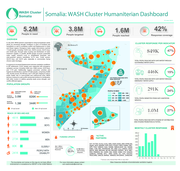

The protracted humanitarian situation in northeastern Nigeria, particularly in Borno, Adamawa, and Yobe (BAY) States, remains a concern due to ongoing insecurity, displacement, food insecurity, disease outbreaks, and climate-related shocks. To address these complex challenges, the
...
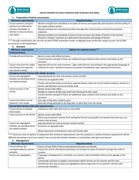

The response to a cholera outbreak must focus on limiting mortality and reducing the spread of the disease. It should be comprehensive and multisectoral, including epidemiology, case management, water, sanitation and hygiene, logistics, community engagement and risk communication. All efforts must b
...
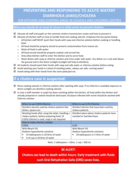
What you should do as head of school or child centre to prevent cholera:
Educate all staff and pupils on the common cholera transmission routes and how to prevent it.
Educate all kitchen staff on how to handle food and cooking utensils. Emphasis the key points below:
o All kitchen staff MUST
...

Ethiopia has been repeatedly affected by conflict, flooding, drought, and disease outbreaks in the past years. As of January 2024, the country is actively responding to the longest recorded cholera outbreak which started in August 2022, recurrent measles outbreaks which started in August 2021, and t
...

This document is a situation report (#6) from October 2, 2017, describing the cholera outbreak in Yemen. By October 1, 2017, there were 777,229 suspected cholera cases and 2,134 deaths across 22 of Yemen's 23 governorates. The response involves WASH
...

South Sudan continues to struggle with a severe health crisis affecting 8.9 million people, primarily in flood- and conflict-affected regions with population movements (displacement and returns), and disease outbreaks. The nation's
...
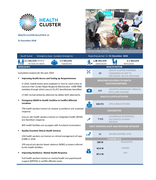
Emergency WASH in Health Facilities in Conflict Affected Locations 756 health workers trained on disease surveillance and outbreak response.
Aroun
...

A practical handbook. This Health Cluster Guide (2nd edition, 2020) provides practical advice on how WHO,
...
The postpartum period is a critical time for mothers and newborns, who require essential hygiene and personal items, such as menstrual pads, clothes, and diapers, to ensure their well- being and health
...

The humanitarian crisis in Northeast Nigeria, driven by conflict, climate-related shocks, and food insecurity, has created immense challenges for the health sector in Borno, Adamawa, and Yobe (BAY) States. About 1.8 million people remain displaced(1
...
Confronted with the important issue of patient safety, in 2002 the Fifty-fifth World Health Assembly adopted a resolution urging countries to pay the closest possible attention to the problem and to
...
Integrated Response Plan: Yemen Cholera Outbreak
recommended
The plan outlines emergency health, WASH and communications interventions to contain and prevent further spread of the outbreak in the 227 high risk districts, where suspected cholera cases were rep
...
Le Burkina Faso traverse des flambées épidémiques complexes sans précédent de la poliomyélite et du virus Corona qui affectent gravement le pays.
Avec de multiples maladies endémiques et d'autres flambées signalées telles que la rougeole, la méningite, le virus Corona, découvert pour l
...
UNICEF, WHO Whole of Syria Nutrition, Cluster, the Global Nutrition Cluster, the IFE Core Group, and partners call for ALL involved in the response
...
These Frequently Asked Questions (FAQs) have been developed by the Infant Feeding in Emergencies (IFE) Core Group Infectious Disease Working Group based on the most recent recommendations, collective knowledge and evidence on cholera. The FAQs also draw on infant and young child feeding (IYCF) recom
...

This report is one of the first major products of the newly established Precision Public Health Metrics unit of the UCN cluster of the WHO Regional
...
This guidance has been developed in line with the WHO corporate risk management framework, the WHO business continuity and contingency plans, as well as the Inter-Agency Emergency Response Preparedn
...
