Filter
1224
Text search:
Pediatric
Treatment
Featured
136
302
Language
Document type
701
191
173
71
28
27
21
5
3
2
1
1
Countries
88
40
39
39
29
25
23
22
20
17
17
16
15
13
13
12
12
12
12
10
10
9
8
8
8
8
8
7
7
7
7
6
5
5
5
5
4
4
4
4
4
4
4
3
3
3
3
3
3
3
3
2
2
2
2
2
1
1
1
1
1
1
1
1
1
1
1
1
1
1
1
1
1
1
1
1
1
1
1
1
1
1
1
Authors & Publishers
Publication Years
Category
470
153
91
49
46
23
1
Toolboxes
152
106
74
71
47
46
42
40
34
21
18
16
15
12
8
8
7
7
6
6
4
3
2
2
2

Accessed Febr. 6 ,2020

Current Treatment Options in Pediatrics, Vol.12 no.15
This review discusses the challenges of pediatric shock management in low-resource settings and outlines practical, evidence-based approaches t
...
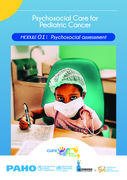
Advances in the treatment of pediatric cancer have made it possible to expand initiatives beyond cure and cover aspects such as early detection, continuity of
...

The article "Asthma treatment in children: A guide to screening for and management of hypothalamic-pituitary-adrenal axis suppression" discusses the risks associated with the use of corticosteroids in pedi
...
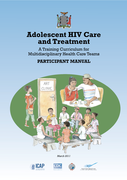
The curriculum, which complements the national pediatric ART training, was finalized in 2011 and was subsequently implemented nationally. The training curriculum includes a 15-module Trainer Manual, a Participant Manual, and accompanying PowerPoint
...
Multi-month dispensing (MMD) is the prescribing and dispensing of three to six months of antiretrovirals
(ARV) and other medicines required for treatment of people living with HIV (PLHIV). This approach is in
contrast to the current standard of ca
...

The key areas covered are diagnosis, imaging, pathology, surgery, rehabilitation, palliative care and survivorship. It emphasizes a multi-disciplinary team approach which is paramount for quality cancer care. The specific cancers covered are breast, central nervous system, gastroint
...
Evidence-based guidelines are one of the most useful tools for improving public health and clinical practice. Their purpose is to formulate interventions based on strong evidence of efficacy, avoid unnecessary risks, use resources efficiently, reduce clinical variability and, in essence, improve hea
...
Asthma is the most common chronic disease in children, imposing a consistent burden on health system. In recent years, prevalence of asthma symptoms became globally increased in children and adolescents, particularly in Low-Middle Income Countries (LMICs). Host (genetics, atopy) and environmental fa
...

Coronavirus disease 2019 has a mild disease course in children and adolescents. Chronic respiratory conditions, including asthma, have been suggested as risk factors; however, asthma in children is highly variable in both triggers and severity.
During the pandemic,
...

This document by Medicines for Malaria Venture (MMV) highlights the significant burden of malaria on children worldwide, emphasizing the need for effective prevention, diagnosis, and treatment strategies. It reviews current challenges and progress i
...
Palliative care for children with life-limiting illness is the active total care of the child’s body, mind, and spirit. It begins at diagnosis and continues regardless of whether the child receives treatment directed at the disease. It seeks to co
...
The information in the brief version is excerpted directly from the full-text guidelines. The brief version is a compilation of the tables and boxed recommendations. The guidelines were updated to comply with Executive Orders. You can download the full guidelines, charts and recommendations
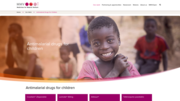
The webpage from Medicines for Malaria Venture (MMV) focuses on efforts to develop and provide child-friendly antimalarial treatments. It highlights the challenges of treating malaria in children, who are among the most vulnerable to the disease, and the need for safe, effective, and easy-to-adminis
...