
Filter
18
Featured
1
Language
Document type
5
5
4
2
1
1
Countries / Regions
6
2
1
1
1
Authors & Publishers
Publication Years
Category
3
1
Toolboxes
8
6
2
1
1
1
1
1
1
The webpage describes a 2025 report by the International Federation of Red Cross and Red Crescent Societies on how governments can integrate anticipatory action into national disaster risk management systems, using global examples and case studies to show why and how anticipatory approaches should b
...
The UNDP webpage “Climate Information and Early Warning Systems” explains how climate information and early warning systems help countries and communities better prepare for and respond to climate-related hazards such as extreme weather events, floods, heatwaves and droughts. It describes UNDPâ€
...
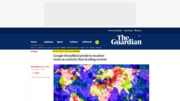
The Guardian article reports that Google DeepMind has developed an artificial intelligence model capable of predicting weather more accurately than one of the world’s leading traditional forecasting systems. The AI system, trained on large amounts of historical weather data, can generate faster an
...
The Early Warnings for All (EW4All) initiative aims to ensure universal protection from hazardous hydrometeorological, climatological and related environmental events through life-saving multi-hazard early warning systems, anticipatory action and resilience efforts by the end of 2027, as called for
...

PLoS One 20(6): e0324338.https://doi.org/10.1371/journal.pone.0324338
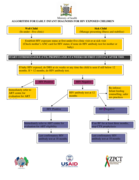
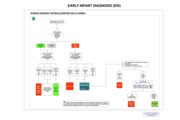
If baby HIV exposed, do DBS at six weeks or any time the child is seen if still below 12 months. If > 12 months, do HIV antibody test.

Orientation slides for trainers
Point of care EID training package
recommended
This training package provides materials to guide onsite training for the introduction of POC EID testing. The topics focus on what health workers at each facility need to learn in order to confidently begin POC EID high-quality testing; the package provides materials for both classroom and hands-on
...

Populations affected by emergencies are continually at risk of outbreaks of epidemic-prone diseases and other public health hazards. This operational guidance aims to guide decision-making on when and how to implement and strengthen Early Warning Alert and Response (EWAR) in preparation for and resp
...

The document “Pandemic Planning Response Guide” provides guidance for organizations on how to prepare for, respond to, and recover from a pandemic. It explains what a pandemic is and emphasizes the importance of advance planning to reduce disruptions to operations. The guide presents a structure
...

The WHO handbook “Epidemiological Data Analysis for the Early Warning Alert and Response Network (EWARN) in Humanitarian Emergencies” explains how to collect, analyse, interpret, and share health data during crises such as conflicts or natural disasters. It is a practical guide for health and su
...

Early detection, assessment and response to acute public health events:
Early Warning and Response to Outbreaks and other Public Health Events: A Guide provides practical guidance for strengthening early warning functions within existing public health surveillance systems in WHO’s South-East Asia Region. The document explains how countries can detect, verify, and resp
...
