
Filter
6
Featured
1
Language
Document type
3
3
Countries / Regions
3
1
Authors & Publishers
Publication Years
Category
2
1
1
1
1
Toolboxes
1
1
1
1
1

This report presents the performance results of 21 household water treatment (HWT) products evaluated in Rounds III and IV of the WHO International Scheme to Evaluate Household Water Treatment Technologies (the Scheme). Released alongside a consolidated overview of findings from Rounds I–II, it re
...

Trends in under-five mortality rate in Malawi: Child health; Child protection ; Child survival ;Early childhood ;Education ;HIV/AIDS
Maternal and newborn health ;Nutrition ;Sanitation ;Drinking water;MICS
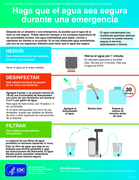
Después de un desastre o una emergencia, es posible que el agua de la llave no sea segura. Preste atención siempre a los consejos especíÿcos de las autoridades locales. Use agua embotellada para beber, cocinar y cepillarse los dientes si es posible. Si no hay disponible agua embotellada, use uno
...
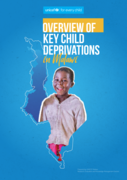
Only 10 per cent of households have electricity. Less than one half (46 per cent) of the households use basic sanitation facilities. Three in every four of the household population had basic drinking water services. More than one third of under-5 Malawian children (boys 39 per cent than girls 32 per
...

UNICEF Malawi and its partners are prioritizing renewable energy solutions for children and communities across the country to access clean and affordable electricity, with a focus on hard-to-reach, rural communities unable to access the national electricity grid.

The document focuses on household water treatment methods to ensure access to safe drinking water, particularly in areas with limited access to clean water sources. It highlights the importance of safe water, noting that contaminated water is a major cause of waterborne diseases such as diarrhea and
...
