
Filter
621
Breadcrumb:
World Health Organisation (WHO)
Featured
34
64
Language
Document type
261
88
73
59
29
28
24
19
17
9
6
5
1
1
1
Countries
43
15
11
10
9
9
8
8
7
7
6
5
5
5
5
4
4
4
4
4
4
4
4
3
3
3
3
3
3
3
3
3
2
2
2
2
2
2
2
2
2
2
2
2
2
2
2
2
2
2
2
2
2
2
2
2
2
2
2
1
1
1
1
1
1
1
1
1
1
1
1
1
1
1
1
1
1
1
1
1
1
1
1
1
1
1
1
1
1
1
1
1
1
1
Authors & Publishers
Publication Years
Category
54
22
16
16
10
10
8
8
8
8
7
7
7
7
7
6
6
6
6
6
4
4
4
4
4
3
3
3
3
3
3
3
3
3
2
2
2
2
2
2
2
2
2
2
2
2
2
2
2
1
1
1
1
1
1
1
1
1
1
1
1
1
1
1
1
1
1
1
1
1
1
1
1
1
1
1
1
1
1
1
1
1
1
1
1
1
1
1
1
1
1
1
1
Toolboxes
19
18
16
13
10
9
9
9
8
8
8
8
8
7
7
7
7
7
6
6
6
5
5
5
5
5
5
5
5
5
5
5
5
4
4
4
4
4
4
4
4
4
4
4
4
3
3
3
3
3
3
3
3
3
3
3
3
3
3
3
3
3
3
3
3
3
3
3
3
3
3
3
3
3
3
3
2
2
2
2
2
2
2
2
2
2
2
2
2
2
2
2
2
2
2
2
2
2
2
2
2
2
2
2
2
2
2
2
2
2
2
2
2
2
2
2
2
2
2
2
2
2
2
2
2
1
1
1
1
1
1
1
1
1
1
1
1
1
1
1
1
1
1
1
1
1
1
1
1
1
1
1
1
1
1
1
1
1
1
1
1
1
1
1
1
1
1
1
1
1
1
1
1
1
1
1
1
1
1
1
1
1
1
1
1
1
1
1
1
1
1
1
1
1
1
1
1
1
1
1
1
1
1
1
1
1
1
1
1
1
1
1
1
1
1
1
1
1
1
1
1
1
1
1
1
1
1
1
1
1
1
1
1
1
1
1
1
1
1
1
1
1
1
1
1
1
1
This action plan is intended for senior-level decision-makers in ministries of health, malaria
programme managers, entomologists, and epidemiologists working on malaria and other vectorborne diseases programmes. It is also intended for decision-makers and technical and advocacy
staff at other orga
...
The Country Cooperation Strategy (CCS) is a medium-term strategic framework for cooperation between WHO and countries and outlines a shared agenda with priority areas of work for five years. The aim of this CSS is to define medium term vision for
WHO technical cooperation with the State of Eritrea
...
HIV, viral hepatitis and sexually transmitted infections continue to pose a major public health burden in the WHO European Region, affecting millions of people and causing premature mortality. Despite some progress being made in achieving the targets outlined in the previous Action plan for the heal
...

This brief update on tuberculosis (TB) in the African region covers the state of TB in the WHO African region, strategic priorities and targets and the impact of COVID-19 on essential services. This is followed by key figures for the region, the role of WHO in country support and, recognizing the im
...

This document seeks to help health communication professionals working on the topic of immunization more effectively communicate about Events Supposedly Attributed to Vaccination and Immunization (ESAVI) by building trust in National Immunization Programs, understanding risk perceptions related to v
...

Tobacco has negative implications for the environment, the economy and the health of both smokers and non-smokers. All people have a fundamental right to breathe clean air, and tobacco-free environments are essential to guaranteeing this right. This includes protection in outdoor spaces. Whether sit
...
In 2019, WHO estimated that 6.7 million premature deaths could be attributed to ambient and household air pollution from particulate matter (particles with a diameter less than 2.5 μm, PM2.5. Of the 4.2 million deaths attributed specifically to ambient air pollution exposures.
Workshop Report: Dhaka, Bangladesh 12-15 June 2023
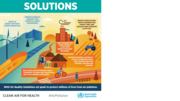
WHO Air Quality Guidelines set goals to protect millions of lives from air pollution

Infographic
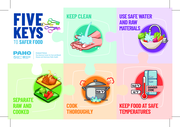
Magnet 5 keys to food safety
As of 21 September, the diphtheria oubreak has resulted in a total of 453 deaths recorded among all confirmed cases (Case Fatality Rate/ CFR: 6.3%). A total of 11,587 suspected and 7,202 confirmed cases have been reported with 99 local government areas (LGAs) affected across 18 states. Event has be
...
The Framework provides a roadmap for creating a stable environment that is sensitive to children’s
health and nutritional needs, with protection from threats, opportunities for early learning, and interactions that are responsive, emotionally supportive and developmentally stimulating
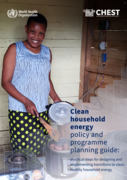
Exposure to household air pollution (HAP) is one of the greatest environmental risks to human health worldwide. Policies to accelerate the adoption of clean cooking, heating and lighting are essential for reducing HAP and the enormous burden of disease it causes and for lowering climate-warming emis
...
This report describes the “Building health workers capacity on air pollution and health” pilot workshop held in Ghana in 2022 which aimed at testing the training material of the first WHO Air Pollution and Health Training toolkit (APHT) targeting health professionals. APHT aims at strengthening
...
Member States of the Region have initiated processes to strengthen leadership and governance for mental health. Several countries have developed and implemented mental health plans, strategies and legislations. Direct spending on mental health needs to be increased throughout the Region through the
...
Almost the entire Rwandan population (98.5%) relies on polluting fuels, particularly firewood and charcoal, for cooking. Access to clean energy such as electricity is still limited. In 2022, 70% of the population lived in towns and villages that have electricity – 49% from the national grid and 21
...

The importance of community and civil society engagement to end TB has been highlighted in various strategies and global commitments. The WHO End TB Strategy, aligned with the United Nations Sustainable Development Goals, emphasizes the role of communities and civil society in ending the TB epidemic
...
In 2019, following a request from the Codex Committee on Food Hygiene (CCFH), the Codex Alimentarius Committee (CAC) approved new work at its 42nd Session on the development of guidelines for the control of Shiga toxin-producing Escherichia coli (STEC) in leafy vegetables and in sprouts.
The obje
...
In 2019, following a request from the Codex Committee on Food Hygiene (CCFH), the Codex Alimentarius Committee (CAC) approved new work at its 42nd Session on the development of guidelines for the control of Shiga toxin-producing Escherichia coli (STEC) in leafy vegetables and in sprouts.
The obje
...
