
Filter
51
Featured
6
9
Language
Document type
23
12
5
5
2
1
1
1
1
Countries
11
7
4
3
3
1
1
1
1
1
1
1
1
Authors & Publishers
Publication Years
Toolboxes
21
2
1
1
1
1
1
The aims of these guidelines are to provide guidance to health-care providers (i.e. the end-users of these guidelines: physicians, nurses, pharmacists and caregivers) on the adequate relief of pain associated with cancer. They also assist policy-makers, programme managers and public health personnel
...
Universal health coverage (UHC) has a central place in achieving the Sustainable Development Goals (SDGs) by 2030, as
it is a major target (3.8) under SDG 3 (Ensuring healthy lives and promote well-being for all at all ages). The World Health
Organization defines Universal Health Coverage (UHC)
...

Inequality of access to palliative care and symptom relief is one of the greatest disparities in global health care (1). Currently, there is avoidable suffering on a massive scale due to lack of access to palliative care and symptom relief in low- and middle-income countries (LMICs) (1). Yet basic p
...

People younger than 20 years comprise 35% of the global population and 40% of the global population of least-developed nations. The number of children - neonates, infants, children, and adolescents up to 19 years of age - who need pediatric palliative care (PPC) each year may be as high as 21 millio
...

Humanitarian emergencies and crises (Humanitarian emergencies and crises) are large-scale events that may result in the breakdown of health care systems and society, forced displacement, death, and physical, psychological, social and spiritual suffering on a massive scale. Current responses to Human
...


Palliative care has been shown to provide significant and diverse benefits for patients with serious, complex,or life-limiting health problem.
Jamison DT, Gelband H, Horton S, Jha P, Laxminarayan R, Mock CN, Nugent R., editors. Disease Control Priorities, 3rd Edition,
Volume 9: Improving Health an
...

Groupe d'étude sur la douleur et les politiques / Centre collaborateur de l'OMS pour les politiques de soulagement de la douleur et de soins palliatifs
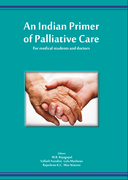
An Indian Primer of Palliative Care
recommended
For medical students and doctors
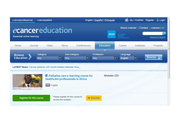
ecancer, Cardiff University and the African Palliative Care Association have developed an online course in palliative care contextualised for African healthcare professionals. The course has been created through the IAEA Programme of Action for Cancer Therapy, Virtual University of Cancer Control a
...
Palliative Care Toolkits and Training Manual
recommended
This toolkit has been written to empower health workers in resource-poor settings to integrate palliative care into the work they are doing by grafting the missing elements of care onto what is already in place. The WHPCA, Hospice UK and Palliative Care Works have led this updating of the Palliative
...

For education to be competency-based and effective, appropriate training methodologies have to be used to support the learner to have the appropriate knowledge and to translate this knowledge into skills and competencies. Such education and training should lead to a change in attitudes, beliefs a
...

Submission by the WHO Collaborating Centre on training and policy on opioid availability and WHO collaborating Centre for community participation in palliative care and long term care To the Indian Nursing Council for consideration to be included in the Undergraduate Nursing education curriculum
