
Filter
1750
Filtered Results: 1750
Text search:
adverse
reactions
Featured
Recommendations
210
New Publications
459
Language
Document type
No document type
988
Guidelines
332
Studies & Reports
192
Manuals
126
Strategic & Response Plan
35
Fact sheets
34
Training Material
23
Brochures
7
Situation Updates
6
Infographics
4
Resource Platforms
2
Online Courses
1
Countries / Regions
India
112
South Africa
50
Global
44
Ethiopia
39
Nigeria
38
Western and Central Europe
38
Kenya
37
Tanzania
32
Uganda
32
Nepal
28
Latin America and the Carribbean
25
Zambia
24
Ghana
22
Malawi
22
Sierra Leone
18
Philippines
18
Eastern Europe
17
Bangladesh
16
Namibia
16
Liberia
16
Africa
15
Zimbabwe
13
Rwanda
12
South–East Asia Region
12
Myanmar / Burma
12
Cambodia
11
Indonesia
10
Ukraine
9
Lesotho
8
Botswana
8
Eswatini/ Swaziland
8
Congo, Democratic Republic of
7
Senegal
6
Asia
6
Colombia
5
Syria
5
USA
5
Brazil
5
Mozambique
4
Germany
4
Eastern Europe and Central Asia
4
South Sudan
4
Thailand
3
Haiti
3
Middle East and North Africa
3
Western Pacific Region
3
East and Southern Africa
3
Argentina
3
Moldova
3
Sri Lanka
3
Timor Leste/ East Timor
2
Benin
2
Cameroon
2
Afghanistan
2
Guinea
2
Venezuela
2
West and Central Africa
2
Bolivia
2
Lebanon
2
Russia
2
Mali
2
Bhutan
2
Ecuador
2
Tajikistan
1
North Korea
1
Australia
1
Gambia
1
China
1
Kazakhstan
1
Chile
1
Fiji
1
Laos
1
Kyrgyzstan
1
Burkina Faso
1
Ireland
1
Paraguay
1
North America
1
United Kingdom
1
Spain
1
Côte d’Ivoire / Ivory Coast
1
Vietnam
1
Yemen
1
Palestine
1
Georgia
1
Angola
1
Chad
1
Libya
1
Iraq
1
Somalia
1
Solomon Islands
1
Madagascar
1
Pakistan
1
Authors & Publishers
Publication Years
Category
Countries
609
Clinical Guidelines
241
Public Health
81
Key Resources
71
Women & Child Health
61
Capacity Building
27
Pharmacy & Technologies
26
Toolboxes
TB
178
Mental Health
156
COVID-19
137
HIV
111
NTDs
93
Pharmacy
88
AMR
43
Ebola & Marburg
39
Planetary Health
39
Caregiver
37
Rapid Response
33
Refugee
27
NCDs
27
Malaria
27
Conflict
24
Specific Hazards
22
Polio
19
Zika
18
Disability
12
2.0 Rapid Response
12
Natural Hazards
10
Cholera
9
Global Health Education
8
Health Financing Toolbox
3
Making the Case for Alcohol as a Public Health Threat in the Region. The purpose of this document is to explain the need for making alcohol a top public health priority in the region and the need for national and regional action. Current evidence-based research shows that alcohol consumption and dri...
Guidance for addressing a global infodemic and fostering demand for immunization
December 2020
Misinformation threatens the success of vaccination programs across the world. This guide aims to help organizations to address the global infodemic through the development of strategic and well-coordina...
Arsenical monotherapies were previously very successful for treating human African trypanosomiasis (HAT).
Melarsoprol resistance emerged as early as the 1970s and was widespread by the late 1990s.
Melarsoprol resistance represents the only example of widespread drug resistance in HAT patients wher...
Rreport of a WHO Consultative Meeting Kolkata India 2012
Second Edition
AIDS Medicines and diagnostics services
July 2015
Review
published: 12 August 2016 doi: 10.3389/fpubh.2016.00166
Frontiers in Public Health | www.frontiersin.org 1 August 2016 | Volume 4 | Article 166

The Committee discussed the implications for preparedness for smallpox-like events reflected by the ongoing COVID-19 pandemic. The Committee noted how quickly diagnostics and vaccines could be developed and deployed when resources and political will were abundant. This rapidity was also due to the f...

Pathak et al. (2016), PeerJ, DOI 10.7717/peerj.1738; 1-14
A quick reference guide for health authorities and health-care workers
Revised 2015
Interim guidance. 12 May 2021. The Continuity of essential health services: Facility Assessment Tool can be used by countries to rapidly assess the capacity of health facilities to maintain the provision of essential health services during the COVID-19 pandemic. It can help to alert the authorities ...
Drawing light from the pandemic: A new strategy for health and sustainable development (2021)
Available in English, French, German and Russian
Interim guidanceAnnex to: Policy considerations for implementing a risk-based approach to international travel in the context of COVID-19, 2 July 2021

The Updated guidelines on Management of tuberculosis in children and adolescents include new recommendations that cover diagnostic approaches for TB, shorter treatment for children with non-severe drug-susceptible TB, a new option for the treatment of TB meningitis, the use of bedaquiline and delama...
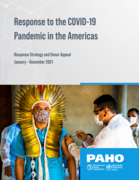
While much progress has been achieved over the past year, the Region of the Americas has stubbornly remained the epicenter of the COVID-19 pandemic. PAHO is launching its 2021 COVID-19 Response Strategy and Donor Appeal to continue supporting Latin American and Caribbean countries and territories i...

Practical considerations
It provides more detailed and practical guidance for continuing services for each life stage across the life-course continuum. As such, both documents should be read and used together. The countries in South-East Asia and the Pacific regions would like to adapt the guidance...
A 16-Year Cohort Analysis of Autism Spectrum Disorder-Associated Morbidity in a Pediatric Population
Front. Psychiatry, 29 November 2018 | https://doi.org/10.3389/fpsyt.2018.00635
The purpose of this pocketbook is to provide clear guidance on current best management practices for VHF across health-care facilities

Following review of the latest evidence, WHO recommends that TB-LAMP can be used as a replacement for microscopy for the diagnosis of pulmonary TB in adults with signs and symptoms of TB. It can also be considered as a follow-on test to microscopy in adults with signs and symptoms of pulmonary TB, e...
