
Filter
4254
Filtered Results: 4254
Text search:
AIDS
response
Featured
Recommendations
351
New Publications
1224
Language
Document type
No document type
2835
Studies & Reports
566
Guidelines
401
Manuals
157
Strategic & Response Plan
134
Training Material
61
Fact sheets
48
Infographics
20
Situation Updates
18
Resource Platforms
7
Brochures
4
Online Courses
3
Countries / Regions
India
202
Kenya
154
Global
141
South Africa
113
Zambia
104
Malawi
101
Uganda
100
Nigeria
89
Ethiopia
89
Nepal
84
Tanzania
84
Sierra Leone
71
Namibia
71
Liberia
69
Myanmar / Burma
69
Africa
67
Rwanda
59
Western and Central Europe
59
Lesotho
57
Bangladesh
57
Ghana
56
Zimbabwe
55
Ukraine
49
Philippines
35
Asia
35
Eastern Europe
34
Indonesia
34
Latin America and the Carribbean
32
Cambodia
31
Mozambique
29
Botswana
28
South–East Asia Region
27
Russia
25
Senegal
24
Congo, Democratic Republic of
23
East and Southern Africa
22
Eswatini/ Swaziland
21
Burkina Faso
16
Cameroon
15
Venezuela
14
Brazil
14
Syria
13
South Sudan
13
West and Central Africa
12
Pakistan
12
Tajikistan
11
Albania
11
Haiti
11
Middle East and North Africa
11
Thailand
10
Guinea
10
China
9
Germany
9
Georgia
9
Vietnam
8
Angola
7
North Macedonia
6
Paraguay
6
Lebanon
6
Moldova
6
Colombia
5
Armenia
5
Western Pacific Region
5
Papua New Guinea
5
Benin
4
Afghanistan
4
Peru
4
USA
4
Jordan
4
North America
4
Southern Africa
4
Argentina
4
Yemen
4
Central African Republic
4
Madagascar
4
Iran
3
Laos
3
Kyrgyzstan
3
Guinea-Bissau
3
Jamaica
3
Sri Lanka
3
Iraq
3
Somalia
3
El Salvador
2
Serbia
2
Kazakhstan
2
Estonia
2
Bulgaria
2
Hungary
2
Eastern Europe and Central Asia
2
Japan
2
Portugal
2
Egypt
2
Sudan
2
Romania
2
Honduras
2
Mali
2
Chad
2
Guatemala
2
Switzerland
1
Timor Leste/ East Timor
1
Mexico
1
Turkey
1
Gambia
1
Togo
1
Canada
1
Fiji
1
Singapore
1
Niger
1
Uzbekistan
1
Burundi
1
Morocco
1
Dominican Republic
1
Croatia
1
Gabon
1
Turkmenistan
1
Belgium
1
Norway
1
Spain
1
Azerbaijan
1
Belarus
1
Bosnia and Herzegovina
1
Belize
1
Costa Rica
1
Panama
1
Nicaragua
1
Slovakia
1
Poland
1
Libya
1
Bhutan
1
Authors & Publishers
Publication Years
Category
Countries
1804
Clinical Guidelines
262
Women & Child Health
189
Public Health
174
Key Resources
170
Capacity Building
103
Pharmacy & Technologies
40
Annual Report MEDBOX
2
Toolboxes
HIV
841
TB
315
Mental Health
188
COVID-19
178
Disability
169
Caregiver
86
Health Financing Toolbox
79
Ebola & Marburg
60
AMR
60
NTDs
58
Conflict
53
Global Health Education
51
Malaria
49
Pharmacy
43
Refugee
42
Planetary Health
40
Rapid Response
37
Natural Hazards
33
NCDs
29
Cholera
24
2.0 Rapid Response
23
Polio
19
Specific Hazards
13
Social Ethics
13
Zika
9
South Sudan
1

This publication provides guidance for planning country-specific programming to achieve the triple elimination of mother-to-child (or vertical) transmission of HIV, syphilis and hepatitis B virus. It is based on the WHO Triple Elimination Framework, which promotes an integrated, person-centred appro...
This operational guidance provides a structured approach to support countries in sustaining priority services for HIV, viral hepatitis and sexually transmitted infections in the context of reduced external funding. The guidance is intended for national governments, public health programmes, communit...

WHO consolidated guidelines on tuberculosis: Module 6: tuberculosis and comorbidities, 2nd ed
recommended
Addressing TB comorbidities and risk factors is central to the World Health Organization (WHO) End TB Strategy. These guidelines consolidate the latest WHO recommendations on TB and key comorbidities. The guidelines are a living document and will include dedicated sections for each key TB comorbidit...

This brief report summarizes recent information on HIV drug resistance (HIVDR) in the era of integrase-strand transfer inhibitors (INSTI) for HIV prevention and treatment.

Country tables & figures

Panel Recommendations

ATIC Newsletter, Vol 15, Issue 1,
February 2022.

International Journal of Advances in Medicine. Vol. 7 No. 7 (2020): July 2020 . This study explores the clinical characteristics and outcomes of patients with concurrent malaria and HIV infection, a combination that is relatively understudied in India.

Accessed: 29.02.2020
Advance Copy
Accessed: 08.03.2020

PLOS ONE | https://doi.org/10.1371/journal.pone.0183180 October 9, 2017

Ending the epidemics of HIV, tuberculosis and malaria by 2030 is within reach, but not yet fully in our grasp.
With only 11 years left, we have no time to waste. We must step up the fight now.
Volume 2 · Supplement 4 · November 2016
ISSN 2055-66-40 – Print
Foreword
| ISSN 2055-66-59 – Online
www.viruseradication.com
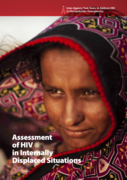

1 July 2021; Report shows big COVID-19-related HIV prevention programme service disruptions, but highlights that HIV service innovations and adaptations are possible.
A synthesis report on programme disruptions and adaptations during the COVID-19 pandemic in 2020
