
Filter
3502
Filtered Results: 3502
Text search:
global
aids
response
Featured
Recommendations
284
New Publications
988
Language
Document type
No document type
2264
Studies & Reports
517
Guidelines
342
Strategic & Response Plan
125
Manuals
124
Training Material
44
Fact sheets
42
Infographics
18
Situation Updates
15
Resource Platforms
6
Brochures
3
Online Courses
2
Countries / Regions
Global
142
Kenya
126
India
116
Zambia
84
South Africa
83
Nigeria
80
Ethiopia
73
Malawi
72
Uganda
72
Africa
65
Nepal
63
Tanzania
61
Sierra Leone
59
Myanmar / Burma
59
Liberia
56
Namibia
53
Western and Central Europe
51
Bangladesh
50
Lesotho
49
Rwanda
48
Ghana
45
Zimbabwe
45
Ukraine
41
Asia
34
Latin America and the Carribbean
31
Eastern Europe
31
Indonesia
27
Philippines
26
South–East Asia Region
26
Mozambique
23
Russia
23
Cambodia
22
Senegal
21
East and Southern Africa
20
Congo, Democratic Republic of
19
Botswana
17
Cameroon
14
Syria
11
Burkina Faso
11
West and Central Africa
11
Brazil
11
Eswatini/ Swaziland
11
Pakistan
11
Tajikistan
10
Guinea
10
Haiti
10
South Sudan
10
Thailand
9
Albania
9
Venezuela
9
Middle East and North Africa
9
Georgia
8
China
7
North Macedonia
6
Germany
6
Lebanon
6
Vietnam
6
Armenia
5
Angola
5
Afghanistan
4
Jordan
4
Western Pacific Region
4
North America
4
Southern Africa
4
Papua New Guinea
4
Moldova
4
Central African Republic
4
Madagascar
4
Benin
3
Iran
3
Laos
3
Kyrgyzstan
3
Jamaica
3
Argentina
3
Sri Lanka
3
Colombia
2
El Salvador
2
Kazakhstan
2
Peru
2
Bulgaria
2
USA
2
Guinea-Bissau
2
Hungary
2
Eastern Europe and Central Asia
2
Japan
2
Portugal
2
Egypt
2
Sudan
2
Yemen
2
Romania
2
Honduras
2
Mali
2
Iraq
2
Switzerland
1
Timor Leste/ East Timor
1
Mexico
1
Serbia
1
Gambia
1
Togo
1
Canada
1
Fiji
1
Niger
1
Uzbekistan
1
Burundi
1
Morocco
1
Dominican Republic
1
Croatia
1
Paraguay
1
Gabon
1
Turkmenistan
1
Belgium
1
Norway
1
Spain
1
Azerbaijan
1
Belarus
1
Bosnia and Herzegovina
1
Belize
1
Costa Rica
1
Panama
1
Nicaragua
1
Slovakia
1
Poland
1
Chad
1
Libya
1
Bhutan
1
Somalia
1
Guatemala
1
Authors & Publishers
Publication Years
Category
Countries
1384
Clinical Guidelines
221
Public Health
163
Women & Child Health
154
Key Resources
152
Capacity Building
64
Pharmacy & Technologies
33
Annual Report MEDBOX
2
Toolboxes
HIV
747
TB
295
COVID-19
160
Mental Health
140
Disability
138
Health Financing Toolbox
80
Caregiver
66
AMR
59
Global Health Education
51
Ebola & Marburg
46
Malaria
45
Conflict
45
NTDs
43
Planetary Health
40
Rapid Response
34
Refugee
34
Pharmacy
33
NCDs
27
Natural Hazards
24
2.0 Rapid Response
21
Cholera
18
Polio
18
Social Ethics
11
Specific Hazards
10
Zika
8
South Sudan
1

Vol. 7, No. 1 (2018) | ISSN 2166-7403 (online) DOI 10.5195/cajgh.2018.295 | http://cajgh.pitt.edu

UNAIDS Joint United Nations Programme on HIV/AIDS
Technical Report
AIDS Medicines and diagnostics service
July 2015

Chapter 1 provides new data on the latest developments in the global treatment effort, highlighting positive trends as well as aspects that require improvement. Chapter 2 summarizes the impact of the scale-up in reducing AIDS-related mortality and new HIV infections. Chapter 3 examines the sequence ...
Background paper prepared for theEducation for All Global Monitoring Report 2012 Youth and skills: Putting education to work
2012/ED/EFA/MRT/PI/15
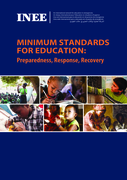
The INEE Minimum Standards Handbook is the only global tool that articulates the minimum level of educational quality and access in emergencies through to recovery. The Minimum Standards express a commitment that all individuals—children, youth and adults—have a right to education.
There are...
The COVID-19 pandemic demonstrated that
the world was not well prepared to respond
to an infectious disease threat of this magnitude. Countries across all socioeconomic and development categories have struggled
to implement effective national responses. Substantial amounts of additional investmen...
23 February 2022
A summary of the commitments and targets within the United Nations General Assembly’s 2021 Political Declaration on HIV and AIDS.The United Nations General Assembly’s 2021 Political Declaration on AIDS features bold global commitments and targets for 2025 that are ambitious but...

The WHO South-East Asia (SEA) Region bears a high burden of tuberculosis (TB) and MDR-TB. In 2015, the Region accounted for nearly 200 000 or 35% of the global estimated new RR/MDR-TB cases eligible for treatment. Extensively drug-resistant TB (XDRTB) has also been reported from s...
The results of the report clearly show that in 2020, a year dominated by the emergence of COVID-19 and its associated health and economic crises, governments around the world rose to the challenge. Sharp increases in government spending on health at all country income levels underpinned the rise in ...
Has the world worked together to tackle the coronavirus? July 2021. This research paper assesses how the global community has responded to calls for greater solidarity in tackling the COVID-19 pandemic, and presents the insights of key stakeholders and experts in global health governance, health sec...
The 2020 Report analyzes global health spending for 190 countries from 2000 to 2018 and provides insights as to the health spending trajectory from the MDG era to the SDG era prior to the crisis of 2020. The report shows that global spending on health continually rose between 2000 and 2018 and reach...

Gender-based violence is a life-threatening, global health and human rights issue that violates international human rights law and principles of gender equality. It is also a threat to lasting peace and an affront to our common humanity. United Nations Member States have called for urgent action to ...
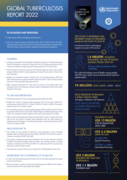
Global Tuberculosis Report 2022 Factsheet
recommended
The World Health Organization Global TB Report provides a comprehensive and up-to-date assessment of the TB epidemic, and progress in the response, at global, regional and country levels.
The 2022 edition features data on disease trends and the response to the epidemic from 215 countries and area...
