
Filter
4646
Filtered Results: 4646
Text search:
Africa
Center
for
Disease
Control
and
Prevention
Featured
Recommendations
468
New Publications
1125
Language
Document type
No document type
2421
Studies & Reports
902
Guidelines
626
Manuals
273
Strategic & Response Plan
196
Fact sheets
71
Training Material
70
Situation Updates
41
Resource Platforms
19
Infographics
13
Brochures
10
App
2
Online Courses
2
Countries / Regions
Global
233
Sierra Leone
162
Liberia
142
Kenya
139
Africa
127
South Africa
122
Nigeria
120
Ethiopia
111
Uganda
98
Tanzania
81
Malawi
76
Zambia
75
India
72
Rwanda
70
Western and Central Europe
60
Ghana
59
West and Central Africa
58
Namibia
58
Congo, Democratic Republic of
56
Guinea
55
Mozambique
54
Latin America and the Carribbean
50
Middle East and North Africa
47
Senegal
46
East and Southern Africa
43
South Sudan
42
Lesotho
37
Zimbabwe
37
Syria
36
Nepal
31
Yemen
31
Burkina Faso
28
Asia
28
Bangladesh
27
Brazil
26
Ukraine
21
South–East Asia Region
21
Angola
21
Botswana
20
Cameroon
19
Russia
18
Madagascar
18
Eastern Europe
17
Central African Republic
17
Mali
16
Eswatini/ Swaziland
15
Germany
14
Philippines
13
Haiti
13
Pakistan
13
Cambodia
12
Guinea-Bissau
11
Venezuela
11
Côte d’Ivoire / Ivory Coast
11
Sudan
11
Colombia
10
Thailand
10
Benin
10
Afghanistan
10
Eastern Europe and Central Asia
10
Somalia
10
Myanmar / Burma
10
China
9
Vietnam
9
Indonesia
9
Togo
8
Burundi
7
Paraguay
7
Chad
7
USA
6
Gambia
5
Niger
5
Jordan
5
Saudi Arabia
5
Western Pacific Region
5
North America
5
Papua New Guinea
5
Chile
4
Albania
4
Portugal
4
Southern Africa
4
Lebanon
4
Mexico
3
Iran
3
Peru
3
Japan
3
France
3
Argentina
3
Sri Lanka
3
Georgia
3
Iraq
3
Turkey
2
Canada
2
Armenia
2
Gabon
2
Jamaica
2
Mauritius
2
Bosnia and Herzegovina
2
Bolivia
2
Moldova
2
Egypt
2
Greece
2
Libya
2
Ecuador
2
North Macedonia
1
Tajikistan
1
North Korea
1
Switzerland
1
Timor Leste/ East Timor
1
El Salvador
1
Kazakhstan
1
Laos
1
Kyrgyzstan
1
Congo-Brazzaville
1
Malaysia
1
Vanuatu
1
Morocco
1
Mongolia
1
Qatar
1
Bulgaria
1
Mauritania
1
Italy
1
Cape Verde
1
Turkmenistan
1
Belgium
1
Tunisia
1
United Kingdom
1
Spain
1
South Korea
1
Belarus
1
Israel
1
Djibouti
1
Palestine
1
Honduras
1
Solomon Islands
1
Authors & Publishers
Publication Years
Category
Countries
1560
Clinical Guidelines
431
Public Health
300
Key Resources
240
Women & Child Health
211
Capacity Building
80
Pharmacy & Technologies
62
Annual Report MEDBOX
1
Toolboxes
HIV
446
COVID-19
419
TB
320
Ebola & Marburg
293
Mental Health
247
NTDs
174
Planetary Health
155
AMR
152
Rapid Response
132
NCDs
104
Caregiver
100
Global Health Education
88
Malaria
85
Disability
84
Refugee
73
Conflict
71
2.0 Rapid Response
69
Health Financing Toolbox
67
Pharmacy
61
Zika
56
Cholera
36
Natural Hazards
34
Polio
30
Specific Hazards
13
Social Ethics
11
South Sudan
2
Taeniasis and cysticercosis caused by the parasite T. solium affect vulnerable populations,
mainly in Latin America, sub-Saharan Africa and Asia, where pigs (the intermediate host) roam
free and poor sanitation allows pigs access to human faeces.

Burkina Faso has approximately 10.5 million inhabitants and is divided into 30 provinces. The study took place in the districts of Tougan, Nouna, and Solenzo, in provinces Sourou and Kossi, in north-west Burkina Faso. There is one medical centre in every district capital and 6 to 14 health centres i...
The aim of the Annual Inspection Report is to present findings of public sector health establishments inspected by the OHSC to monitor compliance with the National Core Standards (NCS) during the 2016/2017 financial year in South Africa.
The NCS define fundamentals for quality of care based on six ...
This important issue of Forced Migration Review draws our attention to the current challenges facing displaced Syrians and the continuing search for solutions. The statistics of Syrian displacement are staggering – and the numbers continue to rise. Half of Syria’s population has been displaced: ...

Findings on maternal and child health in Nepal, Mozambique and
Rwanda, and neglected tropical diseases in Cambodia and Sierra Leone | This report synthesises findings from five country case studies from the health dimension of this project, which focus on maternal and child health (MCH) (Mozambique...

Thirty-three years after its discovery, the Human Immunodeficiency Virus (HIV), responsible for the AIDS pandemic, remains a major public health problem despite advanced researches providing better diagnostic and therapeutic tools. The virus targets especially CD4+ T cells, leading to deficiency of ...
As a high-burden neglected tropical disease, soil-transmitted helminth (STH) infections remain a major problem in the world, especially among children under five years of age. Since young children are at high risk of being infected, STH infection can have a long-term negative impact on their life, i...

Every year, nearly 250 million people move across borders temporarily or permanently for a job opportunity, studying, to flee a crisis back home, or for other reasons. Another 750 million move for similar reasons within the borders of their countries. With the understanding that human mobility affec...

While the full extent of Cyclone Ida’s impact is still being assessed, early reports indicate significant damage to infrastructure and livelihoods, with an estimated 3,000km2 of land submerged. Preliminary government reports as of 24 March indicate that more than 58,600 houses have been damaged, i...
Caregiver: Standard precautions
recommended
Issue Brief 28: Cargiver Toolbox Part 2
A collection of important documents from the category "Standard precautions", including hand hygiene, waste management, infection and prevention control (IPC) measures.
This report investigates the impact of potential misclassification of samples on HIV prevalence estimates for 23 surveys conducted from 2010-2014. In addition to visual inspection of laboratory results, we examined how accounting for potential misclassification of HIV status through Bayesian latent ...

A all for global Action. The Oral Health Atlas. Second edition

Workplace Pandemic Preparedness. Training Manual
recommended
A training manual for identifying, assessing, preventing and controlling the risks of pandemics in the workplace. This training manual has been developed for both medical and non-medical personnel who may be called upon to lead emergency response, (eg epidemic outbreak, etc), ensure effective conta...
Prepared for the Stunting Prevention and Reduction Project - The project Medical Waste Management Plan’s (MWMP) overall objective is to prevent and/or mitigate the negative effects of increased generation of medical waste on human health and the environment. The plan proposes measures to prevent t...

Teachers' Exercise Book for HIV Prevention
Document 6.1
This booklet contains all the participatory learning experiences that are included in the Training and Resource Manual on School Health and HIV and AIDS Prevention. It is to be given to all teachers who receive training as part of the EI/WH...
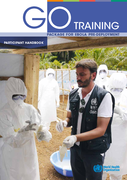
GO pre-deployment training: participant handbook
recommended
This is a pre-deployment training, tailored specially to the Ebola outbreak in West Africa, offered to WHO personnel, consultants, and key partners. The material covered in modules 1-4 is applicable and useful to frontline response workers, national and international. Only Module 5, which focuses on...
