
Filter
1592
Filtered Results: 1592
Text search:
UN
Medical
Services
Division
Featured
Recommendations
121
New Publications
470
Language
Document type
No document type
975
Studies & Reports
275
Guidelines
134
Manuals
99
Strategic & Response Plan
66
Fact sheets
17
Training Material
10
Situation Updates
10
Resource Platforms
3
Infographics
2
Brochures
1
Countries / Regions
Global
62
India
60
Congo, Democratic Republic of
53
Nepal
49
Kenya
49
Bangladesh
45
Liberia
45
Myanmar / Burma
43
Rwanda
39
Western and Central Europe
37
Senegal
36
Nigeria
32
Uganda
32
Sierra Leone
27
Africa
26
Latin America and the Carribbean
24
Namibia
24
Ethiopia
22
Ghana
21
Syria
19
Malawi
18
Benin
17
South–East Asia Region
17
Ukraine
16
Eastern Europe
16
Zambia
16
Tanzania
15
Haiti
13
Mali
13
South Sudan
13
Lesotho
12
Cameroon
12
Burkina Faso
12
Guinea
12
South Africa
12
West and Central Africa
11
Philippines
10
Botswana
10
Cambodia
9
Asia
9
Zimbabwe
8
Venezuela
8
Thailand
7
Mozambique
7
Middle East and North Africa
7
East and Southern Africa
7
Central African Republic
7
Laos
6
Afghanistan
6
Jordan
6
Vietnam
6
Somalia
6
Pakistan
6
Colombia
5
Togo
5
Indonesia
5
Niger
4
Germany
4
Lebanon
4
Sri Lanka
4
Yemen
4
Chad
4
Western Pacific Region
3
Côte d’Ivoire / Ivory Coast
3
Brazil
3
Sudan
3
Tajikistan
2
Timor Leste/ East Timor
2
Mexico
2
Chile
2
Albania
2
Burundi
2
Peru
2
Malaysia
2
Morocco
2
Armenia
2
USA
2
Eastern Europe and Central Asia
2
Paraguay
2
Mauritius
2
Papua New Guinea
2
Moldova
2
Russia
2
Greece
2
Angola
2
Bhutan
2
Iraq
2
Eswatini/ Swaziland
2
North Macedonia
1
Turkey
1
China
1
Iran
1
Singapore
1
Kyrgyzstan
1
Croatia
1
Hungary
1
North America
1
Japan
1
United Kingdom
1
Spain
1
Belarus
1
Argentina
1
Romania
1
Slovakia
1
Poland
1
Libya
1
Madagascar
1
Guatemala
1
Authors & Publishers
Publication Years
Category
Countries
723
Key Resources
115
Women & Child Health
101
Clinical Guidelines
80
Public Health
52
Pharmacy & Technologies
15
Capacity Building
14
Toolboxes
Disability
115
Mental Health
107
COVID-19
91
HIV
86
TB
67
Conflict
60
Ebola & Marburg
45
Refugee
43
Planetary Health
37
Global Health Education
36
Caregiver
30
AMR
27
Rapid Response
25
NTDs
23
Pharmacy
19
Natural Hazards
17
NCDs
16
2.0 Rapid Response
15
Malaria
14
Health Financing Toolbox
12
Cholera
9
Specific Hazards
8
Zika
6
Polio
5
Social Ethics
4
Typhoon
1
An Advocate’s Guide: Strategic Indicators for Universal Access to Sexual and Reproductive Health and Rights
recommended
This guide was prepared to enable advocates to use data
when advocating for universal access to SRHR at the national,
regional and global levels. It is a direct outcome of the Strategic
SRHR Indicators workshop held in Kuala Lumpur, Malaysia on
21-22 August for the project “Strengthening the N...

Clinical care for severe acute respiratory infection: toolkit: COVID-19 adaptation
Training Modules for climate change and Health - WHO
Developing protocols for use with refugees
and internally displaced persons
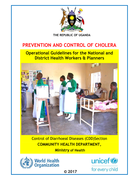
Prevention and Control of Cholera Uganda
recommended
Operational Guidelines for the national and district health workers & planners.
These new approaches include use of selective chemotherapy, Rapid Diagnostic Tests (RDTs), Zinc for treatment of cholera in children and complementary use of OCV
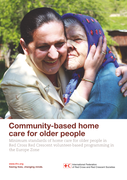
Minimum standards of home care for older people in Red Cross Red Crescent volunteer-based programming in the Europe Zone

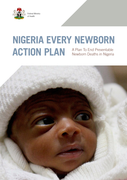
The Newborn Situational Analysis reports of 2009 and 2011, as well as the “Bottleneck analysis on neonatal health” of 2013, culminated in the Nigeria launch of “Call to action on Newborn health” at the first National Newborn Health Conference in 2014. This call to action provided the framewo...
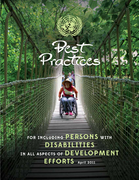
Census Report Volume 4-C
The 2014 Myanmar Census provided the opportunity to measure maternal mortality. The questions on deaths in households during the twelve months prior to the Census were included in the questionnaire, as well as questions necessary to estimate maternal mortality indicator...
The 2014 Myanmar Census provided the opportunity to measure maternal mortality. The questions on deaths in households during the twelve months prior to the Census were included in the questionnaire, as well as questions necessary to estimate maternal mortality indicator...
As the Convention of the Rights of Children recognizes, children are human beings with a distinct set of rights, and not the passive objects of care and charity. They deserve to be full participants in society, and to live lives free of poverty. But for children, living in poverty is particularly im...

The biosphere underlies the whole sustainable development concept, as the layer on
which society and the economy rely. Nature and biodiversity fuel the natural cycles
and life-support systems of the planet, on which humanity ultimately depends.
Ethiopia is home to 25 million girls and women who have experienced FGM. More than half are in the regions of Oromia and Amhara. Overall, 65 per cent of girls and women aged 15 to 49 have undergone FGM. The highest prevalence is in the Somali (99 per cent) and Afar (91 per cent) regions
n Autumn 2013, HHI Executive Director, Vincenzo Bollettino, traveled to the Philippines to participate in an assessment of civil-military engagement in the humanitarian response to Typhoon Haiyan. The report was sponsored by the Center for Excellence in Disaster Management and Humanitarian Assistanc...
This manual has been developed to guide rapid risk assessment of acute public health risks from any type of hazard in response to requests from Member States of the World Health Organization (WHO). The manual is aimed primarily at national departments with health-protection responsibilities, Nationa...

The Camp Managment Toolkit
recommended
Applicable to both IDP and refugee scenarios, the Toolkit incorporates a wide range of relevant information on managing displaced populations living in communal settings (collective centres, spontaneous sites, established camps, etc.). Large scale displacements caused by recent conflict and natural ...
