
Filter
1355
Filtered Results: 1355
Text search:
drug
susceptibility
Featured
Recommendations
166
New Publications
311
Language
Document type
No document type
704
Guidelines
248
Studies & Reports
241
Manuals
66
Strategic & Response Plan
44
Fact sheets
21
Training Material
18
Situation Updates
10
Online Courses
2
Infographics
1
Countries / Regions
India
64
Western and Central Europe
43
Ethiopia
33
Eastern Europe
31
Kenya
30
Latin America and the Carribbean
30
Global
29
South Africa
27
Tanzania
22
Africa
20
Zambia
20
Nigeria
19
Nepal
18
Uganda
17
Bangladesh
16
Malawi
14
Philippines
14
Ghana
12
Rwanda
12
Peru
11
Asia
11
Zimbabwe
10
South–East Asia Region
10
Liberia
10
Colombia
9
Namibia
9
Ukraine
8
Sierra Leone
8
Mozambique
8
Cambodia
8
Argentina
7
Lesotho
6
Brazil
6
Russia
6
Myanmar / Burma
6
Eswatini/ Swaziland
6
Germany
5
Western Pacific Region
5
Bolivia
5
Botswana
5
Pakistan
5
Tajikistan
4
El Salvador
4
Cameroon
4
Senegal
4
Venezuela
4
Spain
4
Vietnam
4
Syria
3
Albania
3
Laos
3
Burkina Faso
3
USA
3
Congo, Democratic Republic of
3
North America
3
Uruguay
3
Lebanon
3
Sudan
3
Thailand
2
Turkey
2
Chile
2
Iran
2
Fiji
2
Afghanistan
2
Morocco
2
Armenia
2
Guinea-Bissau
2
Jordan
2
Saudi Arabia
2
Middle East and North Africa
2
Eastern Europe and Central Asia
2
Paraguay
2
Gabon
2
United Kingdom
2
Sri Lanka
2
Georgia
2
Angola
2
Bhutan
2
Indonesia
2
Iraq
2
Ecuador
2
North Macedonia
1
Timor Leste/ East Timor
1
Mexico
1
Benin
1
Gambia
1
China
1
Qatar
1
Haiti
1
Ireland
1
Turkmenistan
1
Denmark
1
France
1
Maldives
1
Mauritius
1
Tunisia
1
Portugal
1
East and Southern Africa
1
Papua New Guinea
1
Nicaragua
1
Greece
1
Honduras
1
Mali
1
Libya
1
Guatemala
1
Authors & Publishers
Publication Years
Category
Countries
430
Clinical Guidelines
158
Public Health
63
Women & Child Health
27
Key Resources
25
Pharmacy & Technologies
21
Capacity Building
16
Toolboxes
TB
391
AMR
198
HIV
112
NTDs
64
COVID-19
51
Mental Health
41
Malaria
36
Planetary Health
25
Rapid Response
24
Pharmacy
21
Refugee
15
Ebola & Marburg
14
Caregiver
13
Global Health Education
13
Cholera
12
NCDs
11
2.0 Rapid Response
11
Polio
11
Natural Hazards
8
Conflict
7
Specific Hazards
6
Disability
4
Zika
3
Health Financing Toolbox
1
A One Health Response. A Briefing Note
THE REPUBLIC OF BOTSWANA | MINISTRY OF HEALTH | DEPARTMENT OF PUBLIC HEALTH | NATIONAL MALARIA CONTROL PROGRAMME

Cureus 2024 Jan 16;16(1):e52358. doi: 10.7759/cureus.52358

Indoor residual spraying (IRS) involves applying residual insecticide to potential vector resting sites on the interior surfaces of human dwellings or other buildings. The main aim of IRS is to kill vectors before they are able to transmit pathogens to humans. When carried out correctly, IRS has his...

Advocacy, communication and social mobilization for TB control

16-24 February 2020
Over the period 2015 to 2019, scaling up a package of selected nutrition-specific and nutrition sensitive interventions to cover 90 per cent of Sudan would:
- Reduce the under-five mortality rate to 49/1,000 live births
- Reduce the prevalence of stunting to 25 per cent
- Reduce the ...
- Reduce the under-five mortality rate to 49/1,000 live births
- Reduce the prevalence of stunting to 25 per cent
- Reduce the ...

Infectious disease outbreaks are frequently characterized by scientific uncertainty, social and institutional disruption, and an overall climate of fear and distrust. Policy makers and public health professionals may be forced to weigh and prioritize potentially competing ethical values in the face ...

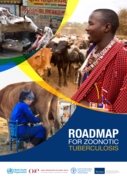
Zoonotic tuberculosis (TB) is a form of TB in people predominantly caused by the bacterial species, Mycobacterium bovis, which belongs to the M. tuberculosis complex. The implications of zoonotic TB go beyond human health. The organism is host-adapted to cattle, where it is refer...

In the context of the coronavirus disease (COVID-19) pandemic response, WHO identifies young people as a priority target audience with specific concerns, experiences and behaviours. This policy brief provides relevant insights from behavioural evidence and a set of behavioural considerations for tho...

The full range and scale of all forms of violence against children are only now becoming visible, as is the evidence of the harm it does. This book documents the outcomes and recommendations of the process of the United Nations Secretary-General’s Study on Violence against Children. ‘The Studyâ€...
The growing understanding of how sequence information can contribute to improved public health is driving global investments in sequencing facilities and programmes. The falling cost and complexity of generating GSD provides opportunities for expanding sequencing capacity; however, challenges to wid...

World malaria report 2024
recommended
New data from the WHO reveal that an estimated 2.2 billion cases of malaria and 12.7 million deaths have been averted since 2000, but the disease remains a serious global health threat, particularly in the WHO African Region. According to WHO’s latest World malaria report, there were an estimated ...

The National Strategic Plan for Malaria Elimination in India (2023-2027) focuses on achieving malaria elimination by 2030, in alignment with the Global Technical Strategy. The document outlines the strategies, targets, and goals for malaria elimination, aiming for zero indigenous malaria cases by 20...

The guidelines are primarily intended for health-care professionals working in first- or second-level health-care facilities, including emergency, inpatient and outpatient services. They are also directed at policy-makers, health-care planners and programme managers, academic institutions, non-gover...

Malaria in pregnancy is a significant health problem in malaria-endemic areas. It not only causes substantial childhood morbidity and mortality but also increases the risks of adverse events for pregnant women and their developing fetuses. Most of the burden in these areas is due to infection with P...
Adapted from: Standard Treatment Guidelines and Essential Medicine List PHC. The syndromic approach to Sexually Transmitted Infections (STIs) diagnosis
and management is to treat the signs or symptoms (syndrome) of a group of
diseases rather than treating a specific disease. This allows for the tr...
