
Filter
4316
Filtered Results: 4316
Text search:
Costa,
F.
Featured
Recommendations
352
New Publications
1023
Language
Document type
No document type
2351
Studies & Reports
928
Guidelines
562
Manuals
211
Strategic & Response Plan
119
Training Material
59
Fact sheets
51
Situation Updates
19
Infographics
7
Brochures
4
Resource Platforms
4
Online Courses
1
Countries / Regions
Global
195
India
177
Latin America and the Carribbean
119
Kenya
112
South Africa
85
Western and Central Europe
79
Nepal
71
Ethiopia
71
Uganda
70
Zambia
66
Liberia
66
Nigeria
65
Africa
62
Brazil
61
Sierra Leone
59
Ghana
52
Malawi
50
Bangladesh
47
Philippines
46
Tanzania
46
Rwanda
41
Mozambique
39
Myanmar / Burma
39
Paraguay
37
Venezuela
34
Ukraine
32
Zimbabwe
32
Eastern Europe
30
Syria
29
Russia
29
South–East Asia Region
28
Namibia
28
Congo, Democratic Republic of
26
Senegal
25
Guinea
24
Colombia
23
Cameroon
23
Burkina Faso
22
Cambodia
22
Asia
21
Indonesia
20
Germany
19
Lesotho
18
Haiti
18
Chile
17
West and Central Africa
17
Peru
16
Côte d’Ivoire / Ivory Coast
16
Botswana
16
Ecuador
16
East and Southern Africa
15
Argentina
15
Mali
15
Middle East and North Africa
13
Eastern Europe and Central Asia
13
Bolivia
12
Yemen
12
Angola
12
South Sudan
12
Pakistan
12
Eswatini/ Swaziland
11
Benin
10
Guinea-Bissau
9
Thailand
8
Afghanistan
8
Sudan
8
China
7
North America
7
Sri Lanka
7
Somalia
7
El Salvador
6
USA
6
Jordan
6
Spain
6
Lebanon
6
Vietnam
6
Tajikistan
5
Central African Republic
5
Chad
5
Iraq
5
Guatemala
5
Timor Leste/ East Timor
4
Mexico
4
Turkey
4
Gambia
4
Togo
4
Western Pacific Region
4
Madagascar
4
Kazakhstan
3
Albania
3
Canada
3
Niger
3
Burundi
3
Armenia
3
United Kingdom
3
Portugal
3
Belarus
3
Israel
3
Georgia
3
Switzerland
2
Laos
2
Kyrgyzstan
2
Congo-Brazzaville
2
Qatar
2
Italy
2
Dominican Republic
2
Uruguay
2
Jamaica
2
France
2
Papua New Guinea
2
Nicaragua
2
Egypt
2
Honduras
2
Libya
2
North Macedonia
1
North Korea
1
Iran
1
Singapore
1
Estonia
1
Malaysia
1
Morocco
1
Mauritania
1
Croatia
1
Saudi Arabia
1
Turkmenistan
1
Japan
1
Denmark
1
Tunisia
1
Southern Africa
1
Greece
1
Palestine
1
Bhutan
1
Cuba
1
Authors & Publishers
Publication Years
Category
Countries
1574
Clinical Guidelines
360
Public Health
239
Key Resources
227
Women & Child Health
217
Capacity Building
68
Pharmacy & Technologies
39
Toolboxes
Mental Health
382
HIV
321
COVID-19
306
TB
276
Planetary Health
212
NTDs
175
Disability
135
Caregiver
121
AMR
116
NCDs
108
Ebola & Marburg
82
Pharmacy
77
Refugee
74
Health Financing Toolbox
74
Global Health Education
71
Conflict
61
Natural Hazards
56
Rapid Response
48
Malaria
39
Cholera
26
2.0 Rapid Response
25
Zika
21
Social Ethics
19
Polio
18
Specific Hazards
17
South Sudan
1
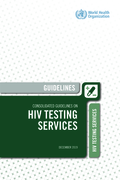
These consolidated guidelines on HIV testing services (HTS) bring together existing and new guidance on HTS across different settings and populations.
The World Health Organization (WHO) first released consolidated guidelines on HTS in 2015, in response to requests from Member States, national pr...

Planning and Implementation Training. Myanmar
This training module on resilient development planning in Myanmar consists of a 2.5 hours session, at the end of which, the participants will:
a) Have a common understanding on development and disaster linkages.
b) Be able to identify the ...
This training module on resilient development planning in Myanmar consists of a 2.5 hours session, at the end of which, the participants will:
a) Have a common understanding on development and disaster linkages.
b) Be able to identify the ...

Rev Panam Salud Publica. 2018;42:e45. https://doi.org/10.26633/RPSP.2018.45
Depression Research and Treatment
Volume 2012, Article ID 962860, 8 pages
doi:10.1155/2012/962860

This literature review summarizes the link between psychological well-being and entrepreneurial outcomes for small and medium-size enterprises in fragile, conflict, and violence–affected contexts. It identifies potentially promising, scalable psychosocial training interventions, based on cognitive...
Accessed: 08.11.2020
The report and an accompanying series of studies show the global uptake of the World Health Organization (WHO) Surgical Safety Checklist in its first ten years since its launch and recommend ways the Checklist can be more effectively used to improve surgical safety for millions at risk.
The report ...


The World Health Organization (WHO) convened a meeting of the Technical Advisory Group on Buruli ulcer at its headquarters in Geneva, Switzerland on 25 to 27 March 2019
A corruption event in 2009 led to changes in how donors supported the Zambian health system. Donor funding was withdrawn from the district basket mechanism, originally designed to pool donor and government financing for primary care. The withdrawal of these funds from the pooled financing mechanism ...

Asthma is the most common noncommunicable disease in children, and among the most common in adults. According to the most recent estimates from the Global Asthma Network Phase I study, around one in 10 children and adults have symptoms of asthma and one in 20 school-aged children have severe asthma ...
Men are underrepresented in HIV testing services throughout sub-Saharan Africa. HIV testing is critical to achieve the UNAIDS 95-95-95 goals, as it is the first entry point to HIV care. In Malawi, an estimated 14% of HIV positive men are undiagnosed, while only 6% of HIV positive women remain undiag...

Addressing comorbidities and risk factors for tuberculosis (TB) is a crucial component of the World Health Organization (WHO)’s End TB Strategy. This WHO operational handbook on tuberculosis. Module 6: tuberculosis and comorbidities aims to support countries in scaling up people-centred care, base...
Trastornos externalizantes
Capítulo D.1.1
Edición: Matías Irarrázaval & Andres Martin
Traductores: Fernanda Prieto-Tagle & Carlos Gómez
