
Filter
517
Filtered Results: 517
Text search:
Ukraine
Ministry
of
Health
Featured
Recommendations
35
New Publications
60
Language
Document type
No document type
256
Studies & Reports
122
Guidelines
49
Manuals
34
Strategic & Response Plan
25
Situation Updates
14
Fact sheets
8
Training Material
4
Resource Platforms
3
Brochures
1
Infographics
1
Countries / Regions
Ukraine
106
Western and Central Europe
38
Global
27
Eastern Europe
26
Africa
10
Russia
8
Eastern Europe and Central Asia
7
Moldova
6
Uganda
5
Kenya
4
South Africa
4
Tajikistan
3
Armenia
3
Germany
3
Romania
3
Syria
2
Nigeria
2
Albania
2
Kyrgyzstan
2
Bulgaria
2
Latin America and the Carribbean
2
Hungary
2
Belarus
2
Lebanon
2
Namibia
2
Ethiopia
2
Poland
2
India
2
Nepal
1
Turkey
1
Rwanda
1
Kazakhstan
1
Iran
1
Estonia
1
Afghanistan
1
Malawi
1
Zimbabwe
1
Guinea
1
Asia
1
Venezuela
1
Lithuania
1
Jordan
1
Congo, Democratic Republic of
1
Middle East and North Africa
1
South–East Asia Region
1
East and Southern Africa
1
Bangladesh
1
Vietnam
1
Slovakia
1
Georgia
1
Zambia
1
South Sudan
1
Somalia
1
Liberia
1
Ecuador
1
Myanmar / Burma
1
Pakistan
1
Authors & Publishers
Publication Years
Category
Countries
103
Clinical Guidelines
31
Key Resources
22
Public Health
13
Women & Child Health
11
Pharmacy & Technologies
5
Capacity Building
1
Toolboxes
HIV
143
TB
68
Conflict
61
Mental Health
57
Refugee
26
COVID-19
20
Disability
16
Health Financing Toolbox
15
Planetary Health
12
Pharmacy
10
Global Health Education
7
AMR
7
Caregiver
6
Polio
6
NTDs
4
Specific Hazards
3
Ebola & Marburg
3
NCDs
3
Rapid Response
2
2.0 Rapid Response
2
Cholera
1

Assessment of the quality of institutional care for adults with psychosocial and intellectual disabilities in the WHO European Region.
The specific objectives of the project were to address gaps in knowledge about the number and characteristics of such long-term institutions and to identify deficie...

Access to health workers who are fit for purpose, motivated and protected is a fundamental force of health service delivery and the achievement of universal health coverage and the health and health-related Sustainable Development Goals. Data and knowledge of the distribution, skill mix and future d...

Participant Manual
February 2011
Edition 3.0
A systematic analysis for the Global Burden of Disease Study 2019. The Lancet Vol.399 Issue 10341 p.2129-2154
Human resources for health (HRH) include a range of occupations that aim to promote or improve human health. The UN Sustainable Development Goals (SDGs) and the WHO Health Workforce 2030 s...

This publication is a compendium of 49 country examples highlighting efforts in improving refugees’ and migrants’ health following the adoption of the WHO Global Action Plan on Promoting the health of refugees and migrants at the seventy-second World Health Assembly, in May 2019.

The world is facing an unprecedented range of emergencies. In reaction to these complex adversities, many people experience considerable distress and impairment, and a minority may even go on to develop mental health conditions. Meanwhile, those with pre-existing mental health conditions may experie...

South Eastern European Journal of Public Health, EEJPH 2016, posted: 11 January 2016. DOI 10.4119/UNIBI/SEEJPH-2016-85

These guidelines promote the delivery of people-centred health services for STIs by providing evidence-based recommendations related to decentralization, integration, task sharing and digital health. These recommendations complement existing WHO guidelines for STI testing, treatment and management, ...
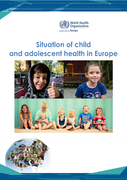
The report focuses on several key areas where health outcomes are falling short, and provides insight into ways in which countries can improve the situation for their children and adolescents. Areas in focus include mental health, overweight/obesity and adolescent risk-taking behaviour.
The report ...
This Manual covers all important aspects of echinococcosis, including parasite biology and life-cycles, geographic distribution and prevalence, epidemiology, clinical presentation in humans and animals, diagnosis and treatment, as well as control and prevention using newly developed tools and method...
New and updated information.
Adverse health effects of hot weather and heat-waves are largely preventable. Prevention requires a portfolio of actions at different levels:from health system preparedness, coordinated with meteorological early warning systems, to timely public ...

For this report, the Task Force commissioned
additional background papers on health taxes to
update the evidence, assess short-term revenue
potential, and understand the role of health taxes
in the current era of multiple crises. We find that
health taxes continue to be underutilized despite th...

This Toolkit for ensuring rights-based and ethical use of digital technologies in HIV and health programmes is derived from the comprehensive UNDP Guidance on the rights-based and ethical use of digital technologies in HIV and health programmes document. The foundational UNDP Guidance document outli...

Compiled by Tin Geber for HIVOS. London, March 2018

Financing Global Health 2016: Development Assistance, Public and Private Health Spending for the Pursuit of Universal Health Coverage presents a complete analysis of the resources available for health in 184 countries, with a particular focus on development assistance for health (DAH). DAH was estim...
The COVID-19 pandemic has resulted in a double shock - health and economic. As of March 1, 2021, COVID-19 has cost more than 2.5 million lives and triggered an economic recession surpassing any economic downturn since World War II.
Part I of this paper explores the impact of this current macro-fisc...
