Filter
117
Filtered Results: 117
Text search:
AIDSFree
Project
Featured
Recommendations
5
New Publications
38
Language
Document type
No document type
84
Studies & Reports
18
Guidelines
10
Manuals
1
Training Material
1
Infographics
1
Strategic & Response Plan
1
Fact sheets
1
Countries / Regions
Nigeria
8
Tanzania
8
Uganda
8
Zambia
8
Malawi
7
Ethiopia
5
Kenya
4
Lesotho
4
Zimbabwe
4
Liberia
4
India
4
South Africa
3
Namibia
3
Global
2
Africa
2
East and Southern Africa
2
Tajikistan
1
Nepal
1
Ukraine
1
Ghana
1
Benin
1
Asia
1
Latin America and the Carribbean
1
Bangladesh
1
Angola
1
Botswana
1
Eswatini/ Swaziland
1
Authors & Publishers
Publication Years
Category
Countries
44
Clinical Guidelines
4
Key Resources
3
Capacity Building
2
Public Health
1
Women & Child Health
1
Toolboxes
HIV
62
TB
4
Disability
3
Caregiver
2
COVID-19
1
Pharmacy
1
Health Financing Toolbox
1
JOURNAL OF THE ASSOCIATION OF NURSES IN AIDS CARE, Vol. 28, No. 2, March/April 2017, 186-198
http://dx.doi.org/10.1016/j.jana.2015.09.003
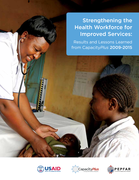
Results and Lessons Learned from CapacityPlus 2009-2015
From policy to practice: how the TB-HIV response is working
“The HIV community must place much more focus on TB co-infection than
it has done to date. TB takes the lives of over 1000 people living with HIV
every day, a number which is absolutely unacceptable. This report highlights that
TB d...
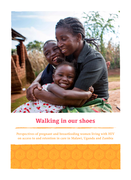
The study sought to understand the factors that facilitate women to adhere to treatment and return to health facilities for routine care from their own perspective. The researchers focused on Malawi, Uganda and Zambia, early adopters of the global guidance to provide lifelong treatment for pregnant ...
Supplement Article
J Acquir Immune Defic Syndr Volume 78, Supplement 1, August 15, 2018 www.jaids.com

Djibuti et al. BMC Public Health (2015) 15:427 DOI 10.1186/s12889-015-1760-z

16-17 November 2017,
Hotel Djeugua, Yaoundé, Cameroon
Meeting Report December 2017
There is growing pressure on PEPFAR, the U.S. global HIV program, to increase its planning for sustainability, including through domestic resource mobilization and, ultimately, transitioning financing at
least in part to recipient countries. While this is connected to a broader push in global healt...
World Health Organization Department of Reproductive Health and Research
Brocher Foundation, Hermance, Geneva, Switzerland, 27–29 April 2016