
Filter
12574
Filtered Results: 12574
Text search:
fund
Featured
Recommendations
900
New Publications
3140
Language
Document type
No document type
6543
Studies & Reports
2426
Guidelines
1507
Manuals
662
Strategic & Response Plan
524
Fact sheets
327
Training Material
200
Situation Updates
161
Infographics
89
Resource Platforms
61
Brochures
46
Online Courses
14
Videos
9
Dashboards/Maps
4
App
1
Countries / Regions
Global
600
India
371
Kenya
326
Latin America and the Carribbean
293
Ethiopia
245
Sierra Leone
217
Myanmar / Burma
212
Nigeria
210
Uganda
209
South Africa
201
Nepal
199
Liberia
181
Syria
179
Western and Central Europe
179
Africa
174
Brazil
172
Malawi
171
Rwanda
163
Zambia
163
Tanzania
162
Bangladesh
156
Mozambique
152
Ukraine
135
Venezuela
134
Ghana
129
Congo, Democratic Republic of
128
Namibia
114
Germany
112
Paraguay
112
Argentina
103
Senegal
97
Colombia
95
South Sudan
92
Philippines
85
Eastern Europe
81
Lesotho
80
Indonesia
80
Zimbabwe
78
Cambodia
76
Yemen
76
Haiti
73
Guinea
67
Asia
63
South–East Asia Region
63
Middle East and North Africa
56
East and Southern Africa
54
Russia
53
Burkina Faso
52
West and Central Africa
52
Botswana
50
Cameroon
49
Peru
49
Angola
49
Central African Republic
45
Bolivia
42
Chile
41
Afghanistan
41
Ecuador
39
Madagascar
35
Pakistan
35
Eastern Europe and Central Asia
33
El Salvador
32
Lebanon
31
Mali
31
Eswatini/ Swaziland
30
Guinea-Bissau
29
Sudan
28
Somalia
27
Thailand
24
Jordan
24
Benin
23
Western Pacific Region
22
Vietnam
20
Iraq
20
Tajikistan
19
China
19
Côte d’Ivoire / Ivory Coast
19
Mexico
17
Moldova
17
Albania
16
Spain
16
Turkey
15
Sri Lanka
15
Honduras
15
Laos
13
North America
13
Guatemala
13
Niger
12
Burundi
12
Georgia
12
Togo
11
USA
11
Portugal
11
Libya
11
North Macedonia
10
Palestine
10
Chad
10
Kyrgyzstan
9
Greece
9
Iran
8
Armenia
8
Dominican Republic
8
Papua New Guinea
8
Gambia
7
Kazakhstan
7
United Kingdom
7
Southern Africa
7
Nicaragua
7
Romania
7
Poland
7
Timor Leste/ East Timor
6
Serbia
6
Hungary
6
Uruguay
6
Egypt
6
Canada
5
Uzbekistan
5
Italy
5
Turkmenistan
5
Jamaica
5
Bhutan
5
Malaysia
4
Japan
4
Tunisia
4
Belarus
4
Fiji
3
Morocco
3
Croatia
3
Saudi Arabia
3
Gabon
3
Belgium
3
France
3
Mauritius
3
Bosnia and Herzegovina
3
Djibouti
3
North Korea
2
Switzerland
2
Singapore
2
Estonia
2
Congo-Brazzaville
2
Vanuatu
2
Mongolia
2
Bulgaria
2
Mauritania
2
Lithuania
2
Maldives
2
Azerbaijan
2
Israel
2
Slovakia
2
Qatar
1
Ireland
1
Luxembourg
1
Denmark
1
Norway
1
South Korea
1
Algeria
1
Morocco
1
Latvia
1
Belize
1
Costa Rica
1
Panama
1
Solomon Islands
1
Cuba
1
Authors & Publishers
Publication Years
Category
Countries
5007
Key Resources
712
Clinical Guidelines
674
Women & Child Health
663
Public Health
575
Capacity Building
210
Pharmacy & Technologies
96
Annual Report MEDBOX
3
Toolboxes
COVID-19
1218
HIV
886
Mental Health
859
TB
648
Disability
540
Planetary Health
478
Conflict
413
NTDs
341
Refugee
321
Caregiver
303
Ebola & Marburg
293
AMR
293
Health Financing Toolbox
266
Global Health Education
224
NCDs
193
Rapid Response
182
Natural Hazards
175
Pharmacy
165
Malaria
152
2.0 Rapid Response
108
Social Ethics
95
Cholera
93
Zika
77
Polio
66
Specific Hazards
51
Typhoon
14
South Sudan
2

This booklet shows what disability inclusive development for poverty alleviation looks like in a range of settings and with different challenges through eight case studies of projects funded by CBM Australia through the Australian Government NGO Cooperation Program (ANCP).
The seven essential features of practice for scaling up are described with great clarity. They are practical and universal, and encourage local innovation. They include policy, funding and local management structure, as well as working with all possible partners and developing local context adaptati...
An Economist Intelligence Unit briefing paper | The Economist Intelligence Unit (EIU) undertook a study aimed at assessing the degree of commitment of 15 countries within the AsiaPacific region to integrating those with mental illness into their communities. The research was commissioned and funded...
The position papers are intended for use by national public health officials and managers of immunization programmes. They may also be of interest to international funding agencies, vaccine advisory groups, vaccine manufacturers, health professionals, researchers, the scientific media and the genera...
La salud es un estado de perfecto (completo) bienestar físico, mental y social, y no sólo la ausencia de enfermedad. El Estado Peruano reconoce a la salud como derecho fundamental, estableciendo que toda persona tiene derecho a la protección de su salud, la del medio familiar y la de la comunidad...
Schools are generally the most popular setting for drug-use-
prevention programmes, and are used both by governmental and
non-governmental agencies. This may be for many reasons: ease of
obtaining funding for school drug-use-prevention programmes, the
captive audience, and the popular perception...

The Alere Filariaisis Test Strip (FTS) is a diagnostic test used to detect filarial antigens for lymphatic filariasis. This training video was developed by ENVISION in collaboration with the US Centers for Disease Control and Prevention, with funding provided by the US Agency for International Deve...
Africa is experiencing an increasing burden of cardiac arrhythmias. Unfortunately, the expanding need for appropriate care remains largely unmet because of inadequate funding, shortage of essential medical expertise, and the high cost of diagnostic equipment and treatment modalities. Thus, patients ...
Accessed: 27.04.2020
United Nations Coordinated Appeal, April - December 2020
At the time of writing, many priority countries are working on or just issuing their revised plans for the COVID-19 response. Funding requirements have not yet been estimated for a number of countries. For this reaso...
Background: Timely reliable data on aid flows to maternal, newborn, and child health are essential for assessing the adequacy of current levels of funding, and to promote accountability among donors for attainment of the Millennium Development Goals (MDGs) for child and maternal health. We provide g...
Informe elaborado en el 2004 por la Organización Mundial de la Salud (OMS) Departamento de Salud Mental y Abuso de Sustancias en colaboración con la Fundación Victorian para la Promoción de la Salud y la Universidad de Melbourne. Este informe tiene el objetivo de activar la dimensión de la salu...
This updated glossary for malaria aims to improve communication and mutual understanding within the scientific community, as well as with funding agencies, public health officials responsible for malaria programmes, and policy-makers in malaria-endemic countries
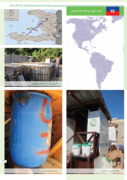
This manual is a good example of the successful outcomes of the productive mutual cooperation between the United States Agency for International Development (USAID) through the Basic Education Support and Training (BEST – Yemen) Project; funded by the USAID, and the Government of Yemen (GY) throug...

Countries, partners, and donors are committed to the global elimination of blinding trachoma by 2020.
Achieving this public health milestone requires more than funding; it requires health personnel with the
right mix of skills, and well supported and managed health systems. Mass drug administratio...
The year 2020 is the target date for the elimination of blinding trachoma as a public health problem. There has been great progress, and there is unprecedented funding available – particularly from DFID, the Queen Elizabeth Diamond Jubilee Trust, and USAID. There is also reason for optimism that, ...

The CDC Self-Study Modules on Tuberculosis are a series of nine educational modules divided into two courses. The first course (Modules 1–5) provides fundamental information about tuberculosis, while the second course (Modules 6–9) offers more specific program-related details. These modules are ...
Neglected tropical diseases (NTDs) are a category of chronic, disabling, and at times disfiguring diseases and conditions that occur most commonly in the setting of extreme poverty. Historically, NTDs have received less attention and funding when compared to other diseases occurring in the same regi...
The Movement for Global Mental Health (MGMH) is a virtual network of individuals and organisations that aim to improve services for people living with mental health problems and psychosocial disabilities worldwide, especially in low- and middle-income countries (LMIC) where effective services are of...
We live in a world in which global warming, pollution, social
injustice, inequity and population health fundamentally influence each other. As a result, health and health care can no longer be thought of and practiced in an isolated manner.
The rapid spread of COVID-19 renewed the focus on how health systems across the globe are financed,
especially during public health emergencies. Development assistance is an important source of health financing in
many low-income countries, yet little is known about how much of this funding was di...
