
Filter
5771
Filtered Results: 5771
Text search:
Our
World
in
Data
Featured
Recommendations
404
New Publications
1455
Language
Document type
No document type
3085
Studies & Reports
1408
Guidelines
502
Manuals
244
Strategic & Response Plan
217
Training Material
104
Fact sheets
101
Situation Updates
41
Resource Platforms
29
Infographics
18
Brochures
10
Dashboards/Maps
7
Online Courses
4
Videos
1
Countries / Regions
Global
322
India
232
Kenya
167
South Africa
149
Ethiopia
132
Nigeria
125
Sierra Leone
117
Uganda
111
Liberia
107
Nepal
103
Africa
103
Western and Central Europe
103
Zambia
102
Rwanda
96
Malawi
94
Myanmar / Burma
91
Bangladesh
86
Latin America and the Carribbean
84
Tanzania
77
Ghana
75
Syria
71
Ukraine
60
Namibia
60
Philippines
57
Congo, Democratic Republic of
45
Zimbabwe
44
South–East Asia Region
38
South Sudan
38
Indonesia
38
Cambodia
36
Lesotho
35
Asia
35
Brazil
34
Haiti
33
Eastern Europe
33
Guinea
32
West and Central Africa
31
Mozambique
30
East and Southern Africa
29
Senegal
27
Burkina Faso
26
Germany
23
Middle East and North Africa
23
Cameroon
22
Botswana
22
Venezuela
21
Russia
21
Pakistan
21
Afghanistan
20
Colombia
18
Lebanon
18
Jordan
17
Eastern Europe and Central Asia
17
Yemen
17
Thailand
16
China
16
Benin
14
Mali
14
Somalia
12
Eswatini/ Swaziland
12
Sudan
11
Vietnam
10
Sri Lanka
10
Central African Republic
10
Peru
9
USA
9
Iraq
9
Western Pacific Region
8
Moldova
8
Tajikistan
7
Côte d’Ivoire / Ivory Coast
7
Palestine
7
Chad
7
Libya
7
Mexico
6
Chile
6
Albania
6
Laos
6
Niger
6
United Kingdom
6
North Macedonia
5
Timor Leste/ East Timor
5
Turkey
5
North America
5
Southern Africa
5
Argentina
5
Egypt
5
Angola
5
Madagascar
5
El Salvador
4
Kyrgyzstan
4
Burundi
4
Spain
4
Papua New Guinea
4
Greece
4
Guatemala
4
Kazakhstan
3
Iran
3
Canada
3
Malaysia
3
Qatar
3
Jamaica
3
France
3
Mauritius
3
Tunisia
3
Belarus
3
Bolivia
3
Honduras
3
Bhutan
3
Switzerland
2
Serbia
2
Togo
2
Estonia
2
Congo-Brazzaville
2
Morocco
2
Italy
2
Armenia
2
Dominican Republic
2
Guinea-Bissau
2
Hungary
2
Lithuania
2
Saudi Arabia
2
Paraguay
2
Japan
2
Portugal
2
Bosnia and Herzegovina
2
Nicaragua
2
Romania
2
Georgia
2
Poland
2
Ecuador
2
North Korea
1
Gambia
1
Fiji
1
Mongolia
1
Mauritania
1
Croatia
1
Ireland
1
Uruguay
1
Norway
1
Morocco
1
Israel
1
Djibouti
1
Solomon Islands
1
Cuba
1
Authors & Publishers
Publication Years
Category
Countries
2166
Public Health
323
Key Resources
322
Clinical Guidelines
289
Women & Child Health
275
Capacity Building
111
Pharmacy & Technologies
19
Annual Report MEDBOX
3
Toolboxes
Mental Health
484
COVID-19
452
HIV
443
Planetary Health
344
Disability
277
TB
211
NTDs
173
Conflict
160
Caregiver
155
NCDs
151
AMR
149
Global Health Education
146
Ebola & Marburg
143
Refugee
127
Health Financing Toolbox
119
Pharmacy
67
Rapid Response
61
Natural Hazards
58
Malaria
45
2.0 Rapid Response
41
Social Ethics
30
Zika
25
Polio
25
Cholera
23
Specific Hazards
21
South Sudan
2
Typhoon
2

Children malnutrition eradication in developing countries is a real challenge, especially among
vulnerable population. There are so many effort towards women (who are the main care providers)
socio-economic situation in order to improve their children nutrition. This article aims to identify the
...
This is a report from a National, representative household survey carried out in Botswana in 2012 – 2014. The study was carried out on behalf of the Norwegian Federation of Organisations of Disabled Persons (FFO), Southern Africa Federation of the Disabled (SASFOD) and Botswana Federation of Disab...

The Global Antibiotic Resistance Partnership (GARP)-Mozambique team, in partnership with the Center for Disease Dynamics, Economics & Policy (CDDEP), has produced this report as part of a solid com-mitment to develop actionable policy proposals to tackle antibiotic resistance and improve appropriate...

This situation analysis has gathered information about the current state of AMR, contributing factors and antimicrobial use in Zimbabwe from the human, animal, agricultural and environmental sectors. Data has been gathered from different sectors such as the general public, academia, the Ministry of ...

High levels of storage iron may increase malaria susceptibility. This risk has not been investigated in semi-immune adolescents. We investigated whether baseline iron status of nonpregnant adolescent girls living in a high malaria transmission area in Burkina Faso affected malaria risk during the fo...
As a high-burden neglected tropical disease, soil-transmitted helminth (STH) infections remain a major problem in the world, especially among children under five years of age. Since young children are at high risk of being infected, STH infection can have a long-term negative impact on their life, i...

R4D conducted a thorough desk review and qualitative fiscal space analysis, 19 interviews about financing for the three diseases and the extent of alignment between public financial management systems and health policy objectives, and a validation workshop with government officials.
Tanzania’...
Tanzania’...
Glob Ment Health (Camb). 2015; 2: e12. Published online 2015 Jul 14. doi: 10.1017/gmh.2015.10
Low and middle income countries (LMICs) are facing an increase of the impact of mental health problems while confronted with limited resources and limited access to mental health care, known as the ‘me...
The Core Set of Indicators and respective Indicator Data Sheets aim to pave the way towards a common understanding, greater consistency and comparability across countries and alignment of results chains of German Development Cooperation in the field of health and social health protection with the in...
Background: COVID-19 is a global public health crisis that affects all sectors; studying the impact of this pandemic on the delivery of cardiology services in Africa is crucial as COVID-19-related cardiovascular complications may worsen the CVD burden in this already highly affected and resource-lim...
PlosOne https://doi.org/10.1371/journal.pone.0161576; Zoonotic diseases have varying public health burden and socio-economic impact across time and geographical settings making their prioritization for prevention and control important at the national level. We conducted systematic prioritization of ...

It is often observed that educated women have lower birth rates than do the less educated, inviting a causal interpretation. However, educated women also differ from those who have never attended school in a
variety of other ways: the two factors are multiply related. This article analyzes the rela...

The Call to Action on Protection from GBV in Emergencies, formally launched in 2013 by the United Kingdom and Sweden, aims to fundamentally transform the way GBV is addressed in humanitarian operations via the collective action of numerous partners, each bringing our various strengths and capacities...
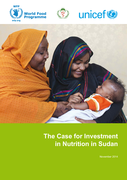
Over the period 2015 to 2019, scaling up a package of selected nutrition-specific and nutrition sensitive interventions to cover 90 per cent of Sudan would:
- Reduce the under-five mortality rate to 49/1,000 live births
- Reduce the prevalence of stunting to 25 per cent
- Reduce the ...
- Reduce the under-five mortality rate to 49/1,000 live births
- Reduce the prevalence of stunting to 25 per cent
- Reduce the ...
DHS Further Analysis Reports No. 111
This study is a theory-driven analysis of the socio-demographic determinants of maternal care seeking in Kenya. Specifically, it examines predisposing, enabling, and need factors potentially associated with use of antenatal care (ANC), health facility delive...
This study is a theory-driven analysis of the socio-demographic determinants of maternal care seeking in Kenya. Specifically, it examines predisposing, enabling, and need factors potentially associated with use of antenatal care (ANC), health facility delive...
Burns are a global public health problem, accounting for close to 200,000 deaths annually. The majority of these occur in low- and middle-income countries, where a number of constraints complicate the public health task of addressing burns. While the primary prevention of burns in low- and middle-in...
Since 2002 the distribution of external funding to reproductive, maternal, newborn, and child health (RMNCH) has become more equitable and better targeted at the poorest countries and those experiencing the highest mortality. The aid envelope is not large enough or well enough concentrated to close ...

India contributes to 16% of the global maternal deaths and around 27% of global newborn deaths. Reducing the burden of maternal and newborn mortality and morbidity in urban poor settings today requires an expansion of effective Maternal and Newborn Health (MNH) care services and lowering the barrier...
Heart failure (HF) is a global public health concern with disproportionate socioeconomic, morbidity and mortality burden on low- and middle-income countries (LMICs). This review summarises contemporary data on the demographic and clinical characteristics, aetiologies, treatment, economic burden and ...
Environment International Volume 146, January 2021, 106245.
We use soils to provide 98.8% of our food, but we must ensure that the pressure we place on soils to provide this food in the short-term does not inadvertently push the Earth into a less hospitable state in the long-term. Using the planeta...
