
Filter
6968
Filtered Results: 6968
Text search:
adults
and
children
Featured
Recommendations
647
New Publications
1741
Language
Document type
No document type
4119
Studies & Reports
1053
Guidelines
872
Manuals
331
Strategic & Response Plan
179
Fact sheets
140
Training Material
132
Situation Updates
50
Infographics
42
Brochures
29
Resource Platforms
18
Online Courses
2
Videos
1
Countries / Regions
India
301
Global
284
Kenya
189
South Africa
164
Ethiopia
148
Uganda
130
Nepal
122
Western and Central Europe
121
Nigeria
119
Malawi
112
Tanzania
112
Zambia
110
Latin America and the Carribbean
105
Sierra Leone
103
Myanmar / Burma
100
Africa
97
Bangladesh
94
Syria
88
Liberia
88
Namibia
81
Ghana
79
Rwanda
79
Ukraine
76
Lesotho
58
Philippines
55
Zimbabwe
54
Mozambique
49
Congo, Democratic Republic of
49
Cambodia
45
Germany
45
Eastern Europe
45
Russia
45
Haiti
43
Indonesia
43
South Sudan
41
Asia
40
Senegal
39
Brazil
37
Yemen
33
South–East Asia Region
32
Venezuela
31
Botswana
27
Eastern Europe and Central Asia
24
Burkina Faso
23
Middle East and North Africa
23
Paraguay
23
Colombia
22
East and Southern Africa
22
Eswatini/ Swaziland
22
Cameroon
21
Guinea
19
Lebanon
19
Jordan
18
Sudan
18
Argentina
17
Pakistan
17
Afghanistan
16
West and Central Africa
16
Central African Republic
15
Peru
14
Somalia
14
USA
13
Vietnam
13
Iraq
13
Thailand
12
China
12
Chile
11
Albania
11
Moldova
11
Tajikistan
10
Spain
10
Turkey
9
Laos
9
Angola
9
Western Pacific Region
8
Mexico
7
Portugal
7
Sri Lanka
7
Georgia
7
Mali
7
Madagascar
7
Serbia
6
Benin
6
North America
6
Greece
6
Ecuador
6
Timor Leste/ East Timor
5
Iran
5
Armenia
5
Papua New Guinea
5
Egypt
5
Palestine
5
North Macedonia
4
Kazakhstan
4
Estonia
4
Kyrgyzstan
4
Niger
4
Southern Africa
4
Bolivia
4
Romania
4
Libya
4
Canada
3
Uzbekistan
3
Guinea-Bissau
3
Croatia
3
Saudi Arabia
3
Turkmenistan
3
Tunisia
3
United Kingdom
3
Bosnia and Herzegovina
3
Bhutan
3
Guatemala
3
El Salvador
2
Togo
2
Fiji
2
Malaysia
2
Morocco
2
Qatar
2
Italy
2
Lithuania
2
Japan
2
France
2
Azerbaijan
2
Côte d’Ivoire / Ivory Coast
2
Nicaragua
2
Djibouti
2
Honduras
2
Chad
2
North Korea
1
Switzerland
1
Gambia
1
Singapore
1
Burundi
1
Mongolia
1
Hungary
1
Ireland
1
Gabon
1
Uruguay
1
Belarus
1
Israel
1
Latvia
1
Oman
1
Poland
1
Solomon Islands
1
Authors & Publishers
Publication Years
Category
Countries
2673
Clinical Guidelines
571
Women & Child Health
389
Public Health
348
Key Resources
267
Capacity Building
169
Pharmacy & Technologies
40
Annual Report MEDBOX
2
Toolboxes
Mental Health
744
HIV
659
COVID-19
495
TB
403
Disability
402
NTDs
239
Conflict
196
Refugee
173
Caregiver
156
Planetary Health
148
NCDs
144
Ebola & Marburg
111
AMR
86
Global Health Education
85
Malaria
79
Rapid Response
78
Pharmacy
78
Natural Hazards
58
Cholera
54
Zika
35
Health Financing Toolbox
34
Polio
30
2.0 Rapid Response
28
Specific Hazards
19
Social Ethics
17
In recent years Terre des Hommes Netherlands observed the steady rise of a new form of child sexual exploitation. One that is enabled and fuelled by rapid technological advances, increasing global connectivity, persisting poverty rates, and growing disparity in the global distribution of resources. ...
Nutrition training of health and agriculture workers can help to reduce child undernutrition. Specifically, trained health extension workers cancontribute through frequent nutrition counselling of caregivers. Evidence from systematic reviews has showed that providing nutrition training targeting hea...
The 65-page report names more than 15 commanders and officials from both the government Sudan People’s Liberation Army (SPLA) and the rebel SPLA-in Opposition and their allies who have used child soldiers. The report is based on interviews with 101 child soldiers who were either forcibly recruited...
2nd edition.
Like the original, this second edition of the guidance aims to inform the revision of existing national guidelines and standards for managing Tuberculosis (TB), many of which include guidance on children. It includes recommendations, based on the best available evidence, for improving ...
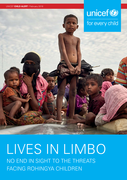
UNICEF Child Alert | February 2018
Back in Myanmar, an estimated half million Rohingya remain largely sealed off in their communities and displacement camps, fearful that the violence and horror that had driven so many of their relatives and neighbours to fl ee would engulf them too. Today, t...
Back in Myanmar, an estimated half million Rohingya remain largely sealed off in their communities and displacement camps, fearful that the violence and horror that had driven so many of their relatives and neighbours to fl ee would engulf them too. Today, t...
Prioritise education in conflict-affected areas:
Across the world 28 million1 primary school-age children living in conflict-affected countries are
out-of-school, and they form half of the world’s total out-of-school population. During conflict,
infrastructure assets such as schools are damaged...
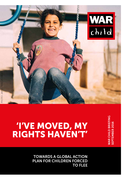
War child: "I´ve moved, my rights haven't" (Towards a global action plan for children forced to flee)
recommended
We live in a world in which 28 million children have been driven from their
homes as a result of conflict, persecution and insecurity¹. If current trends
continue, more than 63 million children could be forced to flee by 2025², of
which over 25 million will cross borders and become refugees. At...
Healthy maternal nutrition, exclusive breastfeeding, and optimal infant and young child nutrition are critical for appropriate growth and development, as well as reducing the risk of developing noncommunicable diseases (NCDs), for both mothers and children. On 7–8 November 2018 the WHO Regional Of...

Little is known about asthma control in the rising number of African children who suffer from this condition. The Achieving Control of Asthma in Children in Africa (ACACIA) study is an observational study collecting evidence about paediatric asthma in urban areas of Ghana, Malawi, Nigeria, South Afr...

NOVEMBER 2012
This document serves as an update to “Out of the Dark”, a report published by MSF in October 2011, highlighting the need to prioritise the long-neglected area of paediatric tuberculosis (TB). This update will outline the key improvements and setbacks—the ‘highlights’ and ‘...
The mission of the Women’s Health Council is to inform and influence the development of health policy to ensure the maximum health and social gain for women in Ireland.
Its membership is representative of a wide range of expertise and interest in women’s health.
The Women’s Health Council ...
The guidelines are to be used to guide the management of adults with lower respiratory tract infection (LRTI). As will be seen in the following text, this diagnosis, and the other clinical syndromes within this grouping, can be difficult to make accurately. In the absence of agreed definitions of th...

Background
Asthma education, a key component of long-term asthma management, is challenging in resource-limited settings with shortages of clinical staff. Task-shifting educational roles to lay (non-clinical) staff is a potential solution. We conducted a randomised controlled trial of an enhanced a...
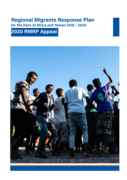
The International Organization for Migration (IOM) and partners from 27 humanitarian and development organisations and governments are appealing for USD 84 million to provide life-saving assistance to hundreds of thousands of African migrants and host community members affected by COVID-19 in the Ho...
A systematic review of randomized controlled efficacy trials | REPORT -
DEPARTMENT OF CHILD AND ADOLESCENT HEALTH AND DEVELOPMENT

In the wake of the Covid‑19 Pandemic, parts of the public health system at increased risk of reduced efficiency include healthcare services for women and children. This in turn could reverse all the progress achieved over the years in reducing maternal and child mortality. In th...

At the threshold of Sustainable Development Goals (SDG) era, this document captures the remarkable achievements by Member States towards achieving MDGs 4 and 5. It acknowledges new opportunities in the post-2015 phase shaped by the SDGs and the Global Strategy for women’s, children’s and adoles...
DHS Further Analysis Reports No. 89 - The 2010 Rwanda Demographic and Health Survey shows that 3 percent of Rwandan adults age 15-49 have been infected with HIV. The prevalence was much higher in urban areas, among women, and among adults who had multiple lifetime sexual partners and used a condom a...
Pocket book of hospital care for children
recommended
Guidelines for the Management of common childhood Illness. 2nd edition
These guidelines focus on the management of the major causes of childhood mortality in most developing countries, such as newborn problems, pneumonia, diarrhoea, malaria, meningitis, septicaemia, measles and related conditions, ...
