
Filter
3329
Filtered Results: 3329
Text search:
AIDS-related
deaths
Featured
Recommendations
292
New Publications
1001
Language
Document type
No document type
2268
Studies & Reports
425
Guidelines
274
Manuals
136
Strategic & Response Plan
98
Training Material
37
Fact sheets
33
Infographics
25
Situation Updates
20
Resource Platforms
9
Brochures
2
Online Courses
2
Countries / Regions
India
192
Kenya
122
Global
112
Uganda
86
South Africa
85
Malawi
82
Zambia
82
Nepal
79
Nigeria
78
Ethiopia
77
Tanzania
76
Liberia
68
Rwanda
63
Sierra Leone
59
Africa
57
Myanmar / Burma
55
Namibia
52
Bangladesh
49
Ghana
48
Western and Central Europe
48
Lesotho
41
Zimbabwe
37
Philippines
35
Asia
33
Cambodia
30
Ukraine
29
Eastern Europe
27
South–East Asia Region
26
Indonesia
26
Mozambique
23
Botswana
21
Latin America and the Carribbean
20
Senegal
19
East and Southern Africa
17
Eswatini/ Swaziland
16
Russia
15
Albania
11
Burkina Faso
11
Congo, Democratic Republic of
11
Thailand
10
Cameroon
9
Haiti
9
West and Central Africa
9
South Sudan
9
Tajikistan
8
Guinea
8
Pakistan
8
Vietnam
7
Brazil
7
Venezuela
6
Middle East and North Africa
6
Moldova
6
Georgia
6
North Macedonia
5
Syria
5
Papua New Guinea
5
China
4
Afghanistan
4
Armenia
4
Southern Africa
4
Lebanon
4
Sri Lanka
4
Hungary
3
Jordan
3
Western Pacific Region
3
Eastern Europe and Central Asia
3
Paraguay
3
North America
3
Mali
3
Switzerland
2
Timor Leste/ East Timor
2
Mexico
2
Serbia
2
Benin
2
Iran
2
Canada
2
Laos
2
Estonia
2
Kyrgyzstan
2
Uzbekistan
2
Germany
2
Argentina
2
Egypt
2
Sudan
2
Yemen
2
Romania
2
Central African Republic
2
Poland
2
Angola
2
Bhutan
2
Madagascar
2
North Korea
1
Colombia
1
Turkey
1
Gambia
1
Togo
1
Kazakhstan
1
Fiji
1
Morocco
1
Bulgaria
1
USA
1
Guinea-Bissau
1
Jamaica
1
Japan
1
Norway
1
Portugal
1
Côte d’Ivoire / Ivory Coast
1
Slovakia
1
Palestine
1
Honduras
1
Iraq
1
Somalia
1
Ecuador
1
Authors & Publishers
Publication Years
Category
Countries
1511
Clinical Guidelines
244
Women & Child Health
161
Public Health
158
Key Resources
109
Capacity Building
77
Pharmacy & Technologies
21
Annual Report MEDBOX
2
Toolboxes
HIV
576
TB
265
Mental Health
167
COVID-19
105
Caregiver
75
Disability
73
Health Financing Toolbox
57
Ebola & Marburg
48
Global Health Education
48
Malaria
45
AMR
41
NTDs
39
Planetary Health
36
Refugee
34
Conflict
34
Pharmacy
31
NCDs
30
Rapid Response
29
Natural Hazards
22
Cholera
19
Social Ethics
13
2.0 Rapid Response
13
Polio
12
Specific Hazards
8
Zika
7
South Sudan
1

The goal of the United States Government for the President's Emergency Plan for AIDS Relief (PEPFAR) in Mozambique is to support country efforts to achieve epidemic control by 2020 through evidence-based policies and interventions to drive progress and save
lives. This document details PEPFAR's op...

This document aims to provide concrete, pragmatic guidance for how TB modelling and related technical assistance is undertaken to support country decision-making. The target audience for this document are the participants and stakeholders in country-level TB modelling efforts, including the individu...
The COVID-19 pandemic demonstrated that
the world was not well prepared to respond
to an infectious disease threat of this magnitude. Countries across all socioeconomic and development categories have struggled
to implement effective national responses. Substantial amounts of additional investmen...
This guidance covers different options for banning or phasing out a pesticide and suggests related risk reduction measures to be taken during the phase-out period. A key focus of this guidance is how to take action to manage, prevent, minimize, and communicate about identified risks during the imple...
Chapter · January 2009 DOI: 10.1007/978-0-387-72711-0_25
D.D. Celentano and C. Beyrer (eds.), Public Health Aspects of HIV/AIDS in Low and Middle Income Countries, DOI: 10.1007/978-0-387-72711-0 25, c Springer Science+Business Media, LLC 2008

MEDBOX Issue Brief no.18.
The MEDBOX team has compiled a new issue brief on the impact of COVID-19 on PLHIV HIV prevention programmes and treatment for this year's World AIDS Day on 1 December 2021.

Natural disasters often increase morbidity and mortality rates. Taking appropriate measures to maintain environmental health helps to reduce or eliminate the risks of preventable disease and death. Such measures contribute not only to the health of individuals in and near disaster-stricken areas, bu...
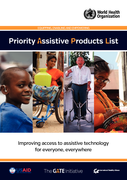
Improving access to assistive technology for everyone, everywhere.
The first WHO Priority Assistive Products List was launched in May 2016. The List includes hearing aids, wheelchairs, communication aids, spectacles, artificial limbs, pill organizers, memory aids and other essential items for many...

20 YEARS OF STRATEGIC HIV AND PUBLIC HEALTH DATA . beThe completion of the 6th South African National HIV Prevalence, Incidence and Behaviour Survey (SABSSM) report, coincides with the celebration of 30 years of democracy in South Africa; and marks 20 years of conducting nationally representative ho...

An Overview of Current Evidence with Recommendations for Strengthening Community Health Worker Programs to Accelerate Progress in Achieving the Health-related Millennium Development Goals

WHO working group on HIV incidence assays meeting report
10–11 December 2015
Glion, Switzerland
UNAIDS/WHO working group on global HIV/AIDS and STI surveillance
WHO/HIV/2017.03
This strategic framework marries formerly separate mandates for HIV and TB management in to one, comprehensive collaboration. It provides a structure for how to: strengthen the health care system to respond effectively to both epidemics, reduce the burden of HIV/AIDS in TB patients, and establish a ...

Only 8,730 asylum applications were registered in the EU+ in April, the lowest since at least 2008, and a massive 87% decrease from pre-COVID-19 levels in January and February.
The European Asylum Support Office (EASO) has released a special report which shows that the COVID-19 related travel restr...

Health Statistics in the Western Pacific Region 2023: Monitoring health for the SDGs is the third biennial report providing an overview of the progress of the World Health Organization (WHO) Western Pacific Region towards the health-related Sustainable Development Goal (SDG) targets. Thi...

The overall objective of the framework is to support WHO and Members States in meaningful engagement of people living with NCDs, and mental health and neurological conditions to co-create and enhance related policies, programmes and services. This framework will contribute to advancing understanding...
This document, Ghana’s National Newborn Health Strategy and Action Plan 2014–2018 outlines a targeted strategy for accelerating the reduction of newborn deaths in Ghana. Furthermore it provides a costed action plan with clearly marked timelines for implementation to facilitate resource mobilisat...
PLoS ONE 15(1): e0228135.
The introduction of “Treat All” (TA) has been promoted to increase the effectiveness of HIV/AIDS treatment by having patients initiate antiretroviral therapy at an earlier stage of their illness. The impact of introducing TA on the unit cost of treatment has been less ...

World malaria report 2024
recommended
New data from the WHO reveal that an estimated 2.2 billion cases of malaria and 12.7 million deaths have been averted since 2000, but the disease remains a serious global health threat, particularly in the WHO African Region. According to WHO’s latest World malaria report, there were an estimated ...

Drawing on the World Health Organization’s package of NCD best buys, the report demonstrates how these evidence-based measures can help countries reduce premature deaths, strengthen health systems, and advance progress towards the Sustainable Development Goals. It provides policymakers, donors, ad...
