
Filter
7661
Filtered Results: 7661
Text search:
training
programmes
Featured
Recommendations
696
New Publications
2131
Language
Document type
No document type
4362
Studies & Reports
1116
Guidelines
926
Manuals
489
Strategic & Response Plan
334
Training Material
184
Fact sheets
107
Situation Updates
61
Resource Platforms
33
Online Courses
16
Brochures
15
Infographics
15
Videos
2
App
1
Countries / Regions
India
342
Global
296
Kenya
231
South Africa
173
Sierra Leone
167
Myanmar / Burma
159
Uganda
158
Nepal
155
Nigeria
149
Ethiopia
142
Western and Central Europe
136
Zambia
120
Tanzania
118
Liberia
114
Malawi
112
Bangladesh
108
Africa
104
Ghana
102
Namibia
91
Syria
89
Rwanda
82
Ukraine
68
Congo, Democratic Republic of
68
South Sudan
64
Lesotho
58
Senegal
56
Latin America and the Carribbean
54
Zimbabwe
53
Eastern Europe
51
Asia
48
Indonesia
48
South–East Asia Region
45
Philippines
44
Haiti
44
Cambodia
44
Guinea
43
Botswana
40
Burkina Faso
39
Cameroon
38
Mozambique
38
East and Southern Africa
36
West and Central Africa
32
Germany
30
Russia
28
Yemen
28
Pakistan
25
Middle East and North Africa
24
Eswatini/ Swaziland
23
Central African Republic
21
Jordan
20
Mali
20
Afghanistan
19
Eastern Europe and Central Asia
19
Lebanon
18
Brazil
18
Benin
17
Vietnam
17
Somalia
17
Western Pacific Region
16
Sudan
15
Moldova
14
Sri Lanka
14
Tajikistan
13
Laos
13
Venezuela
13
Côte d’Ivoire / Ivory Coast
13
China
12
Iraq
12
Madagascar
12
Colombia
10
Thailand
10
Albania
10
Togo
9
Peru
8
Georgia
8
Chad
8
North Macedonia
7
Turkey
7
Gambia
7
Southern Africa
7
Timor Leste/ East Timor
6
Kyrgyzstan
6
Poland
6
Serbia
5
Iran
5
Burundi
5
Romania
5
El Salvador
4
Kazakhstan
4
Niger
4
Armenia
4
Hungary
4
Paraguay
4
Turkmenistan
4
Greece
4
Palestine
4
Angola
4
Bhutan
4
Mexico
3
Singapore
3
Mauritania
3
Guinea-Bissau
3
Mauritius
3
United Kingdom
3
Belarus
3
Bosnia and Herzegovina
3
Bolivia
3
Papua New Guinea
3
Egypt
3
Honduras
3
Libya
3
Guatemala
3
Chile
2
Canada
2
Fiji
2
Estonia
2
Malaysia
2
Bulgaria
2
USA
2
Croatia
2
Ireland
2
Jamaica
2
Japan
2
Azerbaijan
2
Guyana
2
Argentina
2
Nicaragua
2
Slovakia
2
Ecuador
2
North Korea
1
Uzbekistan
1
Morocco
1
Mongolia
1
Qatar
1
Dominican Republic
1
Lithuania
1
Saudi Arabia
1
North America
1
Gabon
1
Belgium
1
Maldives
1
Tunisia
1
Portugal
1
Spain
1
Belize
1
Costa Rica
1
Panama
1
Djibouti
1
Authors & Publishers
Publication Years
Category
Countries
2913
Key Resources
530
Clinical Guidelines
508
Women & Child Health
468
Public Health
433
Capacity Building
208
Pharmacy & Technologies
81
Toolboxes
HIV
584
Mental Health
575
COVID-19
469
Disability
419
TB
384
Caregiver
259
Conflict
235
NTDs
228
AMR
218
Planetary Health
210
Ebola & Marburg
187
Rapid Response
159
Refugee
143
Global Health Education
120
Pharmacy
119
Natural Hazards
118
NCDs
108
Malaria
106
2.0 Rapid Response
105
Health Financing Toolbox
61
Cholera
47
Polio
42
Specific Hazards
33
Zika
32
Social Ethics
25
Typhoon
3
South Sudan
2
MEDBOX Annual Report 2024
recommended
The MEDBOX Annual Report provides an overview of the most important projects of the past year

Non-Communicable Diseases (NCDs) have emerged as conditions of great public health concern in Kenya accounting for 39% of deaths annually. The Ministry of Health through the Department of Non-Communicable Diseases has adopted the vision of achieving a nation free from preventable burden of NCDs. Fur...

This document outlines the plan for a continental cholera prevention and control with the implementation framework for the Cholera IMST, detailing its governance structure, strategic priorities, and operational modalities

Public health challenges over the past decade have highlighted the importance of approaching health through a holistic lens of human, animal, and environmental sectors, recognizing the need for a collaborative response against shared threats. Zoonotic diseases, transmitted between humans and animals...

Drawing on the World Health Organization’s package of NCD best buys, the report demonstrates how these evidence-based measures can help countries reduce premature deaths, strengthen health systems, and advance progress towards the Sustainable Development Goals. It provides policymakers, donors, ad...

WHO guideline on HIV service delivery
recommended
Updated guidance on the integration of diabetes, hypertension and mental health services, and interventions to support adherence to antiretroviral therapy. The guideline offers practical implementation guidance for countries and key stakeholders as well as outlining key research gaps. As life expec...

On 4 September 2025, the Ministry of Health of the Democratic Republic of the Congo (DRC) declared an outbreak of Ebola Virus Disease (EVD) in Kasai Province, following confirmation of Zaire ebolavirus by the National Institute of Biomedical Research (INRB) in Bulape and Mweka Health Zones. As of 19...
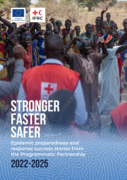
Epidemics and pandemics are some of the biggest threats to a safe and healthy world. But with effective preparedness and response measures, we can reduce their impacts and even stop them in their tracks.
Through the Programmatic Partnership with the European Union, 24 local Red Cross and Red Cres...
The document provides a standardized protocol for evaluating the Early Warning Alert and Response Network (EWARN), a surveillance system used during humanitarian emergencies when regular national health surveillance may be disrupted. The purpose of EWARN is to detect outbreaks of communicable diseas...

This resource was written to support persons who seek to initiate a support group for suicide loss survivors. Suicide bereavement support groups offer a wide range of benefits that can help individuals to navigate the difficult time following a loss. First and foremost, a support group provides a ch...

This report was developed by the WHO TB Vaccine Accelerator Finance and Access working group, co-led by WHO, Gavi and the Government of South Africa. It sets out the working group’s shared vision for equitable access to novel TB vaccines and will advance a shared understanding of the current lands...

CHAPTER 244


Medical care for people caught up in armed conflict and other insecure environments saves lives and alleviates suffering. It is one of the most immediate and high priority needs of an affected population and is often the first type of response activated and/or requested by authorities and affected c...

National guidelines for the provision of psychosocial support for gender based violence victims/survivors
recommended
Psychosocial support is a very important component in Gender Based Violence response that provide appropriate care, protection and social integration. Psychological aspects affect thoughts, emotions, behavior, memory, learning ability, perceptions and understanding. While the social aspects have ef...

African Journal of Laboratory Medicine | Vol 7, No 2 | a770 | 06 December 2018

National guidelines for the provision of psychosocial support for gender based violence victims survivors
recommended
Psychosocial support is a very important component in Gender Based Violence response that provide appropriate care, protection and social integration. Psychological aspects affect thoughts, emotions, behavior, memory, learning ability, perceptions and understanding. While the social aspects have ef...
Handbook of Hospital Care for Newborn Infants
recommended
Updated June 2021

Presentation on WASH in Malawi
