
Filter
1207
Filtered Results: 1207
Text search:
newborn
survival
Featured
Recommendations
112
New Publications
436
Language
Document type
No document type
802
Studies & Reports
183
Guidelines
118
Manuals
37
Strategic & Response Plan
23
Training Material
20
Fact sheets
12
Infographics
6
Situation Updates
5
Online Courses
1
Countries / Regions
India
85
Nepal
44
Kenya
42
Global
42
Ethiopia
37
Nigeria
36
Sierra Leone
32
Rwanda
32
Liberia
32
Zambia
31
Malawi
30
Uganda
30
Tanzania
29
Bangladesh
27
South Africa
22
Myanmar / Burma
22
Namibia
20
Ghana
14
Philippines
14
Lesotho
13
Congo, Democratic Republic of
11
Syria
10
Cambodia
10
Asia
10
Africa
9
Indonesia
9
Zimbabwe
8
Haiti
8
Senegal
7
Mozambique
6
Latin America and the Carribbean
6
South–East Asia Region
6
Lebanon
6
Botswana
6
South Sudan
6
Burkina Faso
5
Western and Central Europe
5
Guinea
4
Yemen
4
Venezuela
3
Middle East and North Africa
3
Paraguay
3
Mali
3
Eswatini/ Swaziland
3
Pakistan
3
Timor Leste/ East Timor
2
Ukraine
2
Cameroon
2
Jordan
2
Southern Africa
2
Brazil
2
Russia
2
Madagascar
2
North Macedonia
1
Tajikistan
1
Colombia
1
Thailand
1
Mexico
1
El Salvador
1
Turkey
1
Gambia
1
Albania
1
Laos
1
Kyrgyzstan
1
Niger
1
Peru
1
Italy
1
Germany
1
Western Pacific Region
1
Eastern Europe and Central Asia
1
Turkmenistan
1
Japan
1
East and Southern Africa
1
Côte d’Ivoire / Ivory Coast
1
Bolivia
1
Vietnam
1
Eastern Europe
1
Papua New Guinea
1
Egypt
1
Sudan
1
Georgia
1
Libya
1
Iraq
1
Authors & Publishers
Publication Years
Category
Countries
627
Women & Child Health
196
Clinical Guidelines
109
Public Health
48
Key Resources
43
Capacity Building
23
Pharmacy & Technologies
5
Toolboxes
HIV
81
Caregiver
55
COVID-19
42
Mental Health
29
Conflict
24
Global Health Education
24
TB
19
Ebola & Marburg
18
Disability
17
Planetary Health
16
AMR
15
Health Financing Toolbox
14
Zika
13
Refugee
11
Natural Hazards
8
Malaria
8
Pharmacy
7
NCDs
6
NTDs
5
Polio
5
Rapid Response
4
Specific Hazards
1
South Sudan
1
Cholera
1
2.0 Rapid Response
1
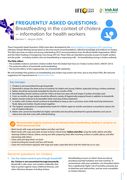
These Frequently Asked Questions (FAQs) have been developed by the Infant Feeding in Emergencies (IFE) Core Group Infectious Disease Working Group based on the most recent recommendations, collective knowledge and evidence on cholera. The FAQs also draw on infant and young child feeding (IYCF) recom...
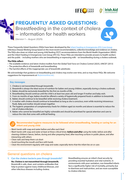
Ces questions fréquemment posées (FAQs) ont été élaborées par le Groupe de travail sur les maladies infectieuses du Groupe l'alimentation central sur des nourrissons en situation d'urgence (IFE) en se basant sur les recommandations les plus récentes, les connaissances collectives et les donnÃ...

The findings of the report are both urgent and devastating. At the current rate of progress, by 2040 we would still have 1.9 million new HIV infections and 990,000 AIDS-related deaths in children. But if funding for HIV prevention and treatment continues to fall as current trends suggest, the world ...

Lao People’s Democratic Republic (Lao PDR), also referred to as Laos, or Lao, is exposed to natural disasters such as flooding, typhoons, cyclones, drought, and earthquakes. The country is vulnerable to recurrent, sudden-onset and slow onset natural disasters with flooding, storms and typhoons hav...
This report presents the key findings of the end-of-project assessment of households and
community health volunteers, conducted in 2017 in the Kamukunji and Embakasi sub-counties
of Nairobi, Kenya, for a Community Health Volunteers’ Decision Support System (CHV DSS)
intervention project. The re...
Revision for Field Review
Online version of the manual: https://iawgfieldmanual.com/manual
By 2100, new UN figures show that 4 of today’s 10 most populous nations will be replaced by African countries.
Brazil, Bangladesh, Russia and Mexico—where populations are projected to stagnate or decline—will drop out. In their place: Democratic Republic of the Congo, Ethiopia, Tanzania and E...

A guidance document in simple language for health personnel, setting out their rights and responsibilities in conflict and other situations of violence. It explains how responsibilities and rights for health personnel can be derived from international humanitarian law, human rights law and medical e...

Country Progress Report
Reporting Period
January – December, 2014
Accessed: 26.09.2019
Los avances en el tratamiento del cáncer pediátrico han permitido ampliar las iniciativas más allá de la curación y abarcar aspectos como la detección precoz, la continuidad del tratamiento y la reducción de su toxicidad. Todo ello ha abierto paso a una visión más integral del cuidado de lo...


The World Health Organization (WHO) has recommended a universal antiretroviral therapy (ART) for all HIVinfected children before the age of two since 2010, but this implies an early identification of these infants. We described the Prevention of Mother-to-Child HIV Transmission (PMTCT) cascade, the ...
Advances in the treatment of pediatric cancer have made it possible to expand initiatives beyond cure and cover aspects such as early detection, continuity of treatment and reduction in toxicity. All this has paved the way for a more comprehensive vision of patient care, which means better chances o...

The Life Skills through Drama curriculum aims at promoting the protection of Syrian and Lebanese adolescent girls from Gender Based Violence and enhancing their psychosocial wellbeing. This curriculum addresses the basic life skills that adolescent girls living in difficult conditions in any similar...

Nearly half the population of Sierra Leone is under the age of 18 years and the impact of the Ebola crisis on their lives now and on their future opportunities has been far-reaching: no school; loss of family members and friends to the virus; and changing roles and responsibilities in the home and t...
Public Health Action PHA 2017; 7(2): 110–115
