
Filter
1630
Filtered Results: 1630
Text search:
WHO,
Ministry
of
Health,
Uganda
Featured
Recommendations
147
New Publications
441
Language
Document type
No document type
925
Studies & Reports
334
Guidelines
159
Manuals
81
Strategic & Response Plan
60
Training Material
36
Situation Updates
17
Fact sheets
13
Brochures
2
Infographics
2
App
1
Countries / Regions
Uganda
223
Kenya
90
Global
82
Rwanda
57
Africa
53
Ethiopia
44
South Sudan
40
Sierra Leone
39
Zambia
39
Tanzania
38
Congo, Democratic Republic of
36
Liberia
32
Nigeria
29
Malawi
28
South Africa
20
Ghana
18
East and Southern Africa
17
Zimbabwe
16
Namibia
16
Guinea
14
Senegal
13
Mozambique
13
Nepal
12
Lesotho
11
India
11
Cameroon
10
Bangladesh
10
West and Central Africa
9
Botswana
8
Eswatini/ Swaziland
8
Syria
6
Burkina Faso
6
Latin America and the Carribbean
6
Central African Republic
6
Colombia
5
Burundi
5
Haiti
5
Jordan
5
Western and Central Europe
5
Somalia
5
South–East Asia Region
4
Sudan
4
Mali
4
Angola
4
Myanmar / Burma
4
Pakistan
4
Ukraine
3
Togo
3
Iran
3
Afghanistan
3
Cambodia
3
Germany
3
Lebanon
3
Eastern Europe
3
Brazil
3
Chad
3
Thailand
2
China
2
Laos
2
Peru
2
Philippines
2
Asia
2
Eastern Europe and Central Asia
2
Southern Africa
2
Côte d’Ivoire / Ivory Coast
2
Argentina
2
Vietnam
2
Russia
2
Yemen
2
Indonesia
2
Iraq
2
Madagascar
2
North Korea
1
Benin
1
Chile
1
Albania
1
Estonia
1
Vanuatu
1
Morocco
1
Venezuela
1
Saudi Arabia
1
Middle East and North Africa
1
North America
1
Gabon
1
Turkmenistan
1
Mauritius
1
Tunisia
1
Morocco
1
Bolivia
1
Papua New Guinea
1
Sri Lanka
1
Djibouti
1
Egypt
1
Romania
1
Greece
1
Georgia
1
Ecuador
1
Solomon Islands
1
Authors & Publishers
Publication Years
Category
Countries
615
Clinical Guidelines
109
Women & Child Health
95
Public Health
84
Key Resources
73
Capacity Building
38
Pharmacy & Technologies
12
Annual Report MEDBOX
1
Toolboxes
HIV
200
Mental Health
90
Ebola & Marburg
84
COVID-19
84
TB
77
Disability
75
AMR
56
NTDs
54
Planetary Health
43
Caregiver
42
Conflict
35
Health Financing Toolbox
29
Malaria
28
Rapid Response
27
Refugee
25
Pharmacy
24
Global Health Education
18
NCDs
15
Zika
14
2.0 Rapid Response
11
Cholera
6
Natural Hazards
5
Social Ethics
4
Specific Hazards
3
Polio
3
South Sudan
2

Operational Guidance. This operational guidance provides a structured approach to support countries in sustaining priority services for HIV, viral hepatitis and sexually transmitted infections in the context of reduced external funding. The guidance is intended for national governments, public healt...

COVID-19 has heavily emphasized how contact tracing is crucial for managing outbreaks, and as part of the strategy for adjusting, and eventually lifting, lockdowns and other stringent public health and social measures. As the pandemic develops further, it will be a core measure to manage further wav...
Water, sanitation and hygiene (WASH) are critical in the prevention and care for all of the 17 neglected tropical diseases (NTDs) scheduled for intensified control or elimination by 2020.
Provision of safe water, sanitation and hygiene is one of the five key interventions within the global NTD ...
Provision of safe water, sanitation and hygiene is one of the five key interventions within the global NTD ...

Interim rapid response guidance, 10 June 2022.
It includes considerations for certain populations such as patients with mild disease with considerations for community care, patients with moderate to severe disease, sexually active persons, pregnant or breastfeeding women, children and young persons...

This working paper was conceived to offer practical tips and suggestions on how to establish and sustain the multisectoral coordination needed to develop and implement National Action Plans on AMR (NAPs). It is intended for anyone with responsibility for addressing AMR at country level. Drawing on b...
This working paper was conceived to offer practical tips and suggestions on how to establish and sustain the multisectoral coordination needed to develop and implement National Action Plans on AMR (NAPs). It is intended for anyone with responsibility for addressing AMR at country level. Drawing on b...

The Contingency Fund for Emergencies (CFE) provides WHO with rapid and flexible resources to respond to disease outbreaks and other health emergencies. The annual report provides an overview of the use and impact of the Fund over the previous year.
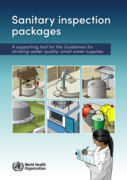
A sanitary inspection is a simple, on-site evaluation (traditionally using a checklist) to help identify and support the management of priority risk factors that may lead to contamination of a drinking-water supply. Sanitary inspections are a well-established and widely-applied practice. They can su...
Guidelines for Diagnosing and Managing Disseminated Histoplasmosis among People Living with HIV
recommended
Histoplasmosis is a disease caused by the fungus Histoplasma capsulatum. This disease is highly endemic in some regions of North America, Central America, and South America and is also reported in certain countries of Asia and Africa. It often affects people with impaired immunity, including people ...

Rabies is entirely preventable, and vaccines, medicines, tools and technologies have long
been available to prevent people from dying of dog-mediated rabies. Nevertheless, rabies still
kills about 60 000 people a year, of whom over 40% are children under 15, mainly in rural areas
of economically ...

Small drinking-water supplies commonly experience operational, managerial, technical and resourcing challenges that impact their ability to deliver safe and reliable services. The needs and opportunities associated with these supplies therefore warrant explicit consideration in policies and regulati...

Outstanding child and adolescent TB priorities include the need to: find the missing children with active TB and link them to TB care; prevent TB in children who are in contact with infectious TB cases (through implementation of active contact investigation and provision of preventive treatment); an...

Developmental disabilities are common. Yet, children with developmental disabilities have been neglected in health systems planning and policy provisions for health and continue to experience stigmatization, institutionalization, barriers to access health care and inequalities in health and educatio...
The Strategy to respond to antimalarial drug resistance in Africa is a technical and advocacy document, grounded in the best available evidence to date and aimed at minimizing the threat and impact of antimalarial drug resistance of Plasmodium falciparum parasites in Africa. Its objectives are to: i...

Vitamin D deficiency is thought to be common among pregnant women, particularly during the winter months, and has been found to be associated with an increased risk of pre-eclampsia, gestational diabetes mellitus, preterm birth, and other tissue-specific conditions.
This guideline is intended for ...

Zika Virus Infection - Step-by-Step Guide to Risk Communication and Community Engagement
recommended
This document provides Technical content on ZIKV, its manifestations, complications, modes of transmission, and prevention measures to be used in answering frequently asked questions and conveying messages in information and communication materials, community talks, press conferences, etc.

This ten year global plan for measles and rubella outlines the strategy that needs to be fully implemented to achieve the measles and rubella goals endorsed by the World Health Assembly. The plan sets out the: vision, goals and targets for the 2011-2020 period, recommended strategies, guiding princi...

The Early Childhood Development Policy and its Strategic Plan seek to provide a framework to ensure such a holistic and integrated approach to the development of young children. International research has demonstrated the high economic returns on ECD investment and its positive impact on health and ...

Overcoming barriers in low- and middle-income countries
For the first time, this year’s report includes information on hepatitis C diagnostics. With a focus on selected countries with diverse HCV epidemics, the report provides updates on the various dimensions of access to HCV diagnostics and pha...
Rabies is entirely preventable, and vaccines, medicines, tools and technologies have long been available to prevent people from dying of dog-mediated rabies. Nevertheless, rabies still kills about 60 000 people a year, of whom over 40% are children under 15, mainly in rural areas of economically dis...
