
Filter
1630
Filtered Results: 1630
Text search:
WHO,
Ministry
of
Health,
Uganda
Featured
Recommendations
147
New Publications
441
Language
Document type
No document type
925
Studies & Reports
334
Guidelines
159
Manuals
81
Strategic & Response Plan
60
Training Material
36
Situation Updates
17
Fact sheets
13
Brochures
2
Infographics
2
App
1
Countries / Regions
Uganda
223
Kenya
90
Global
82
Rwanda
57
Africa
53
Ethiopia
44
South Sudan
40
Sierra Leone
39
Zambia
39
Tanzania
38
Congo, Democratic Republic of
36
Liberia
32
Nigeria
29
Malawi
28
South Africa
20
Ghana
18
East and Southern Africa
17
Zimbabwe
16
Namibia
16
Guinea
14
Senegal
13
Mozambique
13
Nepal
12
Lesotho
11
India
11
Cameroon
10
Bangladesh
10
West and Central Africa
9
Botswana
8
Eswatini/ Swaziland
8
Syria
6
Burkina Faso
6
Latin America and the Carribbean
6
Central African Republic
6
Colombia
5
Burundi
5
Haiti
5
Jordan
5
Western and Central Europe
5
Somalia
5
South–East Asia Region
4
Sudan
4
Mali
4
Angola
4
Myanmar / Burma
4
Pakistan
4
Ukraine
3
Togo
3
Iran
3
Afghanistan
3
Cambodia
3
Germany
3
Lebanon
3
Eastern Europe
3
Brazil
3
Chad
3
Thailand
2
China
2
Laos
2
Peru
2
Philippines
2
Asia
2
Eastern Europe and Central Asia
2
Southern Africa
2
Côte d’Ivoire / Ivory Coast
2
Argentina
2
Vietnam
2
Russia
2
Yemen
2
Indonesia
2
Iraq
2
Madagascar
2
North Korea
1
Benin
1
Chile
1
Albania
1
Estonia
1
Vanuatu
1
Morocco
1
Venezuela
1
Saudi Arabia
1
Middle East and North Africa
1
North America
1
Gabon
1
Turkmenistan
1
Mauritius
1
Tunisia
1
Morocco
1
Bolivia
1
Papua New Guinea
1
Sri Lanka
1
Djibouti
1
Egypt
1
Romania
1
Greece
1
Georgia
1
Ecuador
1
Solomon Islands
1
Authors & Publishers
Publication Years
Category
Countries
615
Clinical Guidelines
109
Women & Child Health
95
Public Health
84
Key Resources
73
Capacity Building
38
Pharmacy & Technologies
12
Annual Report MEDBOX
1
Toolboxes
HIV
200
Mental Health
90
Ebola & Marburg
84
COVID-19
84
TB
77
Disability
75
AMR
56
NTDs
54
Planetary Health
43
Caregiver
42
Conflict
35
Health Financing Toolbox
29
Malaria
28
Rapid Response
27
Refugee
25
Pharmacy
24
Global Health Education
18
NCDs
15
Zika
14
2.0 Rapid Response
11
Cholera
6
Natural Hazards
5
Social Ethics
4
Specific Hazards
3
Polio
3
South Sudan
2
The aim of the framework is to provide guidance to Member States and partners on region-specific priority actions towards the goals, targets and milestones of the GTS. The central pillar of the framework is the adoption of programme phasing and transitioning, aimed at facilitating a tailored approac...

The NDMS&IP focuses on mainstreaming disability to promote equitable access to services in the six thematic areas of health, education, livelihoods, empowerment, and social inclusion and cross-cutting issues.
The first part of the NDMS&IP outlines incongruences between national and sectoral policie...

The Strategic Framework for Emergency Preparedness is a unifying framework which identifies the principles and elements of effective country health emergency preparedness. It adopts the major lessons of previous initiatives and lays out the planning and implementation process by which countries can ...

The WHO Global Antimicrobial Resistance and Use Surveillance System (GLASS) was launched in 2015 to foster AMR surveillance and inform strategies to contain AMR. The system started with surveillance of AMR in bacteria causing common human infections and has expanded its scope to include surveillance...
This document is a guide defining requirements for quality and safety for malaria rapid diagnostic testing services to safeguard the quality of the results, the safety of the operators and patients and that of the environment for use by national malaria control programmes, regulators, implementers a...

Adolescence, defined as the period between 10 and 19 years of age, is a developmental stage during which many psychosocial and mental health challenges emerge. There is a well-established link between mental health and HIV outcomes. Adolescents and young adults living with HIV typically have additio...
Family planning: a global handbook for providers
recommended
4th edition 2022 of the Handbook includes new WHO recommendations that expand contraceptive choices. Also, guidance on starting ongoing contraception following emergency contraception is provided.
Drawing on lessons from recent outbreaks, this new edition details tangible me...

22 December 2020
The COVID-19 vaccine safety guidance manual has been developed upon recommendation and guidance of GACVS members, as well as by experts incorporating current and available information critical to all stakeholders when COVID-19 vaccines will be introduced.
For ease of use, the man...
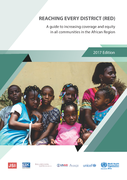
A guide to increasing coverage and equity in all communities in the African Region
Expanded Programs on Immunization (EPI) is responsible for vaccines and vaccination to control, eliminate and eradicate vaccine preventable diseases (VPDs). Having strong immunization systems to deliver vaccines ...
Expanded Programs on Immunization (EPI) is responsible for vaccines and vaccination to control, eliminate and eradicate vaccine preventable diseases (VPDs). Having strong immunization systems to deliver vaccines ...
Руководство по осуществлению mhGAP
recommended
The WHO Mental Health Gap Action Programme (mhGAP) aims at scaling up mental health services in non-specialized health settings to achieve universal health coverage. The mhGAP operations manual is an integral component of the mhGAP package and supports district health managers and others responsible...

Mpox, previously known as monkeypox, is a viral illness caused by the monkeypox virus (MPXV).1
It causes a painful rash, enlarged lymph nodes, fever, headache, muscle ache, back pain and low energy or feeling sick. In most cases, the symptoms of mpox go away within a few weeks with supportive care...
This training module on malaria case management has been developed to support the staff involved in malaria control and elimination programmes in the effective organization of malaria diagnosis and case management services

Offering additional pre-exposure prophylaxis (PrEP) choices has the potential to increase uptake and effective use of PrEP, and of HIV prevention overall, as it allows people to choose a method that they prefer.
In this guideline, WHO recommends an offering long-acting injectable lenacapavir (LEN...
This operational guidance provides a structured approach to support countries in sustaining priority services for HIV, viral hepatitis and sexually transmitted infections in the context of reduced external funding. The guidance is intended for national governments, public health programmes, communit...
9 June 2021
Since its launch, GLASS has expanded in scope and coverage and as of May 2021, 109 countries and territories worldwide have enrolled in GLASS. A key new component in GLASS is the inclusion of antimicrobial consumption (AMC) surveillance at the national level highlighted in this fourth G...

Safe drinking-water management must consider drinking-water quality, acceptability and quantity in the context of public health protection. In this manual, the term “safety” encompasses these three elements. Although the principles in this manual can be broadly applied to all types of drinking-w...

Medical devices are used for the prevention, diagnosis and treatment of illness and diseases and for rehabilitation. WHO developed guidance on medical device donation in 2011, which has been now reviewed, with new evidence, new references on considerations for medical device solicitation and provisi...
Self-help Plus (SH+)
recommended
A group-based stress managment course for adults.
Self-Help Plus (SH+) is WHO’s 5-session stress management course for large groups of up to 30 people. It is delivered by supervised, non-specialist facilitators who complete a short training course and use pre-recorded audio and an illustrated gui...

2nd edition. This second edition builds on the experience of more than 10 years of SMC deployment, and reflects changes introduced in the WHO guidelines for malaria, 3 June 2022. The goal of this publication is to share these best practices to improve SMC implementation, coverage, and monitoring and...
