
Filter
7559
Filtered Results: 7559
Text search:
medical
staff
Featured
Recommendations
743
New Publications
2053
Language
Document type
No document type
4306
Guidelines
1066
Studies & Reports
1064
Manuals
457
Strategic & Response Plan
268
Training Material
144
Fact sheets
113
Situation Updates
91
Resource Platforms
19
Infographics
12
Brochures
11
Online Courses
7
Videos
1
Countries / Regions
India
379
Global
247
Kenya
232
Sierra Leone
199
South Africa
179
Liberia
173
Uganda
154
Nigeria
151
Ethiopia
149
Nepal
145
Western and Central Europe
136
Bangladesh
119
Myanmar / Burma
119
Rwanda
113
Tanzania
112
Syria
111
Zambia
109
Malawi
106
Ghana
99
Ukraine
92
Namibia
91
Africa
82
Congo, Democratic Republic of
78
Indonesia
78
Latin America and the Carribbean
72
Philippines
63
Guinea
54
Cambodia
52
South Sudan
51
Zimbabwe
49
Lesotho
45
West and Central Africa
45
Eastern Europe
45
Senegal
42
Mozambique
41
Asia
40
East and Southern Africa
40
Haiti
39
South–East Asia Region
39
Burkina Faso
36
Venezuela
32
Germany
32
Botswana
32
Yemen
29
Middle East and North Africa
27
Cameroon
26
Eswatini/ Swaziland
24
Afghanistan
23
Lebanon
23
Russia
23
Eastern Europe and Central Asia
22
Brazil
22
Mali
21
Pakistan
21
Vietnam
19
Madagascar
19
Colombia
18
Jordan
18
Western Pacific Region
18
Benin
16
Central African Republic
16
Iraq
16
Tajikistan
14
Thailand
14
Sudan
14
Somalia
14
USA
13
Côte d’Ivoire / Ivory Coast
13
Laos
12
China
11
Turkey
10
Albania
10
Moldova
10
Peru
9
Palestine
9
Sri Lanka
8
Greece
8
Angola
8
Togo
7
Burundi
7
United Kingdom
7
Georgia
7
Libya
7
Iran
6
Niger
6
Papua New Guinea
6
North Macedonia
5
Mexico
5
Kazakhstan
5
Chile
5
Armenia
5
North America
5
Southern Africa
5
Poland
5
Timor Leste/ East Timor
4
El Salvador
4
Singapore
4
Paraguay
4
Japan
4
Bolivia
4
Romania
4
Honduras
4
Chad
4
Gambia
3
Canada
3
Malaysia
3
Italy
3
Guinea-Bissau
3
Hungary
3
Saudi Arabia
3
Mauritius
3
Portugal
3
Argentina
3
Bhutan
3
Ecuador
3
Guatemala
3
Switzerland
2
Serbia
2
Fiji
2
Estonia
2
Kyrgyzstan
2
Congo-Brazzaville
2
Uzbekistan
2
Morocco
2
Bulgaria
2
Dominican Republic
2
Lithuania
2
Turkmenistan
2
France
2
Spain
2
Belarus
2
Nicaragua
2
Egypt
2
Australia
1
Austria
1
Mongolia
1
Qatar
1
Mauritania
1
Croatia
1
Luxembourg
1
Gabon
1
Belgium
1
Maldives
1
Tunisia
1
Israel
1
Belize
1
Costa Rica
1
Panama
1
Djibouti
1
Slovakia
1
Solomon Islands
1
Authors & Publishers
Publication Years
Category
Countries
3026
Clinical Guidelines
534
Key Resources
456
Women & Child Health
424
Public Health
380
Capacity Building
181
Pharmacy & Technologies
79
Annual Report MEDBOX
2
Toolboxes
COVID-19
700
HIV
549
Mental Health
525
TB
355
Ebola & Marburg
317
Disability
302
Caregiver
267
Conflict
257
AMR
194
NTDs
160
Rapid Response
153
Refugee
144
Pharmacy
141
Planetary Health
117
NCDs
103
Natural Hazards
91
2.0 Rapid Response
87
Global Health Education
86
Malaria
69
Specific Hazards
58
Cholera
55
Health Financing Toolbox
55
Zika
33
Polio
33
Social Ethics
29
Typhoon
3
South Sudan
2
Communication to Healthcare Professionals Mar-2020
This guideline is intended to assist healthcare professionals in the participation of very important process of continuous surveillance of safety and efficacy of the health products which are used in their clinical practice. Continuous evaluation o...

UNFPA supports the Youth Health Line (YHL), launched in 2012, as a nationwide, youth friendly health service to provide information and counseling for adolescents and youth on issues related to their health and reproductive health. The YHL is providing a vital service to young people around the coun...

WHO would like to express its gratitude and appreciation to all Member States that provided information to the WHO survey on policies and activities at the national level in the area of antimicrobial resistance. The contribution of staff in WHO Regional and Country Offices has been invaluable: in ga...
This handbook is intended primarily for front-line health care providers who are likely to see children (among other clients) in their day-to-day practice. These may include general practitioners, nurses, midwives, gynaecologists,
paediatricians, mental health professionals, first responders and st...

Ethiopia has seen high economic growth over the last decade, but remains a poor country with a high burden of disease. It has made considerable health gains in recent years, mainly by having health policies that focus on extending primary healthcare, using health extension workers. It...
doi: https://doi.org/10.1101/2020.10.28.20221143
This article is a preprint and has not been peer-reviewed [what does this mean?]. It reports new medical research that has yet to be evaluated and so should not be used to guide clinical practice.
This document sets out the criteria and procedures to be followed by countries in verifying the interruption of yaws transmission. It is intended for use by international verification teams, national yaws eradication programmes and WHO technical staff involved in the eradication of yaws.
The Guideline for Disinfection and Sterilization in Healthcare Facilities, 2008, presents evidence-
based recommendations on the preferred methods for cleaning, disinfection and sterilization of patient-
care medical devices and for cleaning and disinfecting the healthcare environment. This docume...
Experience from Save the Children and partners globally
demonstrates that improvements in education quality go hand-in-hand
with inclusion and access, Flexible, quality, responsive learning
environments will benefit all children and are fundamental to including
marginalised groups like disabled ...

New and updated information.
Adverse health effects of hot weather and heat-waves are largely preventable. Prevention requires a portfolio of actions at different levels:from health system preparedness, coordinated with meteorological early warning systems, to timely public ...
Research in Brief.
The international community’s predominant response to the Venezuelan migration crisis remains focused on humanitarian relief. This is important, for two populations: a) the over 50,000 ‘pendular’ migrants who go back and forth across the border every day in order to access ...
Integration of mental health (MH) and HIV programs has the potential to significantly improve health outcomes for people living with HIV (PLHIV). This training package, which is comprised of a training-of-trainers manual, an accompanying presentation, and a standard operating procedure, was develope...

The "Primary Healthcare Standard Treatment Guidelines and Essential Medicines List" by the South African National Department of Health provides evidence-based guidelines for diagnosing and managing common medical conditions at the primary healthcare level. This document includes treatment protocols ...
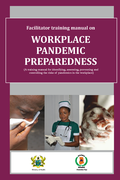
The Facilitator Training Manual on Workplace Pandemic Preparedness is a guide developed by GIZ and the Ministry of Health to help organizations prepare for and respond to pandemics while ensuring business continuity. It provides structured guidance on training, risk assessment, prevention, and respo...
Our spiritual health profoundly impacts our physical health, well-being, and quality of life. Just as medical professionals care for our bodies and minds, spiritual care practitioners care for our spirits. The increasing need for spiritual care makes these practitioners even more crucial. However, m...

This Guidance was developed in response to the increase in HIV-related human rights crises and the shrinking civic space for rights-related responses to HIV in recent years across the world. This document builds upon existing guidance documents, offering updated guidance for country-based United Nat...

This is the story of how an experiment in the north of Ghana changed the health of a nation. How health staff in remote and rural areas are working tirelessly to prevent the deaths of mothers and children. How a radical approach to health research, known as embedded research, has revolutionized how ...
Tuberculosis (TB) is, and should be, a curable disease; however, each year significant numbers of patients acquire or develop drug-resistant TB, which has a much lower cure rate. Patients with drug-resistant TB have a high prevalence of symptoms; hence, staff caring for these patients should h...
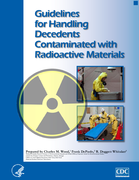
Detonation of a nuclear weapon or activation of a radiological dispersal device could cause radioactively contaminated decedents. These guidelines are designed to address both of these scenarios. They could also be applicable in other instances where decedents’ bodies are contaminated with radioa...
