
Filter
11088
Filtered Results: 11088
Text search:
Health
Life
Featured
Recommendations
889
New Publications
2633
Language
Document type
No document type
6092
Studies & Reports
1963
Guidelines
1240
Manuals
586
Strategic & Response Plan
374
Fact sheets
291
Training Material
213
Situation Updates
101
Infographics
81
Brochures
48
Resource Platforms
47
Videos
21
Online Courses
19
Dashboards/Maps
8
App
4
Countries / Regions
Global
521
India
494
Kenya
315
South Africa
238
Ethiopia
220
Nepal
198
Uganda
196
Sierra Leone
186
Nigeria
182
Myanmar / Burma
174
Bangladesh
163
Western and Central Europe
161
Liberia
158
Syria
152
Malawi
151
Africa
150
Zambia
149
Tanzania
147
Latin America and the Carribbean
146
Rwanda
128
Indonesia
122
Ukraine
119
Namibia
114
Ghana
111
Philippines
95
Congo, Democratic Republic of
82
Zimbabwe
77
South Sudan
76
Lesotho
71
Eastern Europe
68
Asia
65
Germany
65
South–East Asia Region
65
Cambodia
61
Russia
61
Haiti
60
Yemen
60
Mozambique
58
Venezuela
51
Brazil
47
Senegal
44
Botswana
44
West and Central Africa
43
Guinea
39
Burkina Faso
38
East and Southern Africa
38
Middle East and North Africa
37
Cameroon
36
Afghanistan
33
Eastern Europe and Central Asia
32
Eswatini/ Swaziland
32
Lebanon
30
Pakistan
28
Sudan
27
Central African Republic
27
Somalia
26
Jordan
24
Colombia
23
Thailand
23
Western Pacific Region
21
Vietnam
20
Mali
20
Iraq
19
USA
18
Sri Lanka
17
Benin
16
Turkey
15
Moldova
15
Palestine
15
Tajikistan
14
China
13
Laos
13
Peru
13
Paraguay
13
Chile
12
Albania
12
Madagascar
12
North America
11
Argentina
9
Chad
9
Ecuador
9
Kyrgyzstan
8
Côte d’Ivoire / Ivory Coast
8
North Macedonia
7
Mexico
7
Niger
7
United Kingdom
7
Spain
7
Papua New Guinea
7
Georgia
7
Poland
7
Libya
7
Timor Leste/ East Timor
6
Gambia
6
Togo
6
Iran
6
Burundi
6
Hungary
6
Jamaica
6
Southern Africa
6
Egypt
6
Romania
6
Greece
6
Armenia
5
Guinea-Bissau
5
Turkmenistan
5
Portugal
5
Bolivia
5
Honduras
5
Angola
5
Guatemala
5
Switzerland
4
El Salvador
4
Kazakhstan
4
Canada
4
Belarus
4
Bhutan
4
Serbia
3
Fiji
3
Singapore
3
Estonia
3
Uzbekistan
3
Italy
3
Croatia
3
Japan
3
Mauritius
3
Bosnia and Herzegovina
3
Guyana
3
Malaysia
2
Mongolia
2
Lithuania
2
Ireland
2
Azerbaijan
2
Israel
2
Nicaragua
2
Djibouti
2
Slovakia
2
North Korea
1
Congo-Brazzaville
1
Austria
1
Morocco
1
Qatar
1
Bulgaria
1
Mauritania
1
Dominican Republic
1
Saudi Arabia
1
Gabon
1
Belgium
1
France
1
Maldives
1
Tunisia
1
Norway
1
French Guyana
1
Latvia
1
Belize
1
Costa Rica
1
Panama
1
United Arab Emirates
1
Authors & Publishers
Publication Years
Category
Countries
4071
Clinical Guidelines
746
Women & Child Health
615
Public Health
612
Key Resources
610
Capacity Building
272
Pharmacy & Technologies
90
Annual Report MEDBOX
3
Toolboxes
Mental Health
1052
COVID-19
841
HIV
817
Disability
524
Planetary Health
432
TB
395
Conflict
346
NTDs
343
Caregiver
323
NCDs
311
Refugee
267
Ebola & Marburg
218
AMR
213
Global Health Education
209
Natural Hazards
161
Pharmacy
154
Rapid Response
138
Malaria
127
Health Financing Toolbox
120
2.0 Rapid Response
88
Social Ethics
81
Specific Hazards
68
Cholera
58
Zika
57
Polio
45
Typhoon
4
South Sudan
2
This revised trainer's guide contains a prototype training schedule for four days. Teaching and learning strategies are highly interactive, using participatory and experiential approach. Training outcomes include developing skills in assessment of clients for risk factors; conduct basic screening pr...

It is now well known that there is a pandemic of Type 2 Diabetes in the world particularly in developing countries. This fact has several implications for the health care system in the developing countries because this condition is associated with metabolic and vascular complications which in turn i...
The burden of diabetes is high and increasing globally, and in developing economies like India, mainly fueled by the increasing prevalence of overweight/obesity and unhealthy lifestyles. The estimates in 2019 showed that 77 million individuals had diabetes in India, which is expected to rise to over...
The UNHCR Cholera Response Plan (October 2022 – March 2023) outlines efforts to combat the cholera outbreak in Lebanon, which was declared in October 2022. The plan, led by the Ministry of Public Health with support from UNHCR, WHO, UNICEF, and NGOs, focuses on prevention, response, and surveillan...
A Technical Brief for Breakthrough ACTION Field Teams
Social media can be used to collect and address rumors or popular beliefs among target audiences, share evidence-based and timely health information, receive instant feedback on materials, conduct remote trainings, promote awareness of a project...
Issue Brief 31: Antimicrobial resistance (AMR) can occur when viruses, bacteria, parasites and fungi change over time. There is no longer a response to medicines, and the infection treatment gets really difficult which increases the risk of a disesase spread, which can lead to severe health problems...

Rwanda first confirmed cases of coronavirus disease 2019 (COVID-19) in March 2020. Although the number of cases has been low, health system resources are being redirected to respond and an increasing number of children are affected by the socio-economic impacts of the pandemic, including disruptions...
This unit is written so that you will have the opportunity to learn from mistakes.The unit will take you on a journey of personal stress management, one step at a time
Each lesson covers a number of topics and provides various activities for you to complete. In Lesson 1, you will learn about what s...
PNAS 119 (8) e2113947119 | https://doi.org/10.1073/pnas.2113947119
Environmental exposure to active pharmaceutical ingredients (APIs) can have negative effects on the health of ecosystems and humans. While numerous studies have monitored APIs in rivers, these employ different analytical methods, m...
Over 90% of the morbidity and mortality related to chronic obstructive pulmonary disease (COPD) and asthma occurs in low-income and middle-income countries (LMICs) due to well documented factors including decreased access to screening, trained health professionals, and therapies for disease manageme...

The study analyses the current situation of children with disabilities in relation to realizing their rights and accessing basic services, as well as their life experiences in their communities. It also focuses on identifying the barriers created by society that prevent children with disabilities fr...
Environmental Research Volume 151, November 2016, Pages 115-123
Dengue is the world’s most important arboviral disease in terms of number of people affected. Over the past 50 years, incidence increased 30-fold: there were approximately 390 million infections in 2010. Globalization, trade, travel,...
Background: Data on burden of peripheral artery disease (PAD) and its attributable risk factors are valuable for policymaking. We aimed to estimate the burden and risk factors for PAD from 1990 to 2019.
Methods: We extracted the data on prevalence, incidence, death, years lived with disability (YLD...

Since the discovery of insulin nearly 100 years ago, advances in diabetes treatments and therapies have transformed the lives of people
with diabetes (PwD), notably reducing the daily burden of its management.
Newer technologies, including those driven by artificial intelligence, have the potentia...
The article "The burden of chronic obstructive pulmonary disease and its attributable risk factors in the Middle East and North Africa region, 1990–2019" provides an analysis of the prevalence, mortality, and disability-adjusted life-years (DALYs) due to COPD in the MENA region from 1990 to 2019. ...

Latin America and the Caribbean is characterized by a matrix of social inequality whose axes —such as
socioeconomic stratum, gender, stage in the life cycle, ethnicity and race, territory, disability, and immigration
status— create multiple, often concurrent, situations of exclusion and discri...
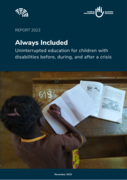
Globally, some 72 million children are out of school due to emergencies and
protracted crises. Of these, at least 17% are children with disabilities.1 Yet, education in a crisis context can be a
lifeline for children, providing psychosocial support, access to school feeding and health programmes, ...
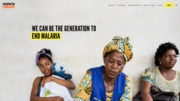
Malaria No More is a non-profit organisation dedicated to eradicating malaria, a preventable and treatable disease, in our lifetime. Through innovative partnerships, advocacy and data-driven solutions, Malaria No More works globally to ensure access to prevention tools, diagnostics and treatment, pa...

One of the most important ways we feel we can help to reduce the burden of cancer in Africa is to work with African cancer advocacy organisations to help educate and advocate about cancer in their countries. To this end in 2010 we designed with our partners, 13 posters for use in Africa
giving heal...
