
Filter
517
Filtered Results: 517
Text search:
Ukraine
Ministry
of
Health
Featured
Recommendations
35
New Publications
60
Language
Document type
No document type
256
Studies & Reports
122
Guidelines
49
Manuals
34
Strategic & Response Plan
25
Situation Updates
14
Fact sheets
8
Training Material
4
Resource Platforms
3
Brochures
1
Infographics
1
Countries / Regions
Ukraine
106
Western and Central Europe
38
Global
27
Eastern Europe
26
Africa
10
Russia
8
Eastern Europe and Central Asia
7
Moldova
6
Uganda
5
Kenya
4
South Africa
4
Tajikistan
3
Armenia
3
Germany
3
Romania
3
Syria
2
Nigeria
2
Albania
2
Kyrgyzstan
2
Bulgaria
2
Latin America and the Carribbean
2
Hungary
2
Belarus
2
Lebanon
2
Namibia
2
Ethiopia
2
Poland
2
India
2
Nepal
1
Turkey
1
Rwanda
1
Kazakhstan
1
Iran
1
Estonia
1
Afghanistan
1
Malawi
1
Zimbabwe
1
Guinea
1
Asia
1
Venezuela
1
Lithuania
1
Jordan
1
Congo, Democratic Republic of
1
Middle East and North Africa
1
South–East Asia Region
1
East and Southern Africa
1
Bangladesh
1
Vietnam
1
Slovakia
1
Georgia
1
Zambia
1
South Sudan
1
Somalia
1
Liberia
1
Ecuador
1
Myanmar / Burma
1
Pakistan
1
Authors & Publishers
Publication Years
Category
Countries
103
Clinical Guidelines
31
Key Resources
22
Public Health
13
Women & Child Health
11
Pharmacy & Technologies
5
Capacity Building
1
Toolboxes
HIV
143
TB
68
Conflict
61
Mental Health
57
Refugee
26
COVID-19
20
Disability
16
Health Financing Toolbox
15
Planetary Health
12
Pharmacy
10
Global Health Education
7
AMR
7
Caregiver
6
Polio
6
NTDs
4
Specific Hazards
3
Ebola & Marburg
3
NCDs
3
Rapid Response
2
2.0 Rapid Response
2
Cholera
1
ndependent of the current conflict, the health sector in Ukraine faces several critical shortcomings. In particular, the country has an oversupply of hospitals and an undersupply of primary care and diagnostic facilities. Addressing these limitations will require substantial amounts of capital inves...
Supplement to: Guidance on vaccination and prevention of vaccine-preventable disease outbreaks for countries hosting refugees from Ukraine, April 2022 update
This document provides: • information on how to obtain vaccination documentation remotely (intended for refugees from Ukraine and intern...

WHO recently conducted a survey to assess the availability and cost of a national tracer list of essential medicines in the outpatient sector in Ukraine using a new collection tool – the WHO Essential Medicines and Health Products Price and Availability Monitoring Mobile Application. This tool fac...

14 March 2022. Ukraine emergency response
WHO appreciates offers of contributions of supply support in solidarity with the affected population of the current conflict in Ukraine.
Please note that supply into and within Ukraine is seriously constrained by continuously shifting conflict zones, d...

This report reviews and analyses the Affordable Medicines Programme, which was introduced in Ukraine in April 2017 to provide patients with improved access to 23 outpatient medicines for the treatment of chronic noncommunicable diseases. The evaluation combines both quantitative and qualitative anal...
This report is part of the gender and noncommunicable diseases (NCDs) initiative launched by the WHO Regional Office for Europe, which aims to strengthen the response to NCDs through a gender approach. It is part of a series of country profiles and a synthesis report. The country profile of Ukraine ...

Ukrainian decentralization reform has increased and democratized local government responsibility for health care at the level of local government closest to communities and has increased regional and local government responsibility for public health. Decentralization affects health system reform in ...


14–22 April 2015

Report of a mission 20–24 April 2015
Assessment and Guidance for Strengthening Integration of Mental Health into Primary Health Care and Community-Based Service Platforms in Ukraine
Following the 2014 Euromaidan Revolution, Ukraine embarked on a national reform program to reduce widespread corruption within government. In the health sector, the government introduced several complementary reforms that aimed to improve the health outcomes of Ukrainian citizens, but designed in su...

The health sector In Ukraine is beginning to change in recent years. The sector, based on a system of health care (Semashko) originating from the Soviet Union, had been stagnant for many years. Remarkably little had changed since Independence and the health care system is as of today still character...
Experiences from Indonesia, Kenya, Uganda and Ukraine

Despite its rich culture, great economic potential, high level of education and last but not least its sheer size – it is the largest state whose borders lie entirely within Europe and is 1.7 times the size of the Federal Republic of Germany – Ukraine seems far away in perception and awareness. ...
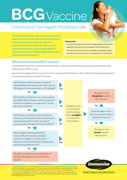

This document summarizes the findings of the STEPS survey in Ukraine and compares them with the results of STEPS surveys carried out in other countries in the WHO European Region, as well as with selected other surveys in Ukraine. The survey is designed to be repeated approximately every five years ...
In 2018 and early 2019, the WHO Regional Office for Europe’s cultural contexts of health and well-being project worked alongside the University of Exeter’s WHO Collaborating Centre on Culture and Health, the Minsk Regional Centre for Psychiatry and Addiction, and the Institute of Mental Health o...

Saving lives is the priority of WHO’s response in Ukraine. WHO works to ensure time-critical, lifesaving multisectoral assistance, non-discriminatory access to emergency and essential health services and priority prevention programmes, and laying the foundation for longer-term health systems recov...
